


Skin Pigmentation Treatments at Thames Skin Clinic
At Thames Skin Clinic in Twickenham, London, we assess melasma, sun spots, post-inflammatory hyperpigmentation and marks after acne. Your personalised pigmentation and photodamage programme may combine ZO Skin Health skincare, prescription treatment where appropriate, daily sun protection and selected laser treatments. We take particular care with melasma and darker skin tones, where some procedures can make pigmentation worse.
Founded by Dr Anna Hemming, our award-winning, CQC-registered clinic takes a programme-led approach. We consider your skin tone, sensitivity, previous treatments and the triggers that may be keeping pigmentation active. Our aim is clearer, more even-looking skin, with a plan you understand and support to maintain your progress.



Skin Pigmentation Treatment at a Glance
- Assessment comes first: Melasma, sun spots and post-inflammatory marks need different treatment, and colour alone cannot confirm the diagnosis.
- Skincare and SPF form the foundation: Personalised skincare and daily broad-spectrum SPF 50 form the foundation of treatment, with ZO Skin Health products selected where appropriate.
- Prescription treatment is selective: Where suitable, hydroquinone is used as a supervised course of no more than four months, followed by non-hydroquinone maintenance.
- Laser is chosen carefully: Excel V+, Laser Genesis and Fotona can help selected concerns but are not the first step for every dark mark.
- Maintenance matters: Pigmentation, especially melasma, can return. Ongoing protection and review help you keep your results.
What is Skin Pigmentation?
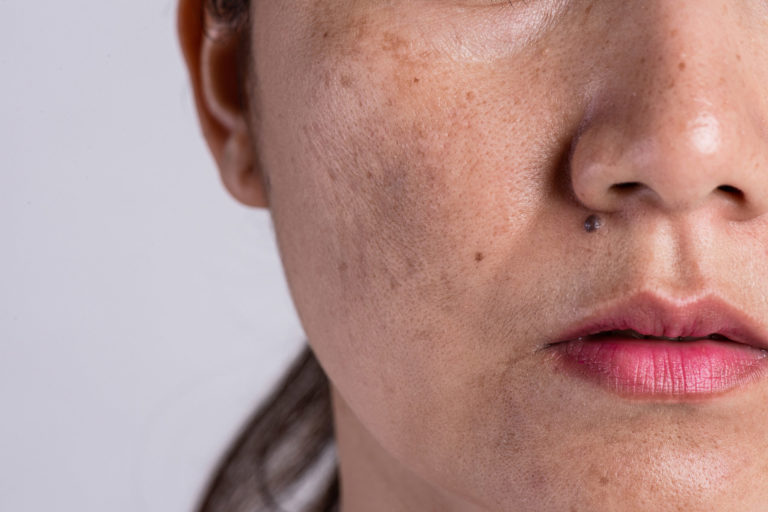
Melanin is the pigment that gives skin its natural colour. Hyperpigmentation develops when excess melanin makes an area look darker than the surrounding skin. It may appear brown, grey-brown or unevenly distributed.
Pigment can sit near the surface, deeper in the skin or at both levels. Its depth affects how it looks and how well it responds to treatment.
Pigmentation also includes loss of colour, known as hypopigmentation. Pale patches need a different assessment and are not treated with a routine brightening programme. Our treatments aim to improve unwanted discolouration while respecting your natural skin tone.
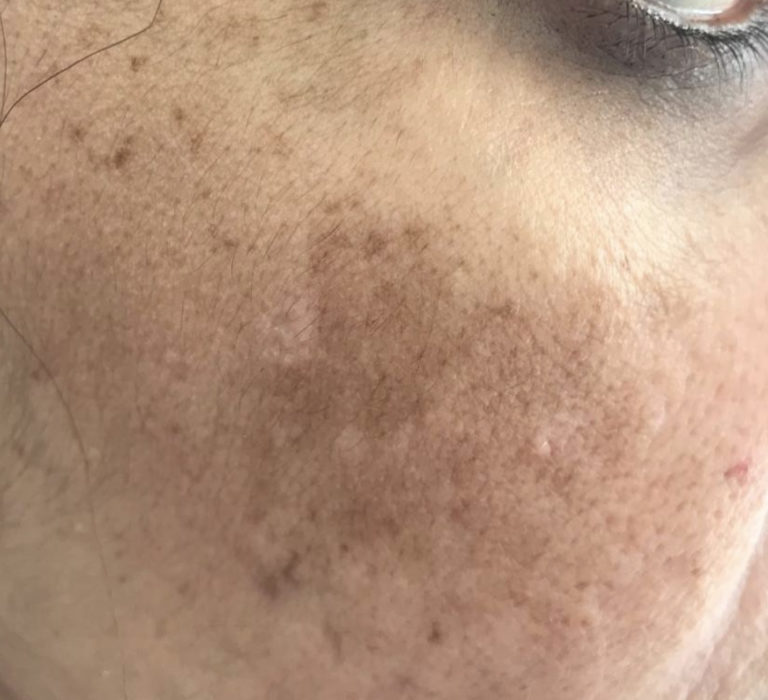
What Causes Uneven Skin Pigmentation?
Common causes of uneven skin pigmentation include sunlight, hormonal influences, inflammation and the skin’s response to injury. Acne, eczema, irritating products and previous procedures can all leave darker marks. Some medicines and medical conditions can also change skin colour.
Several factors are often present together. You might have sun spots across the cheeks, melasma on the forehead and post-acne marks along the jawline. Treating them all in the same way can give disappointing results or aggravate part of the problem.
During your consultation, we explore when the pigmentation started, what makes it worse and what you have already tried.
Types of Skin Pigmentation We Assess
Comparing Pigmentation Concerns
This table is a guide only. A medical assessment confirms the diagnosis and whether treatment is suitable.
Concern
Typical appearance
Treatment approach
Melasma
Broader brown or grey-brown facial patches, often on both sides
Light protection, topical treatment and ongoing maintenance
Sun spots
Separate flat brown marks on sun-exposed skin
Assessment, then suitable topical or targeted laser treatment
Post-inflammatory hyperpigmentation
Darker marks after inflammation or injury
Control the underlying cause, then introduce pigment treatment carefully
Pigmentation after acne
Flat brown marks after breakouts
Combine pigmentation care with control of active acne
Mixed pigmentation
Several patterns occurring together
A staged plan addressing each component
The Thames Pigmentation and Photodamage Programme
Your programme builds a treatment sequence around your diagnosis and goals. It follows our THAMES approach: Thorough, Holistic Assessment, Medical care, Expectations and Safety.
1. Medical Consultation with Dr Anna Hemming
We assess the pigmentation and the wider health of your skin, reviewing your medical history, hormonal influences, medicines, skincare, sun exposure and response to previous treatment.
We discuss what can realistically improve, what may recur and whether any mark needs investigation first. Clinical photographs record your starting point so we can track progress.
2. Build Your Skincare Foundation
Your home routine is an active part of treatment. It may include barrier support, daily sun protection and selected ingredients to improve discolouration and skin renewal.
If your skin is inflamed or reacting to products, we settle it before introducing stronger ingredients. Instructions are tailored to your tolerance, rather than simply adding more products.
3. Choose Your Pigmentation Pathway
Some patients benefit from a non-hydroquinone plan. Others may suit a time-limited prescription course alongside their skincare. We explain the purpose of each stage and arrange reviews to check your response.
4. Add Clinic Treatments Where They Help
Laser or a selected peel may help a particular part of your pigmentation or photodamage. We weigh the likely benefit against recovery time, the chance of recurrence and the risk of additional pigmentation.
5. Maintain and Review
Maintenance includes ongoing light protection, suitable skincare and adjustments as your skin changes. We agree on a treatment plan for holidays, seasonal sun exposure and returning pigmentation so you can act early.
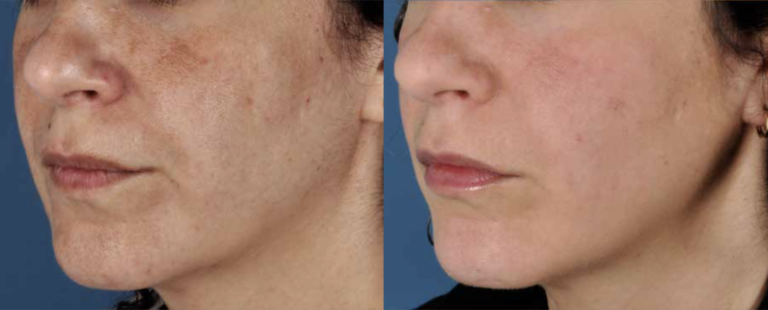
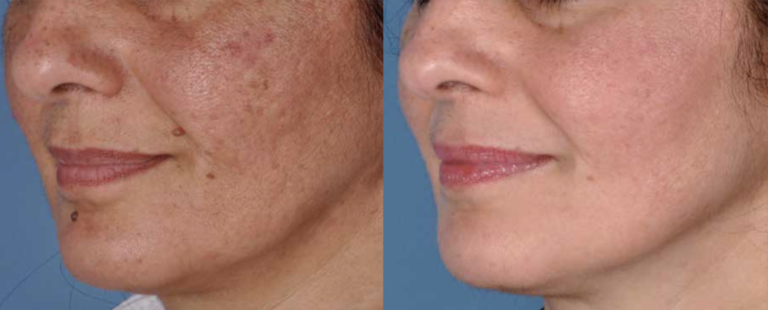
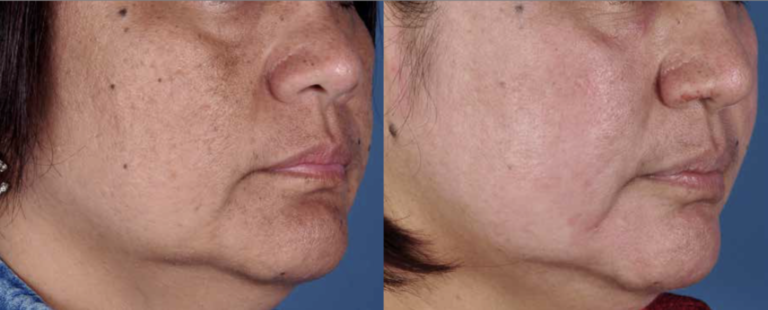
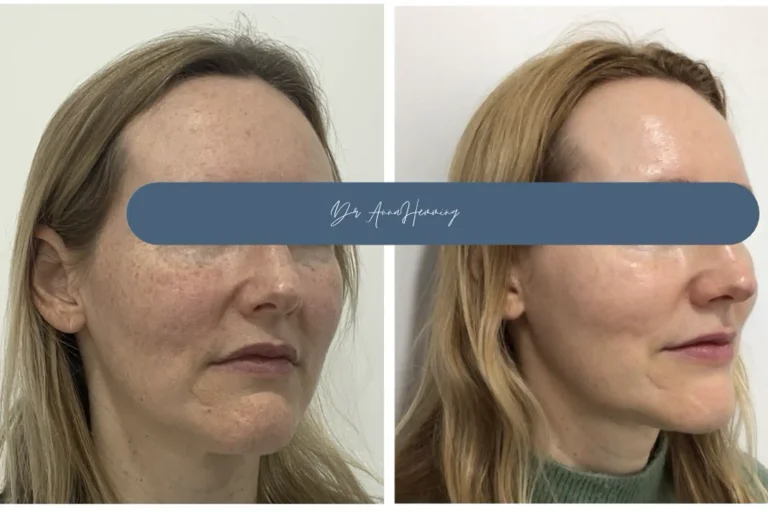
ZO Skin Health Pigmentation Plans
We use ZO Skin Health within personalised programmes to even skin tone and support skin quality. A plan may combine cleansing, appropriate exfoliation, non-hydroquinone brightening products, retinol where suitable and daily SPF.
The combination and pace are important to your skin pigmentation treatment. Retinol and exfoliating products can cause irritation, so we explain how to introduce them and when to contact us for an adjustment. Persistent inflammation or significant irritation needs review. The aim is a routine your skin can tolerate consistently. Product choice also depends on pregnancy, breastfeeding, other treatments and your medical history.
Prescription and Non-Hydroquinone Pathways
Hydroquinone and topical retinoids are avoided during pregnancy. Please tell us if you are pregnant, breastfeeding or planning a pregnancy so we can advise on suitable options.
Non-Hydroquinone Pathway
A non-hydroquinone pathway can be the main treatment or used to maintain improvement after a prescription course. It combines light protection with selected brightening ingredients and skin renewal where appropriate, tailored to your diagnosis and tolerance. Non-hydroquinone does not automatically mean suitable during pregnancy. Retinol-containing plans still need specific advice.
Hydroquinone Pathway
Hydroquinone reduces melanin production and may be prescribed for selected pigmentation concerns, particularly melasma. It requires medical supervision and can cause irritation or unwanted colour changes. At Thames, a prescribed hydroquinone course lasts no more than four months, with earlier review or discontinuation when needed. This is our clinic’s maximum, not a recommendation that everyone uses it for four months.
We plan your move to non-hydroquinone maintenance from the start, and any further course requires reassessment. Generic prescription hydroquinone may be considered where clinically appropriate; the exact formulation is discussed at your consultation.
When Can Laser Treatments Help Pigmentation?
Laser treatments can be useful for selected benign pigmented lesions and some aspects of photodamage. The right choice depends on the diagnosis, pigment depth, skin tone and any associated redness or texture change.
An isolated sun spot and a broad patch of melasma need very different decisions. For melasma and PIH, skincare and light protection are usually the starting point, and procedures are considered selectively, particularly when pigment is active or the skin is sensitive.
Excel V+ for Skin Pigmentation
Excel V+ offers 532 nm and 1064 nm laser wavelengths for selected vascular and pigmentation concerns. At Thames, it may be considered for suitable superficial sun spots, or photodamage involving both brown discolouration and visible vessels.
The 532 nm wavelength is strongly absorbed by melanin, so skin tone and recent tanning affect suitability. Cooling, carefully selected settings and a patch test where indicated are part of treatment planning. A patch test helps assess your response but cannot remove all risk.
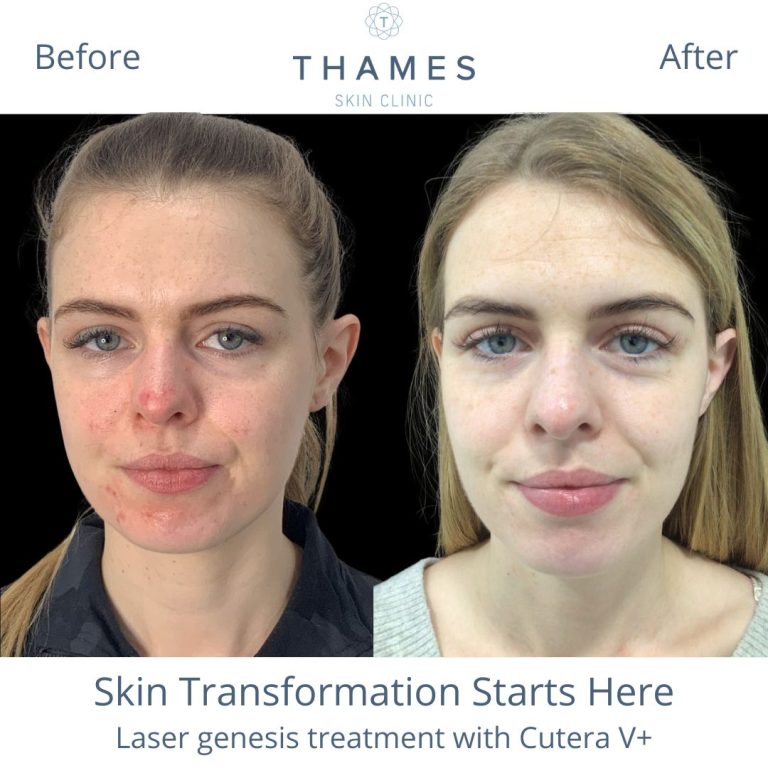
Laser Genesis for Skin Pigmentation
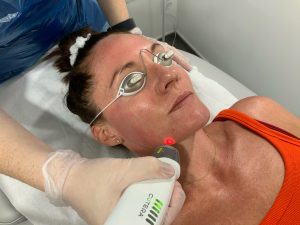
Laser Genesis uses a non-ablative 1064 nm laser. It may form part of a plan where uneven tone comes with redness, visible pores, fine lines or scarring (Cutera: Laser Genesis).
Its role is broader skin revitalisation. It is not a substitute for targeted treatment of individual brown spots or a prescription melasma plan.
We assess its value for the specific concerns in your skin.
Fotona Laser for Skin Pigmentation
Our Fotona platform provides Nd:YAG and Er:YAG treatment options. Selected Fotona Er:YAG laser resurfacing may be considered where photodamage includes surface discolouration alongside texture changes and fine lines.
We choose the exact mode and intensity around your skin and recovery preferences. Having Fotona available does not make it suitable for melasma: different protocols have different uses, and we assess each proposed treatment for its risk of triggering further pigment.
Other Clinic Treatments
Selected chemical peels may complement a pigmentation plan. Where acne scars or more significant texture changes are also present, we can assess microneedling or Secret PRO resurfacing separately.
These procedures are not routine treatments for every dark mark. Their role depends on the structural concerns, your skin tone and the risk of post-inflammatory pigmentation.
FAQs
-
When Does Laser Need Caution?
Laser and resurfacing need particular care if you have active melasma, previous PIH, darker skin, a recent tan or inflamed skin. Some procedures can cause darker or lighter patches and, less commonly, burns or scarring.
We may recommend preparing your skin first, changing the order of treatment or continuing with topical care. Choosing the right time and method is part of achieving a good result.
-
Can Laser Make Pigmentation Worse?
Yes. Laser can trigger PIH or worsen melasma. Correct diagnosis, skin preparation, suitable settings and aftercare reduce this risk but cannot eliminate it.
-
Can I Have Laser Treatment if I Have a Tan?
Usually not straight away. A recent tan increases the risk of burns and unwanted colour change, particularly with wavelengths absorbed by melanin. We may delay treatment until your tan has faded.
-
Should a Changing Brown Mark be Lasered?
No, not before a medical assessment. A new or changing mark needs proper investigation, and a suspicious lesion should be referred rather than treated cosmetically.
SPF and Long-Term Maintenance
Daily sun protection is central to pigmentation care. We generally recommend a broad-spectrum SPF 50 with high UVA protection, together with shade and a hat. Reapply when outdoors and after swimming, sweating or towel-drying, following the product instructions. Visible light can also worsen melasma. A tinted sunscreen containing iron oxides can add visible-light protection.
Your maintenance plan may include non-hydroquinone brightening skincare, retinol where appropriate and periodic reviews. Pigmentation can return with renewed sun exposure or other triggers, so protection continues after your initial course ends.
What Results Can You Expect From Skin Pigmentation Treatment?
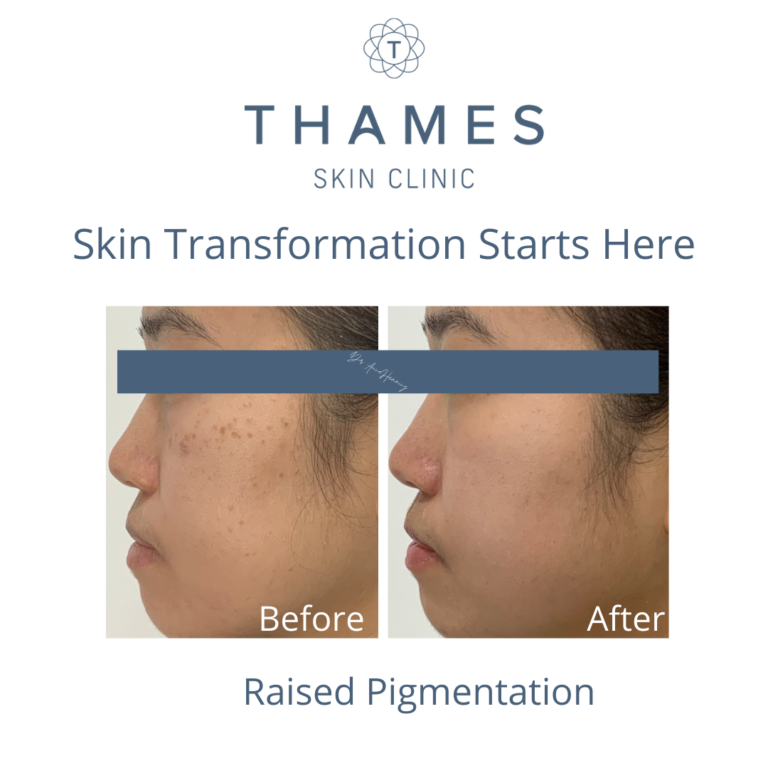
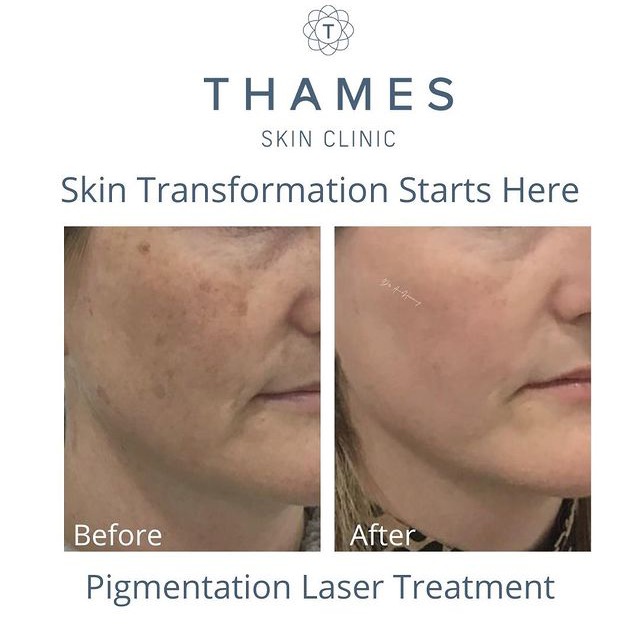
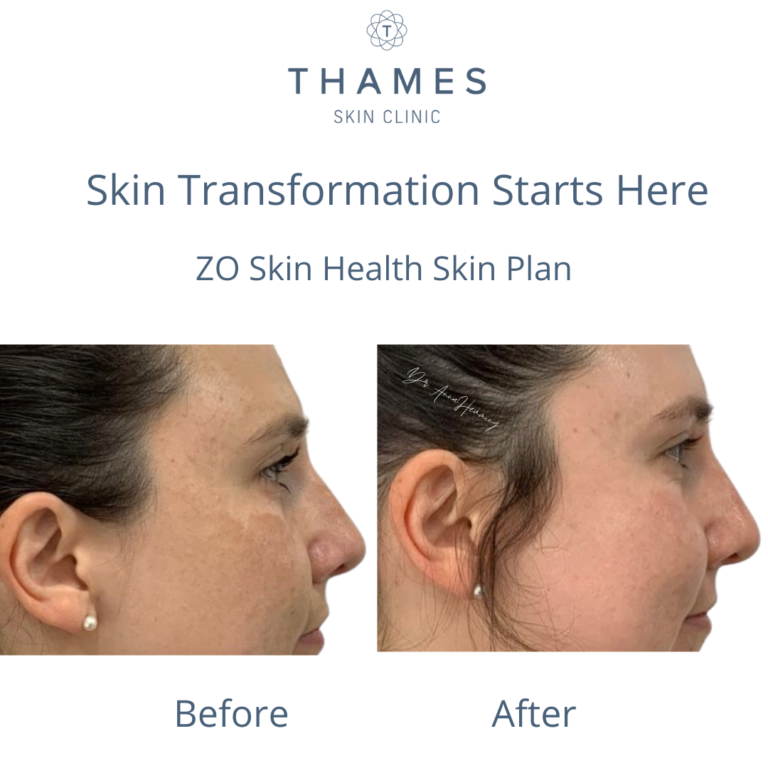
Results depend on the diagnosis, pigment depth, your skin’s response and how consistently treatment is followed. Superficial sun spots usually respond more readily than long-standing melasma or deeper post-inflammatory marks.
Topical programmes usually take several weeks to show progress and often continue for several months. Clinic treatments may involve a course, with recovery and review between sessions. We give you a more specific timeline after your assessment.
Our aim is a meaningful improvement in uneven tone and a practical way to maintain it. Complete clearance cannot be guaranteed.
Why Choose Thames Skin Clinic for Pigmentation Care?
Dr Anna Hemming has worked as a doctor since 2002 and in medical aesthetics since 2008, with an approach centred on skin health, individual assessment and natural results. Her programmes bring together personalised skincare, medical treatment and laser technology to address both visible concerns and the factors driving them. Dr Anna is an international Key Opinion Leader for ZO Skin Health and Thames Skin Clinic holds ZO Blue Diamond status. Her training includes personal training with Dr Zein Obagi in Beverly Hills.

Dr Anna was named Medical Aesthetic Practitioner of the Year at the Aesthetics Awards 2026 and Aesthetic Practitioner of the Year (Doctor) at the Aesthetic Medicine Awards 2025.
She also won Best Injectable Result at the Aesthetics Awards 2025 and received the Cutera Lifetime Achievement Award in 2024.
In 2024, Thames Skin Clinic was named Aesthetic Clinic Team of the Year at the Aesthetic Medicine Awards and Best Clinic South England at the Safety in Beauty Awards.
These achievements sit alongside our commitment to careful assessment, clear explanations and support throughout your treatment.
FAQs
-
What is the Best Treatment For Pigmentation?
It depends on the cause. A sun spot may suit targeted laser treatment, while melasma or post-acne pigmentation usually needs a topical programme and control of ongoing triggers. Assessment always comes first.
-
Can Melasma be Removed Permanently?
Melasma can improve with treatment but commonly recurs. Long-term light protection and maintenance skincare help sustain the improvement.
-
Why Does Pigmentation Come Back After Treatment?
Sun and visible light, hormonal changes, inflammation and stopping maintenance skincare can all reactivate pigment. Melasma is especially prone to returning. Daily SPF, a maintenance routine and early review help keep it under control.
-
How Long Does Pigmentation Treatment Take?
Topical programmes usually take several weeks to show progress and often continue for several months. Laser treatment may need a course of sessions. We give you a personal estimate after your consultation.
-
Can You Treat Pigmentation in Darker Skin Tones?
Yes. We tailor your plan to your skin and how it responds to inflammation. Topical care is often prioritised, and procedures are selected carefully because the risk of unwanted pigment change is higher.
-
Is Pigmentation After Acne the Same as Scarring?
No. Flat brown marks are usually pigment changes, while indented or raised scars involve altered skin structure. Both can occur together and may need separate treatment stages.
-
Do I Need Hydroquinone?
Not necessarily. Some patients are better suited to a non-hydroquinone plan. Hydroquinone is only considered after medical assessment and is used as a supervised course of no more than four months.
-
Can I Treat Pigmentation During Pregnancy?
Yes, with suitable options. Appropriate light protection and gentle skincare can help during pregnancy. Hydroquinone and retinoids are avoided, we review all ingredients and elective procedures are usually postponed.
-
Can You Treat Pigmentation On My Hands or Chest?
Yes. We assess pigmentation beyond the face, including the hands, neck and chest. Treatment and recovery vary by area, so your plan is tailored accordingly.
Book Your Skin Pigmentation Treatment in Twickenham
Thames Skin Clinic offers doctor-led pigmentation care at 1–3 Baylis Mews, Twickenham, TW1 3HQ, welcoming patients from Richmond, Teddington, Kingston and across London.
Your plan can bring together ZO Skin Health, prescription treatment where suitable and technologies including Excel V+, Laser Genesis and Fotona, with each element chosen for its relevance to your skin.
Whether you are concerned about a few sun spots, persistent melasma or marks left by acne, the first step is understanding the cause.
Enquire now about a consultation.
You can also explore other concerns in our Skin Concerns Guide.
Contact Us Today
Getting To The Clinic
Clinic Address
Thames Skin Clinic 1-3 Baylis Mews Twickenham TW1 3HQ. Please call 0208 068 1145 to speak directly to a team member.
By Train
Thames Skin Clinic is conveniently located in Twickenham, with excellent rail connections from across the UK. The nearest station is Twickenham Train Station, just a 5 minute walk from the clinic. Direct South Western Railway services run from London Waterloo (20-25 mins), Clapham Junction (10-15 mins) and Richmond (5 mins).
From the North, Midlands and Wales, travel via London Euston or Paddington before connecting at Waterloo. From the South and West, change at Reading, Clapham Junction, or Woking. If arriving from the East, transfer to Liverpool Street.
By Car
Thames Skin Clinic is located in Twickenham and is easily accessible by car from London and surrounding areas.
From Central London – Take the A4 or A316 towards Richmond, then follow the A310 into Twickenham.
From the M25 – Exit at Junction 12 (M3), continue on the M3/A316, then take the turnoff towards Twickenham town centre.
From the South and West – Use the M3, M4, or A3, connecting to the A316 into Twickenham.
Parking
Free parking on site with disabled parking available.
Public Car Parks: The nearest public car park is Arragon Road Multi-Storey (TW1 3NG), just a short walk from the clinic.