
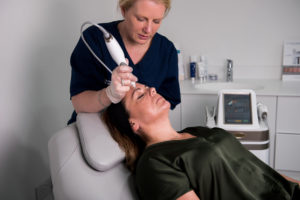
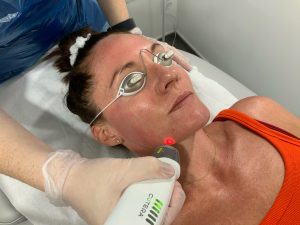

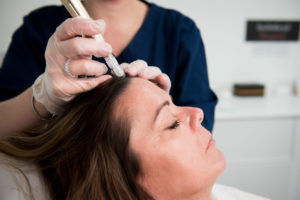





Fotona laser resurfacing is an Er:YAG laser treatment that renews the skin surface and stimulates collagen to improve texture, fine lines, acne scars, pigmentation and skin quality.
What is Fotona laser resurfacing?
Is Fotona resurfacing good for acne scars?
Fotona resurfacing may help improve certain acne scars by stimulating collagen remodelling and smoothing uneven texture. A course or combination plan may be needed.
Does Fotona resurfacing hurt?
The treatment can feel hot, prickly or uncomfortable depending on intensity. Topical anaesthetic may be used.
How much downtime is there after Fotona resurfacing?
Downtime is usually around 7–10 days depending on treatment depth. Redness, swelling, peeling, dryness, crusting or scabbing may occur.
When will I see results?
Some improvement may be visible once peeling and redness settle. Collagen-based improvement continues over 4–8 weeks and may continue beyond this.
How many resurfacing treatments do I need?
Some patients may need one intensive treatment. Others may need 2–3 treatments spaced around 8 weeks apart, especially for acne scarring or deeper texture concerns.
Can Fotona resurfacing treat pigmentation?
Fotona resurfacing may help improve some pigmentation and sun damage, but pigment risk must be assessed carefully. Pre-treatment skincare and strict SPF may be needed.
Can Fotona resurfacing treat lines around the mouth?
Yes, Fotona resurfacing may help soften fine perioral lines. Deeper lines may need combination treatment.
Is Fotona resurfacing suitable for all skin types?
Not always. Suitability depends on skin type, pigmentation risk, tanning, medical history, medication and previous skin reactions.
Can I wear make-up after Fotona resurfacing?
You should avoid make-up until the skin has healed enough and Dr Anna advises it is safe. This depends on the depth of resurfacing.
Can Fotona resurfacing be combined with Fotona 4D® / 5D?
Yes, but timing must be planned carefully. 4D/5D focuses on tightening and collagen stimulation, while resurfacing focuses on skin surface renewal.
Can I have Fotona resurfacing if I get cold sores?
You must tell Dr Anna if you have a history of cold sores. Preventative antiviral medication may be recommended.
What concerns can Fotona resurfacing improve?
Fotona laser resurfacing can be used as part of a treatment plan for:
Acne scars
Post-acne texture
Fine lines and wrinkles
Perioral lines
Sun damage
Pigmentation
Uneven tone
Rough skin texture
Enlarged pores
Dullness
Early skin ageing
Targeted scars
For some patients, resurfacing may be combined with other treatments such as medical skincare, exosomes, polynucleotides, microneedling, PRP, Fotona 4D/5D or injectables, depending on the concern.
Fotona resurfacing for acne scars
Acne scarring is often caused by inflammation damaging collagen in the deeper layers of the skin. This can leave pitted, uneven or textural scars.
Fotona resurfacing can help by creating controlled injury to the skin and stimulating collagen repair. This may gradually improve the appearance of certain types of acne scarring and uneven texture.
Acne scar improvement usually requires a course or combination plan. Patients with active acne may need acne control first before resurfacing is recommended.
At Thames Skin Clinic, acne scarring is assessed as part of a wider skin health plan, which may include medical skincare, AviClear, peels, microneedling, exosomes, polynucleotides or laser treatment.
Fotona resurfacing for lines around the mouth
Fine lines around the mouth, sometimes called perioral lines, can be caused by collagen loss, movement, sun exposure, smoking, genetics and skin thinning.
Fotona resurfacing may help improve etched surface lines by renewing the skin and stimulating collagen. Depending on the depth of lines, Dr Anna may also discuss LipLase®, dermal filler, anti-wrinkle treatment, polynucleotides, exosomes or medical skincare.
Fotona resurfacing for pigmentation and sun damage
Sun damage and pigmentation can make the skin look uneven, dull or aged. Fotona resurfacing may help improve surface pigmentation and overall clarity by removing damaged outer layers and stimulating skin renewal.
Pigmentation treatment must be planned carefully, especially in patients with higher Fitzpatrick skin types or a history of post-inflammatory hyperpigmentation. Sun protection and pigment-stabilising skincare may be recommended before and after treatment.
What results can I expect?
Fotona laser resurfacing is designed to improve skin surface quality and stimulate collagen.
Patients may notice:
Smoother skin texture
Softening of fine lines
Improvement in acne scarring
Refined pores
Brighter skin
More even tone
Improved skin clarity
Reduction in roughness
Improved skin quality over time
You may start to see improvement once redness, peeling and crusting have settled. The supplied resurfacing information states that patients may typically start to see results within 5–7 days once initial redness and peeling subside, while collagen-based results continue to develop over 4–8 weeks.
Results vary depending on scarring type, skin type, age, collagen response, sun exposure, pigmentation tendency, skincare, lifestyle and the intensity of treatment.
What happens during treatment?
Your appointment begins with assessment, consent and confirmation that it is safe to proceed.
The skin is cleansed and protective eyewear is used. Depending on your protocol, topical anaesthetic may be applied before treatment.
Dr Anna will use the Fotona laser to treat the planned area in a controlled way. The treatment may feel hot, prickly or uncomfortable depending on intensity. More intensive resurfacing usually creates more heat and more downtime.
After treatment, the skin may look red, swollen or feel warm and tight. There may be pinpoint bleeding, crusting, peeling or scabbing depending on the depth and intensity of treatment.
You will be given personalised aftercare and review advice.
Is there downtime after Fotona resurfacing?
Yes. Fotona resurfacing usually involves visible downtime.
Common expected reactions may include:
Redness
Warmth
Tightness
Swelling
Dryness
Peeling
Flaking
Crusting
Pinpoint bleeding
Temporary darkening of pigmentation before fading
The supplied resurfacing information describes approximately 7–10 days of downtime, including swelling, redness, peeling and some scabbing. The general pre/post-treatment advice also explains that laser treatments can cause flushing, erythema, stinging, burning, tightness, peeling, scabbing and temporary pigment change depending on treatment type and skin response.
The exact downtime depends on the treatment depth, area treated, skin type and individual healing response.
How many treatments will I need?
This depends on the concern.
Some patients may benefit from one more intensive treatment. Others may need a course of 2–3 treatments, especially for acne scarring, deeper texture change or more significant sun damage.
The supplied resurfacing information lists a recommended course of 2–3 sessions, with treatments spaced around 8 weeks apart.
Dr Anna will advise the safest and most effective plan during consultation.
Is there downtime?
Many Fotona 4D® / 5D treatments have minimal downtime. If a stronger surface refresh or resurfacing step is included, redness, dryness, peeling or flaking may occur.
Can Fotona 4D® / 5D replace filler?
Not exactly. Fotona stimulates collagen and improves skin firmness, while filler restores or adds volume. Some patients benefit from laser alone, while others may benefit from a combination plan.
Can Fotona 4D® / 5D be combined with injectables?
Yes, in suitable patients. Fotona may be combined with anti-wrinkle injections, dermal fillers, polynucleotides, exosomes or skin boosters, but timing and sequencing must be planned carefully.
Is Fotona 4D® / 5D suitable for all skin types?
Fotona settings can be adjusted, but suitability depends on skin type, pigmentation risk, tanning, medication and medical history. This is assessed during consultation.
How long do results last?
Results vary depending on skin quality, age, lifestyle, sun exposure and maintenance. Many patients choose maintenance treatment annually or every 12–18 months.
How do I know if Fotona 4D®, 5D, resurfacing or injectables are right for me?
Dr Anna will assess your skin, facial structure, laxity, volume, texture and goals before recommending the most appropriate option or combination.