

Milia are small, firm white or cream-coloured cysts that develop when keratin, a natural protein found in the skin, becomes trapped beneath the surface rather than being shed normally.
They often look like tiny white bumps or whiteheads but they are not acne or blocked pores.
Milia commonly develop on the cheeks, around the eyes and on the eyelids, although they can occur elsewhere on the face and body.
What are milia?
What causes milia?
Milia form when keratin becomes trapped beneath the surface of the skin instead of being released normally as the skin renews itself.
There are different types of milia.
Primary milia develop spontaneously and are particularly common in babies and young children, although adults can develop them too.
Secondary milia can develop after the skin has been disrupted or injured, including following burns, trauma, inflammation or certain skin treatments.
Some people are simply more prone to developing milia, particularly around areas where the skin is thinner such as the eyelids and upper cheeks.
Can skincare products cause milia?
Skincare products do not directly cause milia. Milia develop when keratin becomes trapped beneath the surface of the skin rather than being released normally.
However, very rich or occlusive products may make the skin around existing milia feel more congested and some people notice milia developing more frequently in areas where they use heavier products.
If you regularly develop milia, we can assess your skin and skincare routine and advise whether changes may help support healthy skin renewal.
How do I know if a white bump is milia?
Milia usually appear as very small, firm, white or cream-coloured bumps beneath the surface of the skin. They are often found around the eyes, eyelids, cheeks and upper face.
However, not every small white bump is a milium. Other benign skin lesions and occasionally inflammatory or gland-related conditions can look similar.
At Thames Skin Clinic, we recommend assessing the lesion before removal so that we can confirm what it is and decide whether treatment is appropriate.
Will milia go away on their own?
Some milia disappear naturally as the skin renews itself, particularly in babies and children.
In adults, however, milia can remain for months or considerably longer.
If a milium persists or is bothering you cosmetically, it can usually be removed with a relatively simple professional treatment.
It is important to make sure the lesion is actually milia before attempting treatment, particularly around the eyelids and eye area.
Will milia come back after treatment?
Milia can sometimes develop again after treatment, but this does not mean the original removal was unsuccessful.
When an individual milium is professionally removed, the existing keratin-filled cyst is cleared.
However, new milia can develop in the future if keratin becomes trapped beneath the skin again.
Some people are naturally more prone to developing recurrent milia, particularly around the eyelids and upper cheeks.
How are milia removed?
At Thames Skin Clinic, we first assess the lesion to confirm that it is suitable for treatment.
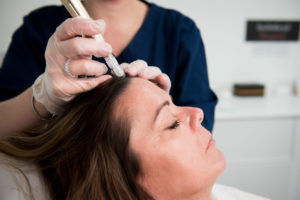
Milia can usually be removed by carefully opening the very superficial layer of skin covering the cyst and extracting the trapped keratin.
The precise technique used for milia removal depends on the size, depth and location of the lesion, particularly when treating the delicate skin around the eyes.
Our aim is to remove the lesion while causing as little unnecessary trauma to the surrounding skin as possible.
How long does milia removal take?
Milia removal is usually a quick and straightforward procedure.
The length of the appointment depends on the number, size and location of the milia being treated.
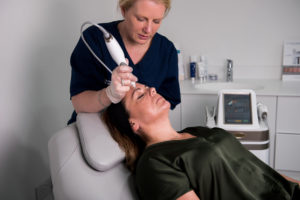
At Thames Skin Clinic in Twickenham, milia are treated as part of our skin lesion removal service, with the appointment allowing time for assessment, preparation, treatment and aftercare advice.
The treated area may appear slightly red immediately afterwards and tiny marks or superficial crusting can sometimes occur while the skin heals. Most patients are able to return to their usual activities afterwards.
Is it safe to remove milia around the eyes?
Milia frequently develop around the eyes and eyelids, where the skin is particularly thin and delicate.
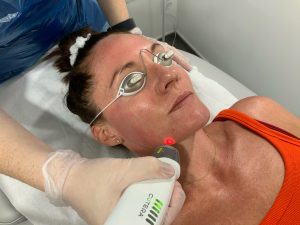
These lesions should be assessed carefully before treatment. The appropriate removal technique depends on exactly where the milium is positioned and its proximity to the eyelid margin and surrounding structures.
At Thames Skin Clinic, eyelid milia and milia around the eyes are assessed before treatment to make sure that removal is appropriate and safe.
Can I squeeze or remove milia myself?
We do not recommend squeezing, picking or attempting to remove milia yourself.
Unlike spots, milia are enclosed beneath a layer of skin and often cannot simply be squeezed out.
Repeatedly pressing, picking or piercing the area can cause unnecessary trauma and increase the risk of inflammation, infection, pigmentation or scarring, particularly around the delicate eye area.
Professional assessment also helps confirm that the small white bump is actually a milium before it is treated.