

Jowls describe the loss of definition that develops along the lower jawline as tissues of the face begin to descend with age.
Although they can look like an area of loose skin or fat, jowls usually develop because several structures are changing at the same time, including skin, collagen, facial fat, ligaments, muscle and underlying bone.
This is why treating the jowl itself is not always the best way to improve it. At Thames Skin Clinic, we assess the whole face to understand which changes are contributing to the loss of jawline definition.
What are Jowls?
What Causes Jowls to Form?
Jowls develop because several layers of the face change as we age. Loss of skin elasticity, changes in facial fat, reduced bone and ligament support and gravity all contribute to the development of jowls around the lower face and jawline.
- Collagen and elastin within the skin gradually reduce, making the skin less firm.
- The facial fat compartments that provide youthful support can shrink, change shape and descend.
- At the same time, changes in the underlying bone and supporting ligaments reduce the structural support available to the overlying tissues.
- Gravity then acts on tissues that have less support, allowing them to descend towards the lower face and jawline.
- The platysma muscle in the neck can also contribute to downward pull around the jawline in some patients.
- Genetics, sun exposure, smoking and significant changes in weight can influence how quickly these changes become visible.
At What Age do Jowls Typically Start to Appear?
There is no particular age at which everyone develops jowls. Subtle changes in the lower face can begin in the 30s or 40s, although some people notice them earlier and others retain a well-defined jawline considerably longer. Genetics, facial structure, skin quality, sun exposure, changes in facial fat and weight fluctuations all influence when jowls become noticeable.
This is why any treatment for jowls should be based on your anatomy rather than your age.
Are Jowls Caused by Excess Fat?
No, jowls are not necessarily caused by excess fat.
What looks like a pocket of fat beside the jawline may actually be tissue that has descended because support higher in the face has been lost. In some patients there is also localised fat beneath the chin or around the lower face, but removing fat is not automatically the answer. If support and skin laxity are the main problem, reducing fat in the wrong area can potentially make the face look more depleted.
At Thames Skin Clinic, we assess the skin, fat compartments, facial structure and jawline before recommending treatment.
Can Jowls be Treated Without Surgery?
Yes. Mild to moderate jowling can often be improved with non-surgical treatments, although non-surgical treatment cannot reproduce the degree of tissue repositioning achieved with a surgical facelift.
Non-surgical treatments for jowls may include the following:
- Dermal fillers to restore structural support or improve contour around the cheek, chin, jawline or pre-jowl area.
- Profhilo Structura, where changes within the superficial fat compartments are contributing to facial ageing
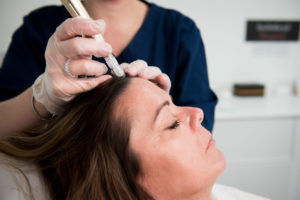
- JULÄINE to stimulate the patient’s own collagen and gradually improve structural skin support.
- Secret RF or Secret PRO to stimulate collagen and improve skin firmness.
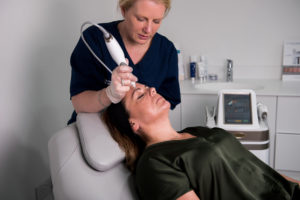
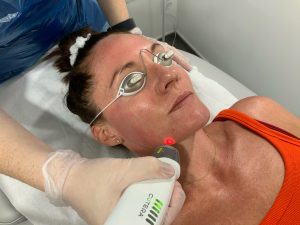
- Fotona laser treatment to stimulate collagen remodelling and tighten the tissues.
- HIFU to deliver focused ultrasound energy into deeper tissue layers for tightening and lifting.
- Anti-wrinkle injections may also be useful in selected patients where downward pull from the platysma muscle is contributing to the appearance of the jawline.
What's the Difference Between Dermal Fillers and Skin Tightening for Jowls?
Dermal filler and skin tightening treatments do different jobs for jowls.
Dermal filler restores structural support. Rather than simply filling the jowl itself, we may replace support in areas such as the cheeks, chin, jawline or around the pre-jowl hollow. This can improve the way the lower face is supported and restore more natural facial proportions.
Skin tightening treatments stimulate collagen and tissue remodelling. Treatments such as Fotona, Secret RF, Secret PRO and HIFU are used when skin laxity and loss of firmness are important parts of the problem.
If someone has lost structural support as well as developing loose skin, tightening alone may not fully address the problem. Equally, adding filler to a face that primarily needs tightening may add unnecessary volume. This is why we decide which tissue layers need treating before recommending either approach.
Can Anti-Wrinkle Injections Help Jowls?
Anti-wrinkle injections can help some patients, but they do not directly remove jowls.
The platysma is a broad muscle extending from the chest and neck into the lower face. In some people its activity creates a downward pull at the jawline. Carefully positioned anti-wrinkle injections can reduce this muscular pull and improve jawline definition.
However, if the jowls are primarily caused by significant volume loss, loose skin or tissue descent, other treatments will also be required.
How Many Sessions Will I Need to See a Difference in my Jowls?
The number of sessions needed to see a difference in your jowls depends entirely on what is causing the jowls and which treatment is being used.
Dermal filler may produce an immediate structural change following treatment, although the final result is assessed once swelling has settled. Collagen-stimulating, laser, radiofrequency and ultrasound treatments work more gradually and are often performed as a course because each treatment triggers further tissue remodelling.
Where several different layers of the face are contributing to jowling, we may build the treatment plan in stages rather than trying to correct everything in one appointment.
How Long Do Jowl Treatment Results Last?
There is no single duration because different treatments work in different ways.
Dermal fillers can provide structural support for many months and sometimes longer depending on the product, treatment area and individual metabolism.
Treatments such as JULÄINE, Secret RF, Secret PRO, Fotona and HIFU stimulate changes within your own tissues. Results develop gradually and can continue to improve as collagen remodels.
However, no non-surgical treatment stops the ageing process. Maintenance treatment may therefore be recommended over time.
Is Treatment for Jowls Painful?
Most non-surgical jowl treatments are well tolerated, but the sensation depends on the treatment being performed.
- Injectable treatments may involve local or topical anaesthetic depending on the procedure.
- Energy-based treatments can create sensations of heat, pressure or small pulses within the skin and deeper tissue.
We explain the expected sensation and any anaesthetic options before treatment and adjust treatment appropriately to keep you comfortable.
Can Lifestyle Changes Help Prevent or Slow Jowl Formation?
Lifestyle cannot completely prevent jowls because changes in bone, fat, collagen and facial structure are part of natural ageing. However, several lifestyle factors can help reduce some of the factors that accelerate skin ageing:
- Protect your skin from UV exposure
- Avoid smoking
- Maintain a relatively stable weight
- Support good overall skin health
Daily sunscreen and appropriate medical skincare can help protect collagen and maintain healthier skin, but they cannot replace lost structural support once significant facial ageing has occurred.
Do Jowls Get Worse With Age?
Jowls often become more noticeable over time because the underlying processes that cause them continue as part of normal facial ageing.
Collagen and elastin continue to reduce, facial fat compartments and supporting tissues change, bone support gradually alters and gravity acts on tissues that have become less firmly supported.
How quickly jowls progress varies considerably between individuals and is influenced by genetics, facial structure, skin quality, sun exposure, smoking and changes in weight.
Jowls are not harmful. However, if they bother you, treatment is often most effective when we identify the combination of factors contributing to them rather than simply treating the visible area.