
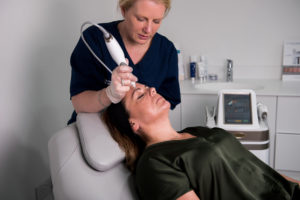
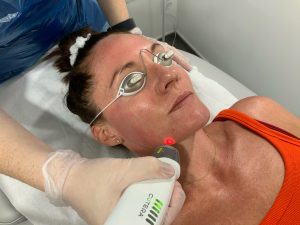

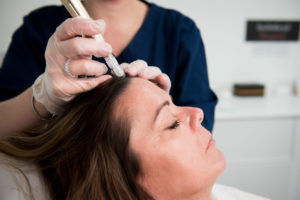

Skin Tightening Is Not One Treatment
Loose, crepey or sagging skin can develop because of changes within the skin itself, loss of collagen and elastin, reduced hydration, facial-volume change, localised fat, reduced muscle tone or changes within deeper supporting structures.
Different skin treatments work at different depths. The right skin-tightening treatment depends on what is causing the change, where it is occurring and what you realistically want to achieve.
At Thames Skin Clinic in Twickenham, near Richmond in South West London, we take a medically led, layered approach to the face and body. Rather than asking you to choose a machine from a list, we assess the tissues contributing to your concern and build a personalised programme to support firmer, healthier and naturally refreshed skin.
Our non-surgical skin tightening treatments at clinic in Twickenham, London may include:
What is the best skin-tightening treatment?
There is no single best skin-tightening treatment.
The right option depends on whether the concern is mainly skin quality, dermal collagen loss, crepey texture, deeper laxity, facial-support change, localised fat, reduced muscle tone or a combination of these.
At Thames, treatment may range from Secret RF and Secret PRO for dermal collagen and surface ageing, to Fotona programmes for multi-layer skin renewal and tightening. Profhilo, polynucleotides, PRP and JULÄINE have different roles in hydration, regeneration or collagen support. HIFU can be considered selectively where deeper tissue support is the main concern. Body concerns may need treatment of skin, fat and muscle together.
A medical consultation is more useful than choosing a treatment solely by device name.
Find the Right Starting Point
What Does Skin Tightening Mean?
Skin tightening describes non-surgical treatments designed to improve skin firmness, elasticity or structural support without surgically removing excess skin. Depending on the treatment, this may include improving barrier function and hydration, stimulating collagen and elastin, remodelling dermal collagen, resurfacing damaged skin, restoring facial support or addressing selected areas of fat and muscle.
Skin tightening, lifting, resurfacing, volume restoration and body contouring are connected, but they are not the same thing.
- Skin tightening primarily improves collagen, elasticity and firmness.
- Skin lifting concerns deeper support and the position of underlying tissues.
- Skin resurfacing addresses superficial ageing, texture, pigmentation, pores, scars and sun damage while encouraging renewal.
- Structural support may be relevant when skin appears loose because the tissues beneath it have changed.
- Body contouring may need separate planning for skin, fat, muscle, scars and cellulite.
What Non-Surgical Treatment Can and Cannot Do
Non-surgical treatments can improve mild to moderate laxity, skin quality, crepiness, fine lines, texture and selected early structural changes. They cannot remove substantial quantities of excess skin or reproduce the result of a surgical facelift, neck lift, body lift or blepharoplasty.
Where surgery is more likely to provide the appropriate outcome, this should be discussed honestly during consultation. The aim is to select the treatment that is suitable for the tissue concern and your expectations.
Why Does Skin Become Loose or Crepey?
Our skin becomes loose or creepy as we as collagen and elastin change, making skin thinner, less elastic and less resilient. UV exposure can accelerate this process while also contributing to pigmentation, rough texture, pores and lines. Hormonal changes, including around perimenopause and menopause, can influence skin hydration, thickness and elasticity.
Facial ageing also occurs beneath the skin. Changes in fat compartments, ligaments and bone can reduce support for the overlying tissues, contributing to hollowing, folds, jowls and jawline softening. Weight change, pregnancy, smoking, lifestyle, genetics, scarring and reduced body-muscle tone can also affect the face and body.
THAMES Skin Tightening Treatment Planning
| What needs support? | What we aim to address | Thames options that may be considered |
|---|---|---|
| Skin barrier and epidermis | Hydration, resilience, preparation and recovery | ZO Skin Health, appropriate skincare, HydraFacial, Skinade |
| Surface texture | Crepiness, fine lines, pores, uneven texture and selected pigmentation concerns |
Dermapen 4, ZO Stimulator Peel, Fotona Er:YAG resurfacing, Secret PRO |
| Dermal collagen | Firmness, resilience and collagen remodelling | Dermapen 4, Laser Genesis, Secret RF, selected Fotona modes, regenerative treatment where appropriate |
| Skin quality and hydration | Thin, dehydrated, fragile or crepey skin | Profhilo, Sunekos, polynucleotides, PRP, skincare and selected energy-based treatment |
| Collagen architecture | Progressive collagen regeneration | JULÄINE® where clinically appropriate |
| Deeper laxity | Deep support and progressive tightening | Fotona programmes, HIFU selectively where appropriate |
| Facial structural support | Underlying support where apparent laxity is not primarily a skin problem |
Profhilo Structura, PRP Filler, dermal filler / THAMES Uplift |
| Localised fat | Contour while protecting the overlying skin | Fotona TightSculpting, truSculpt iD, Aqualyx |
| Muscle | Tone and underlying body definition | truSculpt Flex |
Two patients asking for the same outcome may therefore leave consultation with very different programmes.
Secret RF Radiofrequency Microneedling
Best suited to: Mild to moderate laxity with crepiness, fine lines, pores, uneven texture, acne scarring, stretch marks or selected body concerns.
Not designed for: A surgical lift, substantial excess skin, major fat reduction or ablative surface resurfacing.
Usual course: A tailored course; sessions and treatment depth depend on the area and concern.
Downtime band: Low to moderate; temporary redness, swelling and pinpoint treatment marks may occur.
When results develop: Early skin-quality change may be seen first, with collagen remodelling over the following weeks and months.
From price: Only display if current and actively maintained.
Secret PRO
Best suited to: Dermal collagen loss combined with visible surface ageing, including crepiness, lines, pores, texture, pigmentation irregularity, acne scarring and stretch marks.
Not designed for: Substantial excess skin, a replacement for surgery or for every skin type without assessment of pigmentation risk and recovery tolerance.
Usual course: Tailored according to whether RF microneedling, fractional CO₂ resurfacing or both are appropriate.
Downtime band: Variable, from low to more significant depending on resurfacing intensity.
When results develop: Surface renewal follows healing; collagen remodelling continues beyond this.
From price: Only display if current and actively maintained.
Fotona 4D and 5D
Best suited to: Multi-layer facial treatment planning where laxity, early jowls, folds, reduced firmness and skin quality coexist.
Not designed for: Substantial skin excess, a guaranteed facelift-equivalent result, or a substitute for significant volume restoration where another approach is more suitable.
Usual course: Individually planned; treatment modes and number of sessions depend on anatomy and aims.
Downtime band: Usually low to moderate, depending on the programme and surface treatment included.
When results develop: Some early improvement may occur, with progressive change as collagen remodels.
From price: Only display if current and actively maintained.
Fotona Er:YAG Resurfacing
Best suited to: Crepey texture, fine lines, sun damage, selected pigmentation concerns, enlarged pores, acne scars and uneven texture.
Not designed for: A primary solution for deeper tissue descent, fat reduction, muscle tone or substantial excess skin.
Usual course: Intensity and number of treatments are selected according to skin type, pigmentation risk, concern and downtime tolerance.
Downtime band: Variable; stronger resurfacing has a more significant healing period.
When results develop: Visible renewal follows healing, with continued collagen remodelling thereafter.
From price: Only display if current and actively maintained.
Profhilo and Regenerative Injectables
Best suited to: Thin, dehydrated, crepey or less resilient skin where hydration, skin quality, tissue support, regeneration or progressive collagen stimulation is the aim.
Not designed for: A universal lift, removal of excess skin, or an interchangeable substitute for energy-based treatment or structural filler.
Usual course: Product- and concern-specific; your clinician will explain treatment sequence and maintenance.
Downtime band: Usually low; injection-site swelling, tenderness and bruising are possible.
When results develop: It depends on the product; regenerative and biostimulatory change generally develops progressively.
From price: Only display if current and actively maintained.
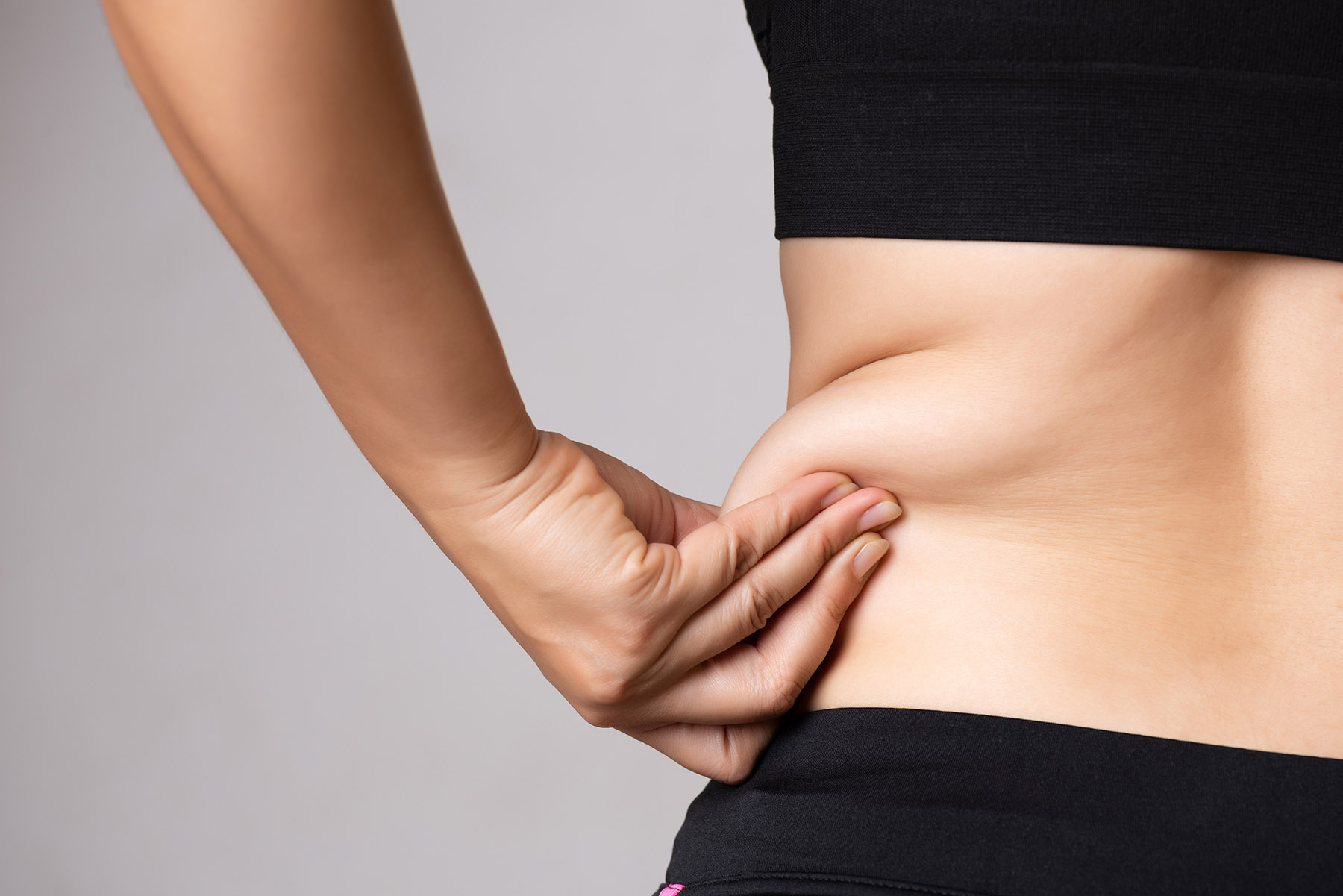
Body Treatments: Skin, Fat and Muscle
Best suited to: Selected body concerns where assessment identifies laxity, localised fat, reduced muscle tone, stretch marks, scars or cellulite as separate or combined contributors.
Not designed for: Weight-loss treatment, substantial excess skin or a guarantee that one device will correct every component of a body concern.
Usual course: Tailored and sometimes combined in a planned programme.
Downtime band: Varies by treatment and area.
When results develop: Depends on the tissue target and treatment; assessment should follow the stated programme timeline.
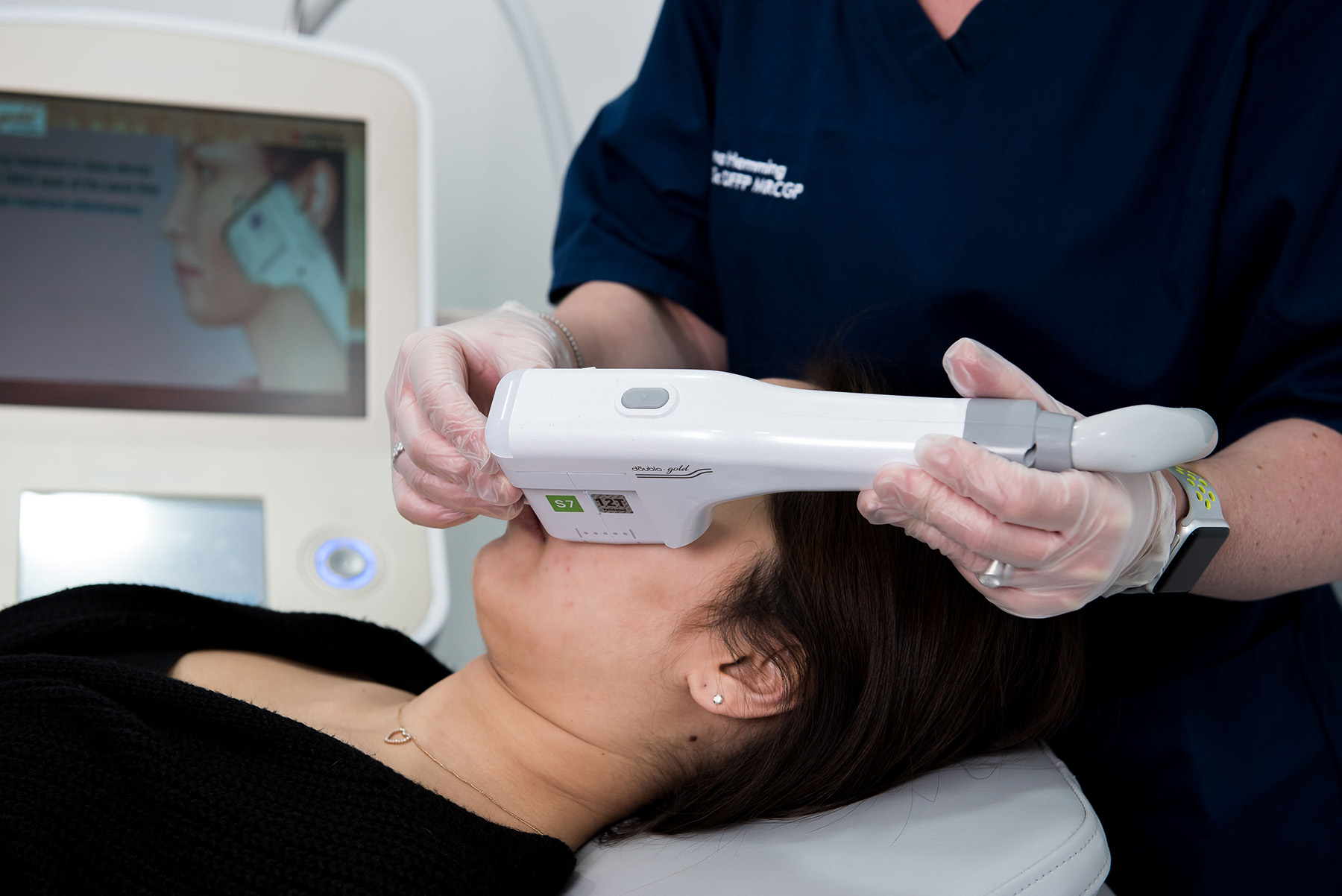
HIFU
Best suited to: Selected patients whose deeper facial or neck laxity, early jowls, jawline softening or brow support is the main concern.
Not designed for: Substantial excess skin, major volume loss, pigmentation, pores, surface sun damage or a surgical-level lift.
Usual course: Individually planned according to area and degree of laxity.
Downtime band: Usually low; temporary tenderness, redness or swelling can occur.
When results develop: Gradually as collagen remodelling develops over the following weeks and months.
From price: Only display if current and actively maintained.
Skin Health, Collagen and Resurfacing
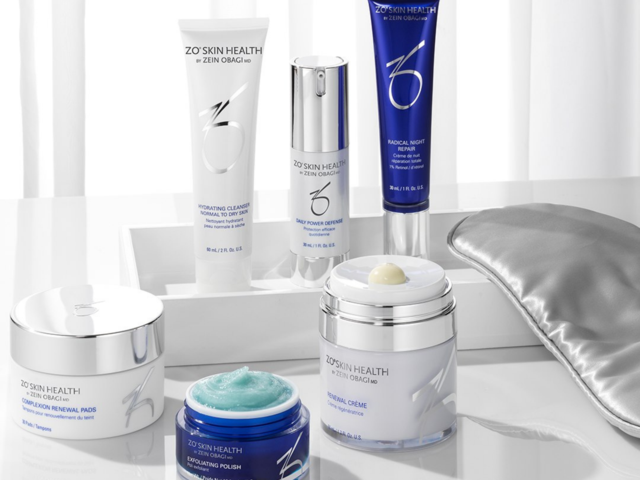
Medical skincare is a core part of many Thames programmes. A personalised ZO Skin Health routine can support barrier function, texture, tone, sun-damage management and recovery around treatment. Some patients need their skin calmed and strengthened before more active skincare or energy-based procedures.
- Dermapen 4 medical microneedling may be considered for early laxity, fine lines, crepey texture, enlarged pores, uneven texture, acne scarring and stretch marks.
- Laser Genesis and Forma RF can offer progressive, lower-downtime collagen and skin-quality support for suitable patients.
- Secret RF combines microneedling with controlled radiofrequency energy within the dermis.
- Secret PRO can additionally use fractional CO₂ resurfacing where both surface ageing and deeper collagen remodelling require attention.
- Treatment choice reflects the concern, skin type, pigmentation risk and recovery tolerance.
Fotona Treatment Planning
Fotona is not one generic laser treatment. Its Er:YAG and Nd:YAG wavelengths can be selected for different tissue depths, from controlled surface resurfacing through to non-ablative collagen remodelling and deeper heating.
- SmoothEye may be used for selected periocular concerns.
- VectorLift extends treatment planning across the upper eyelid, brow, forehead and scalp vectors where appropriate.
- LipLase can be considered for collagen-focused lip rejuvenation without conventional filler.
- Fotona 4D uses a multi-step approach across tissue levels.
The Thames 5D programme builds on that layered principle where a more comprehensive programme is appropriate. Fotona TightSculpting brings together deeper treatment of localised fat with treatment of the overlying skin. It illustrates why fat reduction must not be planned without assessing skin laxity.
Regenerative Injectables and Structural Support
Injectable treatments have different roles in our skin tightening treatments.
- Profhilo is used for hydration and skin quality.
- Sunekos and polynucleotides may be selected to support skin quality and regeneration.
- PRP may have a role within tailored regenerative programmes.
- JULÄINE is a collagen-stimulating biostimulator.
- PRP Filler, Profhilo Structura and carefully placed dermal filler may be considered where loss of underlying support contributes to apparent laxity.
These treatments do not all “tighten” in the same way and should not be presented as interchangeable. For full information on injectables, treatment suitability and individual protocols, visit our Injectable Treatments Guide and the relevant individual treatment pages.

Face, Eyes, Neck and Body Concerns
Jowls and Jawline Definition
Jowls can involve dermal laxity, deeper tissue descent, loss of support, localised fat, muscle activity and skeletal anatomy. Treatment may include Secret RF, Fotona 4D/5D, regenerative injectables, structural support or selective fat treatment, depending on assessment.
Crepey or Ageing Eye Area
The eye area may involve thin eyelid skin, reduced collagen, brow descent, volume change or excess skin. SmoothEye, VectorLift, polynucleotides, PRP, selected injectables or Plasma BT may be considered. Non-surgical treatment cannot remove substantial excess eyelid skin as surgery can.
Neck Laxity
The neck can show thin skin, crepiness, sun damage, collagen loss, deeper laxity and platysmal muscle changes. Treatment can involve skincare, regenerative injectables, Secret RF, Fotona, microneedling, resurfacing or other appropriately assessed treatment.
Body Skin, Fat and Muscle
Loose abdominal skin may coexist with fat, reduced muscle tone, stretch marks or Caesarean-section scarring. Selected programmes may include Fotona TightSculpting, truSculpt iD, truSculpt Flex, Secret RF, Secret PRO, Dermapen 4 and scar or stretch-mark treatment. Significant muscle separation, hernia or substantial excess skin requires medical or surgical assessment.
Cellulite, Scars and Stretch Marks
Cellulite can involve fat, fibrous connective tissue, skin thickness, collagen and surface contour. Scars and stretch marks have different causes and require tailored assessment. Appropriate programmes may include skincare, microneedling, Secret RF, Secret PRO, Fotona and selected body treatments.












What to Expect at Your Consultation
Your consultation includes assessment of your medical history, medication, treatment history, current skincare, skin type, skin quality, laxity, anatomy, fat distribution, muscle tone, scars, stretch marks, goals, acceptable downtime and maintenance preferences.We explain
- Which tissues appear to be contributing to your concern
- Which treatments may be appropriate
- What each treatment can and cannot achieve
- Likely course
- Expected timeline
- Possible side effects
- Downtime
- Aftercare
- Maintenance and alternative options
Results, Longevity and Safety
Some treatments create an early improvement in hydration, radiance or temporary tissue contraction. Collagen remodelling and regenerative changes develop more gradually over weeks or months. The longevity of results depends on the treatment, starting skin quality, age, hormones, sun exposure, smoking, general health, weight stability, treatment course, skincare and maintenance.
Many treatments can be used across a range of skin types, but laser, resurfacing procedures and active skincare need particular care where pigmentation risk is higher. Suitability, contraindications and treatment settings are assessed individually.
FAQs
-
Can loose skin be tightened without surgery?
Mild to moderate loose skin (laxity) may be improved using non-surgical collagen-stimulating technologies, radiofrequency, laser treatment, regenerative injectables and resurfacing. Non-surgical treatment cannot remove substantial excess skin.
-
Do Profhilo and polynucleotides tighten the skin?
Injectable biostimulators, such as Profhilo and polynucleotides, may improve hydration, elasticity, resilience and the qualities that make skin look firmer, but they are not equivalent to deeper lifting technology. They can be particularly useful where laxity is accompanied by thin, crepey or dehydrated skin.
-
Can microneedling tighten loose skin?
Microneedling may improve early laxity, fine lines and skin quality through collagen stimulation. More established laxity may need additional or different treatment.
-
Which treatment is best for jowls?
The appropriate treatment for jowls depends on the contribution of skin laxity, deeper descent, facial support, fat, muscle activity and anatomy. A consultation identifies the relevant layer or combination of layers.
-
Which treatment has the least downtime?
Medical skincare, Laser Genesis, Forma RF and selected non-ablative treatments generally involve relatively little downtime. Recovery increases with radiofrequency microneedling and with stronger Er:YAG or fractional CO₂ resurfacing.
-
Can skin-tightening treatments be combined?
Yes. Combining skin tightening treatments can be useful when different technologies address different tissue layers. They should be combined and sequenced according to anatomy, skin biology and clinical assessment.
Contact Us Today
Book a Skin-Tightening Consultation in Twickenham
The best place to begin is not by choosing a machine. It is by understanding why your skin or contour has changed.
At Thames Skin Clinic, we assess the skin, face or body anatomy and the tissue layers contributing to your concern. Your programme may use skincare, regenerative injectables, Dermapen 4, Laser Genesis, Secret RF, Secret PRO, Fotona, selected HIFU, resurfacing, body contouring, fat reduction or muscle stimulation.
The aim is to determine what needs support, which layer should be treated and how to achieve a healthier, firmer and natural-looking result.
Book your doctor-led skin-tightening consultation at Thames Skin Clinic in Twickenham, near Richmond in South West London.
Getting To The Clinic
Clinic Address
Thames Skin Clinic 1-3 Baylis Mews Twickenham TW1 3HQ. Please call 0208 068 1145 to speak directly to a team member.
By Train
Thames Skin Clinic is conveniently located in Twickenham, with excellent rail connections from across the UK. The nearest station is Twickenham Train Station, just a 5 minute walk from the clinic. Direct South Western Railway services run from London Waterloo (20-25 mins), Clapham Junction (10-15 mins) and Richmond (5 mins).
From the North, Midlands and Wales, travel via London Euston or Paddington before connecting at Waterloo. From the South and West, change at Reading, Clapham Junction, or Woking. If arriving from the East, transfer to Liverpool Street.
By Car
Thames Skin Clinic is located in Twickenham and is easily accessible by car from London and surrounding areas.
From Central London – Take the A4 or A316 towards Richmond, then follow the A310 into Twickenham.
From the M25 – Exit at Junction 12 (M3), continue on the M3/A316, then take the turnoff towards Twickenham town centre.
From the South and West – Use the M3, M4, or A3, connecting to the A316 into Twickenham.
Parking
Free parking on site with disabled parking available.
Public Car Parks: The nearest public car park is Arragon Road Multi-Storey (TW1 3NG), just a short walk from the clinic.