


Your skin does not feel quite as firm as it used to, fine lines become deeper, and the skin around your eyes, neck or décolletage starts to look thinner and more crepey.
But why does this change happen?
Skin is a living organ. It is constantly protecting us, regulating temperature and helping to prevent moisture from escaping. As we get older, changes happen within the skin itself, as well as in the tissues underneath it. Collagen and elastin reduce, the skin becomes thinner and drier, and we gradually lose some of the structural support provided by fat, muscle and bone.
These changes are why ageing can show up as wrinkles, sagging, loose skin and a crepey texture.
At Thames Skin Clinic in Twickenham, Dr Anna Hemming assesses these changes carefully because they are rarely caused by one single issue. Skin ageing can involve the skin surface, dermis, facial fat pads, ligaments, muscle activity, bone support, hormones, sun exposure, lifestyle and genetics.
What Causes Your Skin to Change as We Get Older?
Skin ageing happens gradually. Many people first notice fine lines, followed by texture
changes, reduced firmness, crepey skin, jowls, jawline softening or changes around the
eyes and neck.
These changes are normal, but their speed and pattern vary considerably. Sun exposure,
menopause, weight change, stress, smoking, inflammation, poor sleep, pollution and
genetics can all contribute.
- Loss of collagen
- Loss of elastin and reduced elasticity
- Skin thinning
- Reduced hydration
- Slower skin repair
- Sun damage
- Hormonal change
- Menopause-related collagen change
- Facial fat-pad changes
- Ligament laxity
- Repeated muscle movement
- Changes in bony support
- Weight loss or weight fluctuation
- Reduced skin-barrier function
These factors combine differently for everyone. That is why one patient may mainly notice wrinkles, another may notice jowls and another may be more concerned about crepey skin on the neck, chest, arms or around the eyes. Thames Skin Clinic’s doctors assess each patient’s skin individually before recommending any treatment.
Where Do These Changes Happen in Your Skin?
Your skin is made up of several layers, with the epidermis on the surface, the dermis underneath and deeper tissues beneath that.
The dermis contains collagen and elastin. Collagen gives the skin strength and structure, while elastin allows it to stretch and then spring back.
When you are younger, these support fibres are more plentiful and organised. As you age, your body produces less collagen and elastin, and the existing fibres become less robust. Skin gradually loses some of its firmness and resilience.
There are also changes underneath the skin. Facial fat can shrink or move, while muscle and bone change with age. This means the skin is no longer sitting over exactly the same supporting structure it did when you were younger.
That is why ageing is not simply a case of your skin becoming wrinkled. There can be changes at several different levels:
- Skin quality: the skin becomes thinner, drier and less elastic.
- Collagen and elastin: production reduces, affecting firmness and resilience.
- Volume: fat beneath the skin can reduce or shift.
- Structural support: changes to muscle and bone can affect the shape of the face.
- Skin laxity: the skin can become looser as the supporting structures change.
What is Collagen?
Collagen is one of the main structural proteins in the skin. It helps the skin feel firm, strong
and supported. As we age, collagen production slows. Existing collagen also becomes more fragmented and less organised. This can make the skin feel thinner, weaker, looser and less
supported.
When collagen declines, patients may notice:
- Fine lines and wrinkles
- Loose skin
- Reduced firmness
- Crepey texture
- Enlarged pores
- Slower healing
- More visible skin laxity
- Less bounce and resilience
Many non-surgical treatments for ageing skin aim to stimulate collagen repair and
remodelling. This is why results from skin tightening, laser, radiofrequency microneedling
and collagen-stimulating treatments usually develop gradually rather than instantly.
What is Elastin?
Elastin is another important structural protein in the skin. It helps the skin stretch and
return towards its original position. When elastin becomes damaged or reduced, the skin loses some of its ability to spring back. This can contribute to laxity, wrinkling and crepey texture.
Sun exposure is one of the biggest contributors to elastin damage. This is why sun-
exposed areas such as the face, neck, décolletage, hands and arms often show signs of
ageing earlier.
Why Does Skin Become Crepey?
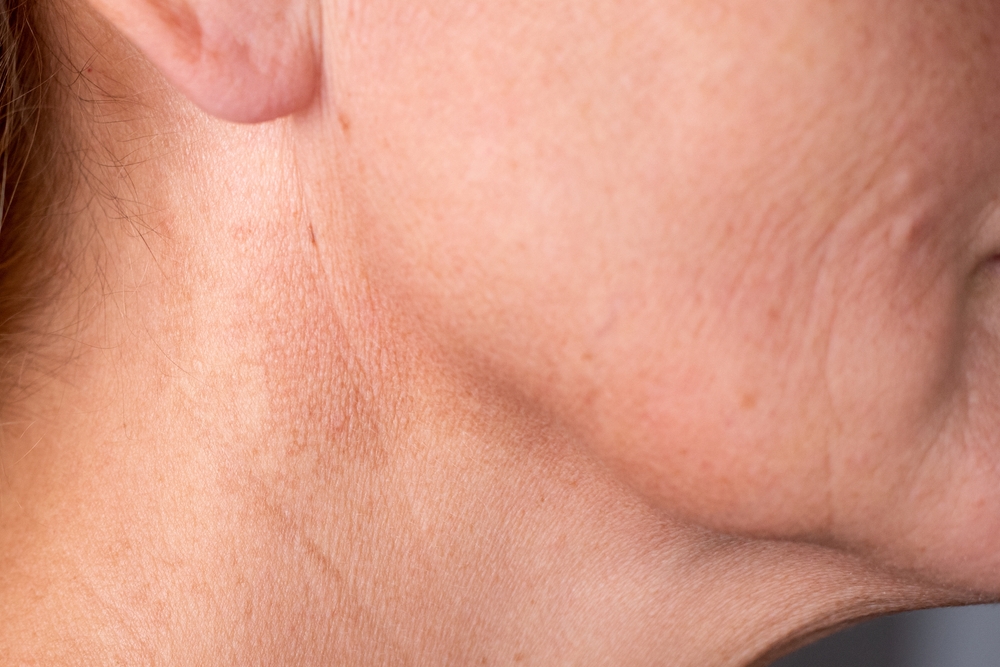
Crepey skin is thin, finely wrinkled or papery-looking skin. It often appears on the:
- Neck
- Décolletage
- Area around the eyes
- Upper arms
- Hands
- Abdomen
- Area above the knees
Crepey skin may be associated with collagen loss, elastin damage, skin thinning,
dehydration, sun damage, menopause, weight change and ageing.
It is different from deeper facial sagging. A patient may have crepey skin without heavy
tissue descent. Equally, another patient may have sagging without much crepey texture.
Crepey skin often needs a layered approach because it is a skin-quality concern as well as
a laxity concern. Read more about crepey skin treatment.
Why Do Wrinkles Get Worse With Age?
Wrinkles form for several reasons, including repeated facial movements..
Smiling, laughing, frowning, squinting and raising your eyebrows all cause the skin to fold. Younger skin can usually spring back after these movements, but reduced elasticity means repeated movement can leave lines that become visible even when your face is relaxed.
You may notice wrinkles first in these areas:
- Crow’s feet around the eyes
- Forehead lines
- Frown lines between the eyebrows
- Lines around the mouth
- Neck wrinkles
Other wrinkles are related to collagen loss, skin thinning, sun damage, dehydration and
reduced skin quality. They may appear as fine lines, etched lines or criss-cross texture
Changes.
Wrinkles may become more visible when:
- The skin loses collagen
- Elastin becomes weaker
- The skin becomes thinner
- The skin is dehydrated
- Sun damage accumulates
- Facial movement repeatedly folds the skin
- Volume support is lost beneath the skin
This is why wrinkle treatment is not always just about relaxing muscles. Some patients
need skin-quality treatment, resurfacing, collagen stimulation, hydration support,
skincare, injectables or a combination plan.
Why Does My Skin Sag as I Get Older?
Skin sagging happens when the skin and deeper facial support structures gradually
weaken or descend. Many patients think sagging is simply loose skin, but facial sagging is usually more complex. It may involve:
- Loss of collagen and elastin
- Thinner skin and reduced firmness
- Facial fat-pad descent
- Loss of midface support
- Ligament laxity
- Changes in muscle activity
- Changes in bony support
- Weight loss or weight fluctuation
- Deterioration in skin quality
Loose skin is not always a problem with the skin alone. Your face is a whole structure, with bone underneath, then muscle and fat, and collagen and skin sitting above it. Fat pads can shrink or move, collagen production slows and skin loses elasticity. All of that can change how the face is supported, which can contribute to jowls, a less defined jawline and sagging around the neck.
Skin-tightening treatment may help when mild to moderate laxity is present, but it cannot
remove significant excess skin or reproduce the effect of surgery. The right approach
depends on whether the main problem is skin laxity, volume loss, deeper tissue descent or
a combination of factors.
What Role Does Menopause Play?
Perimenopause and menopause can have a significant effect on skin quality.
As oestrogen levels decline, many women notice changes in collagen, hydration, skin thickness, elasticity and repair. Skin may feel drier, thinner, more reactive, less firm or more crepey.
Common menopause-related skin changes include:
- Increased dryness
- Crepey skin
- Fine lines
- Reduced firmness
- Slower healing
- Increased sensitivity
- Loss of facial volume
- Jawline softening
- Neck laxity
This does not mean ageing is suddenly untreatable. It means the skin may benefit from a more structured plan. This may include skincare, sun protection, collagen-stimulating treatment, hydration support and realistic maintenance, depending on the individual’s concern.
Why Does Sun Damage Make Ageing Worse?
Sun exposure is one of the biggest contributors to premature skin ageing.
UV exposure can damage collagen and elastin, increase pigmentation, weaken skin quality and contribute to wrinkles, rough texture, redness, pigment change and crepey skin. This is why sun-exposed areas often show signs of ageing earlier than protected areas.
At Thames Skin Clinic, sun protection is usually part of any long-term skin health plan. Treatments may improve skin quality, but ongoing UV exposure can continue to accelerate ageing if the skin is not protected.
Why Does Weight Loss Affect Facial Sagging?
Weight loss can be very positive for general health, but it can sometimes make facial sagging or crepey skin more noticeable.
Facial fullness provides some support beneath the skin. When volume reduces, the skin may look looser, particularly if collagen and elastin have already declined.
Patients may notice:
- Hollowing
- Cheek descent
- Jowls
- Neck laxity
- Loose skin
- Crepey texture
- More visible wrinkles
The best approach depends on whether the main issue is skin laxity, volume loss, tissue descent or skin quality.
Is Sagging Skin the Same as Crepey Skin?
No. These concerns can overlap, but they are not the same.
| Concern | What it commonly means |
|---|---|
| Wrinkles | Lines linked to repeated movement, collagen loss, skin thinning or sun damage |
| Sagging skin | Loss of support causing heaviness, jowls, jawline softening or tissue descent |
| Crepey skin | Thin, finely wrinkled, fragile or papery-looking skin texture |
| Skin laxity | Reduced firmness and elasticity |
| Volume loss | Loss of deeper support from facial fat compartments or structural change |
This is why assessment matters. Treating crepey skin is not always the same as treating jowls, and treating wrinkles is not always the same as lifting sagging skin.
At Thames Skin Clinic, facial ageing is assessed by a doctor across three main areas:
Skin surface and quality
This includes fine lines, texture, dryness and crepey skin.
Volume loss
Changes in the fat and deeper structures can lead to hollows and changes in facial shape.
Tissue laxity
This is when the skin and deeper tissues become looser and less supported.
Identifying which of these areas is behind your concern is the first step in any Thames Skin Clinic treatment plan.
What Treatments Can Help With Crepey Skin?
Many age-related skin changes, such as crepey skin can be improved, but the treatment needs to match the cause.
A treatment that improves surface crepey texture may not correct deeper facial descent. Equally, a treatment that supports facial structure may not improve sun-damaged texture or fine lines on its own. The best plans are often layered and staged rather than based on choosing one device or injectable treatment from a list.
Depending on your skin and the area being treated, crepey skin treatment may include:
- Medical-grade skincare, such as ZO Skin Health, to support hydration and skin quality
- Sun protection and pigment control where needed
- Laser skin tightening or laser resurfacing
- Fotona laser treatments, including selected Fotona 4D or 5D protocols
- SmoothEye for selected eye-area concerns
- Radiofrequency microneedling
- Focused ultrasound
- Collagen-stimulating injectables
- Dermal filler where restoring structural support is appropriate
- Skin boosters
- EXO|E skin health restoration as selected pre- or post-treatment support where appropriate
- Polynucleotides or other regenerative support in selected patients
- Surgical referral where non-surgical treatment is unlikely to achieve the desired result
The right sequence matters. Some patients need to improve skin health and barrier function first. Others need collagen stimulation, resurfacing, volume support or a combination approach. Where substantial excess skin or tissue descent is present, surgical advice may be more suitable.
If facial sagging, jowls or jawline softening are your main concerns, read our guide to the best treatment for sagging skin on the face. It compares laser, radiofrequency microneedling, focused ultrasound, injectables, collagen stimulation and surgical options.
What Treatments Can Help with Sagging Skin?
Many patients looking for help with sagging skin, wrinkles or crepey texture are unsure whether they need skincare, laser, radiofrequency microneedling, skin tightening, injectables, collagen stimulation or surgery.
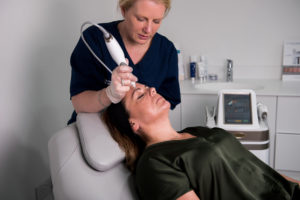
At Thames Skin Clinic in Twickenham TW1, we assess the skin and face carefully before recommending treatment.
The non-surgical skin tightening treatments we use at Thames Skin Clinic include:
Fotona 5D
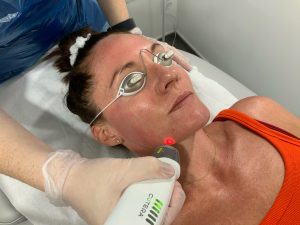
Fotona 4D and 5D laser treatments can be used for deeper collagen stimulation and tightening when the main concern is laxity and loss of firmness.
Secret RF
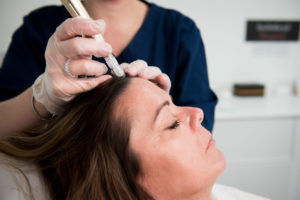
Secret RF combines microneedling with radiofrequency energy delivered at different depths within the skin. We use it to stimulate collagen and improve skin firmness and texture.
HIFU
HIFU skin tightening uses focused ultrasound energy to stimulate collagen deeper within the skin. We use it for certain types and areas of skin laxity, depending on the individual assessment.
Injectables for Volume Loss
Sometimes the main issue is not simply loose skin. There can also be a loss of volume and support underneath it.
We may consider treatments such as Profhilo, Profhilo Structura and dermal fillers where hydration, skin quality or deeper structural support are part of the concern. Profhilo is primarily focused on hydration and improving skin quality, while Profhilo Structura is used to address volume and structural changes in the deeper tissue.
This does not mean adding lots of volume to the face. In many cases, the aim is to restore support rather than simply make an area look fuller.
What if I Have Loose Skin and Excess Fat?
Loose skin and excess fat can sometimes occur together, and we can treat them both.
The area underneath the chin is a good example. If there is both submental fat and skin laxity, reducing fat alone may not address the whole concern.
At Thames Skin Clinic, we use leading treatments, including HIFU and TruSculpt iD, which help to reduce fat as well as tighten the skin.
How Does Thames Skin Clinic Assess Sagging, Wrinkles and Crepey Skin?
Thames Skin Clinic is a CQC-registered, award-winning, doctor-led skin clinic in Twickenham, south-west London, specialising in skin health, rejuvenation and anti-ageing treatments.
All new patients begin with a consultation with Dr Anna Hemming to discuss their skin concerns, expectations and treatment options.
Ageing is a gradual process, but that does not mean every change needs to be treated in the same way. That is why we use your initial consultation to understand your skin and the changes taking place underneath it. From there, your treatment options can be discussed based on your individual concerns, skin quality, laxity and structural changes.
Dr Hemming has practised medicine since 2002 and has focused on skin health and medical aesthetics since 2008. Her expertise has been recognised at the highest level of the medical aesthetics industry. Dr Anna was named
- Best Medical Practitioner (Doctor Category) at the Aesthetic Medicine Awards 2025
- Best Medical Practitioner (Doctor, Dentist or Surgeon) at the Aesthetics Awards 2026.
She is also a key opinion leader for Cutera and ZO Skin Health and an AviClear ambassador.
If you’re interested in having a skin assessment with us, please book an appointment, either online or by contacting our team.
Realistic results depend on the cause of the concern, the treatment chosen and the condition of the skin.
A good result may include:
- Firmer-looking skin
- Better texture
- Improved crepey appearance
- Softer fine lines
- Healthier skin quality
- Improved hydration
- Better jawline definition
- Softer early jowls
- A fresher facial appearance
- More resilient skin
The aim is natural improvement, not a completely different face.
Looking for treatment options for loose or sagging skin?
Our skin tightening guide explains the causes of skin laxity and the different treatments that may be considered, including HIFU, radiofrequency microneedling and Fontana laser treatments.
Where is Thames Skin Located?
Thames Skin Clinic is a CQC-registered medical skin clinic at 1–3 Baylis Mews, Twickenham TW1 3HQ, close to Twickenham station and easily reached from Richmond, Teddington, Kingston, Chiswick, Barnes, St Margarets and South West London.
The Thames Skin Clinic approach
Dr Anna Hemming designed the THAMES philosophy to bring medical standards, detailed assessment and natural skin restoration into every consultation.
T – Thorough
We begin with a detailed consultation. Dr Hemming assesses your skin, facial structure, ageing pattern, skin quality, laxity, volume changes, medical history, previous treatments, skincare, lifestyle, hormones, weight changes and goals.
H – Holistic
Ageing is not just skin deep. We consider skin, fat, muscle, ligaments, bony support, hormones, sleep, stress, nutrition, sun exposure, inflammation and long-term maintenance.
A – Assessment
Clinical assessment is essential. Where appropriate, we may use skin scan analysis and photography to review visible skin quality, pigmentation, redness, texture, pores and ageing patterns. These findings are considered alongside clinical examination and your history.
M – Medical
Treatment for sagging, wrinkles and crepey skin may involve medical devices, energy, needles or injectable products. Treatment choice should be based on anatomy, diagnosis, medical history, skin type, risk and suitability.
E – Expectations
We explain what treatment can and cannot do. Non-surgical treatments may improve skin quality, collagen support, wrinkles, crepey texture and mild to moderate laxity, but they cannot reproduce surgery where significant excess skin or heavy tissue descent is present.
S – Safety
Safety means choosing the right treatment, depth, energy, product, dose, spacing and aftercare. It also means knowing when to prepare the skin first, when to delay treatment and when a surgical opinion may be more appropriate.