

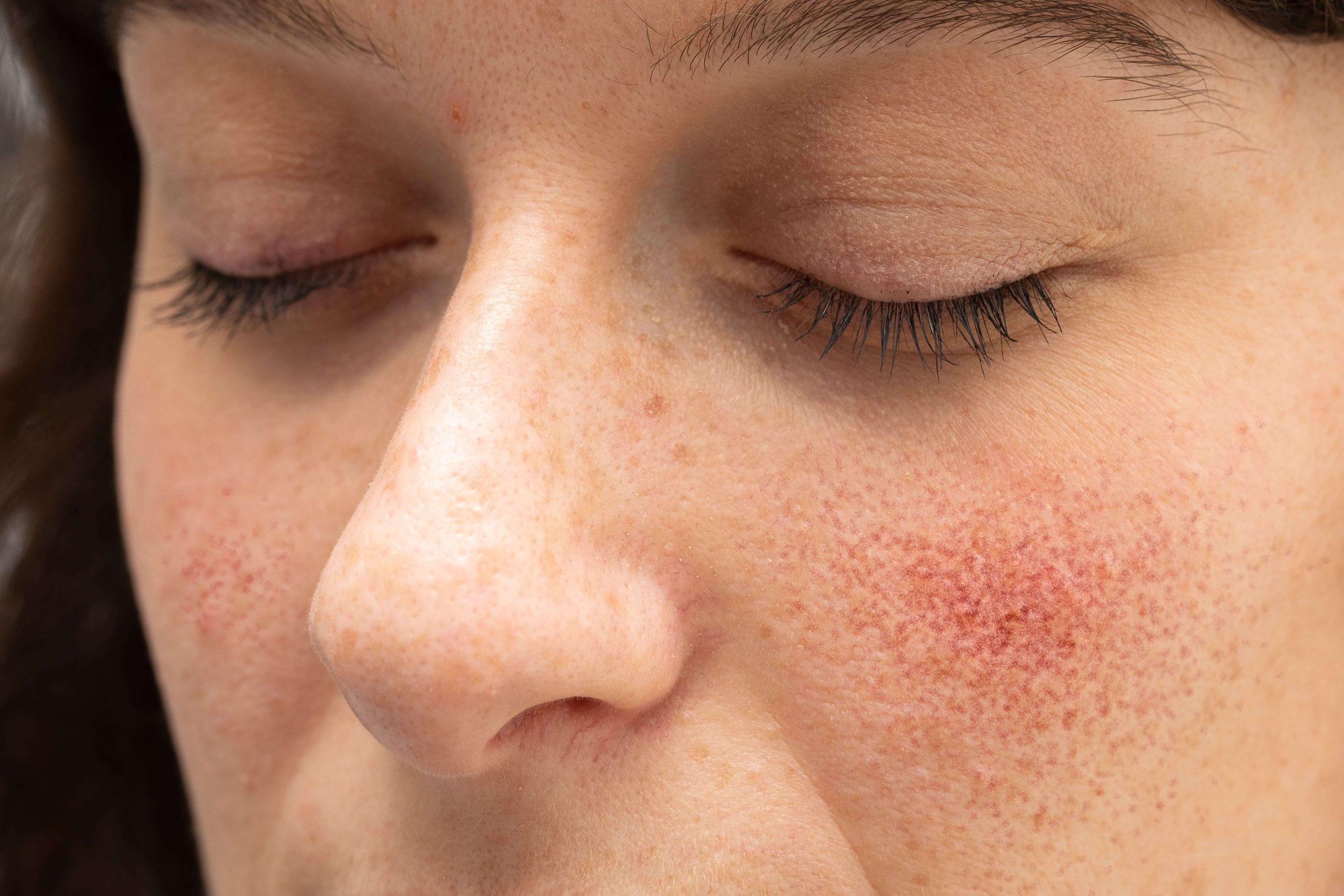
Rosacea is not one single condition. It covers several different patterns of redness, flushing, acne-like breakouts, thickened skin and eye irritation, and each type behaves differently and responds to different treatments.
There are four main rosacea types:
- Erythematotelangiectatic (vascular) rosacea
- Papulopustular rosacea
- Phymatous rosacea
- Ocular rosacea.
Some patients can have more than one type of rosacea. A medical assessment can identify your rosacea type and help determine the most effective treatment for your symptoms.
At Thames Skin Clinic, our award-winning, doctor-led skin clinic in Twickenham, south west London, Dr Anna Hemming assesses your rosacea type and subtypes before creating a personalised treatment plan.
Here, we’ll cover the different types of rosacea and how Dr Anna Hemming and the team at Thames Skin Clinic approach treatment for each one.
What Are the Different Types of Rosacea?
Rosacea is grouped into four recognised types, based on which signs and symptoms are most prominent.
| Type | Also Called | What It Looks Like |
| Erythematotelangiectatic rosacea | Vascular or erythematous rosacea | Persistent redness, flushing and visible blood vessels |
| Papulopustular rosacea | Acne rosacea or inflammatory rosacea | Redness with acne-like bumps and pustules |
| Phymatous rosacea | Rhinophyma-type rosacea | Thickened, bumpy skin, most often on the nose |
| Ocular rosacea | Eye-related rosacea | Dry, red, gritty or irritated eyes |
It’s also common to have signs of more than one type at the same time, known as multitype or mixed rosacea. Each pattern is assessed on its own, since the treatment that calms flushing is different from the treatment that settles breakouts or thickened skin.
What Is Erythematotelangiectatic (Vascular) Rosacea?
Erythematotelangiectatic or erythematous rosacea causes persistent redness across the cheeks and nose, flushing that comes and goes and small visible blood vessels under the skin, known as telangiectasia.
Common signs of erythematous rosacea include:
- Redness that doesn’t fully fade between flare-ups
- Flushing triggered by heat, alcohol or stress
- Visible thread veins on the nose and cheeks
- Skin that feels tight, sensitive or rough
- Burning or stinging, particularly after applying skincare
- Skin that can be dry in some areas and oily in others
This type of rosacea is driven by changes in the blood vessels, rather than acne-like breakouts. Good skincare can soothe and strengthen the skin, but it cannot remove visible blood vessels.
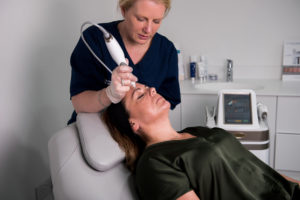
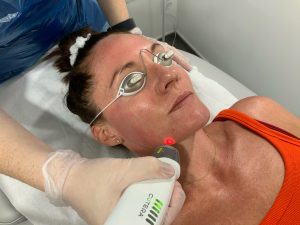
Dr Hemming uses vascular lasers, such as excel V+ to treat thread veins and flushing and Laser Genesis to reduce overall redness and maintain results between flare-ups.
What Is Papulopustular (Acne-Like) Rosacea?
Papulopustular rosacea combines the redness and flushing seen in vascular rosacea with acne-like breakouts, which is why it’s also called ‘acne rosacea’ or ‘inflammatory rosacea’.
Common signs of papulopustular rosacea include:
- Red bumps, pustules or inflamed spots across the central face
- Breakouts that appear alongside redness or flushing, not instead of it
- Visible thread veins
- Skin that reacts badly to standard acne products
- Fewer blackheads than typical acne
- Flares linked to heat, alcohol, spicy food, stress or exercise
The difference from ordinary acne comes down to what’s driving it. Acne is largely caused by blocked pores, oil and bacteria, whereas papulopustular rosacea is driven by inflammation and reactive blood vessels. This is why stand alone acne products can strip an already fragile skin barrier rather than calming it.
At Thames Skin Clinic, Dr Hemming calms the inflammation and rebuilds the skin barrier first before treating any remaining redness or thread veins.
Our guide on papulopustular rosacea and why it’s often confused with acne explains the key differences in more detail.
What Is Phymatous Rosacea?
Phymatous rosacea causes the skin to thicken and develop an irregular, bumpy texture, most often on the nose, where it’s known as rhinophyma. It can also affect the chin, forehead, cheeks and ears.
Common signs of phymatous rosacea include:
- Thickened, uneven or lumpy skin texture
- Enlarged pores
- Visible blood vessels
- Skin that looks permanently swollen, particularly on the nose
- Gradual changes that develop over months or years rather than overnight
Phymatous rosacea is more common in men and often develops gradually after years of persistent redness or breakouts. At Thames Skin Clinic, following a professional consultation, we may combine medical-grade skincare and laser treatment to manage redness, oil production and changes in skin texture.
What Is Ocular Rosacea?
Ocular rosacea affects the eyes and eyelids, and it can occur alongside any of the other types of facial rosacea or completely on its own.
Common signs of ocular rosacea include:
- Red, dry or irritated eyes
- Swollen or gritty-feeling eyelids
- Burning or stinging sensations in the eyes
- Sensitivity to light
- Blurred vision
Ocular rosacea can affect the surface of the eye and, rarely, lead to corneal damage if left untreated. If you have eye symptoms alongside facial redness, it’s worth being assessed promptly rather than waiting to see if it settles by itself.
Can You Have More Than One Type of Rosacea at Once?
Yes. Overlapping features from two or more types of rosacea are common. We often see patients with the persistent redness and visible vessels of vascular rosacea alongside the acne-like breakouts of papulopustular rosacea.
This is one of the reasons a doctor-led assessment is important, as the focus is on what is actually driving your symptoms. That might be vascular reactivity, inflammation, a weakened skin barrier or hormonal change, and each points to a different treatment.
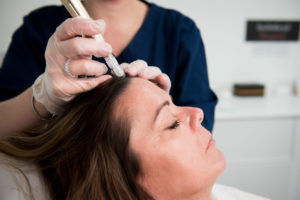
At Thames Skin Clinic, Dr Anna Hemming reviews your full skin history and uses a detailed skin scan to assess redness, vascular activity, inflammation and barrier damage. Identifying the true driver and the specific type or types of rosacea present is what guides your treatment plan, alongside your medical history, lifestyle and triggers.
What Type of Rosacea Do I Have? A Simple Symptom Checklist
If you’re trying to work out what type of rosacea you have, start by noting which of these apply to you. Most people recognise themselves in one or two groups more than the others.
You may be dealing with erythematotelangiectatic (vascular) rosacea if:
- Your cheeks or nose stays red most of the time.
- You flush easily and it takes a while to fade.
- You can see small blood vessels under the skin.
You may be dealing with papulopustular rosacea if:
- You get red bumps or pustules along with redness or flushing.
- Acne products tend to make your skin worse rather than better
- Your breakouts sit on skin that also feels hot or reactive.
You may be dealing with phymatous rosacea if:
- Your skin, especially on the nose, feels thicker or bumpier than it used to.
- Your pores have become noticeably larger over time.
- The changes have crept in slowly over months or years.
You may be dealing with ocular rosacea if:
- Your eyes feel dry, gritty or irritated.
- Your eyelids are swollen or sore.
- You have facial redness alongside eye symptoms.
This checklist is a starting point, not a diagnosis. Rosacea can be confused with several other conditions, including acne, eczema, perioral dermatitis and seborrhoeic dermatitis. Therefore, a professional assessment is the only reliable way to confirm which type or types you have.
What Causes the Different Types of Rosacea?
Rosacea doesn’t have a single cause. Genetics, immune response, hormonal changes during perimenopause or menopause, and how the blood vessels can contribute.
Common triggers of rosacea that can bring on a flare-up or make symptoms worse include:
- Sun exposure
- Heat, including hot showers, saunas and hot drinks
- Cold or windy weather
- Alcohol, particularly red wine
- Spicy food
- Stress
- Strenuous exercise
- Harsh or irritating skincare products
Triggers vary between patients, so keeping a short diary of flare-ups alongside what you ate, drank or did that day can help you spot your own pattern.
How Is Each Type of Rosacea Treated at Thames Skin Clinic?
Rosaca treatment at Thames Skin Clinic is built around your specific type and your triggers, since each type responds to a different combination of skincare, laser and desensitisation. There is no cure for rosacea, so the aim is to calm symptoms, reduce triggers and keep the skin stable for longer. All our rosacea laser treatments are delivered using CE-marked and FDA-approved devices within a CQC-registered medical setting.
- Erythematotelangiectatic (vascular) rosacea is usually managed with desensitising, barrier-repair skincare, plant-based exosomes and excel V+ vascular laser or Laser Genesis to target visible vessels and redness.
- Papulopustular rosacea is calmed with medical-grade Zo Skin Health, with the AviClear laser considered where oiliness and inflammatory breakouts are significant and HydraFacial for congestion.
- Phymatous rosacea is treated with a combination of skincare and laser to manage texture and pore size, with the approach depending on how advanced the changes are.
- Multitype rosacea is treated in phases, addressing the most active symptoms first before building a longer-term maintenance plan.
Most treatments begin with a period of desensitisation for reactive skin, followed by several months of active treatment and ongoing maintenance.
Why Choose Thames Skin Clinic for Rosacea Management?
Thames Skin Clinic is a CQC-registered, award-winning, doctor-led skin clinic in Twickenham, south-west London, specialising in rosacea management.
The clinic is led by Dr Anna Hemming, a nationally recognised, multi-award-winning medical doctor and former GP to Buckingham Palace. She was named:
- Best Medical Practitioner (Doctor Category) at the Aesthetic Medicine Awards 2025
- Best Medical Practitioner (Doctor, Dentist or Surgeon) at the Aesthetics Awards 2026.
She is also a key opinion leader for Cutera and ZO Skin Health and an AviClear ambassador.
Patients travel to the clinic from Twickenham, Richmond, Surrey, Chiswick, Wimbledon and across London for her doctor-led rosacea care.
The team also has experience recognising rosacea in skin of colour, where it can look different and is more easily missed. They also recognise rosacea in teenagers, where the early signs are often mistaken for ordinary teenage acne.
Book a Rosacea Assessment at Thames Skin Clinic
If you’re still unsure what type of rosacea you have, book a doctor-led rosacea consultation at our skin clinic in Twickenham.
New patient consultations at Thames Skin Clinic are £249, which includes £50 credited to your account for a month to put toward treatment or skincare.
Our clinic is based at:
1-3 Baylis Mews
Twickenham
TW1 3HQ
Book a rosacea consultation or read more about what to expect at your first rosacea consultation at Thames Skin Clinic.