

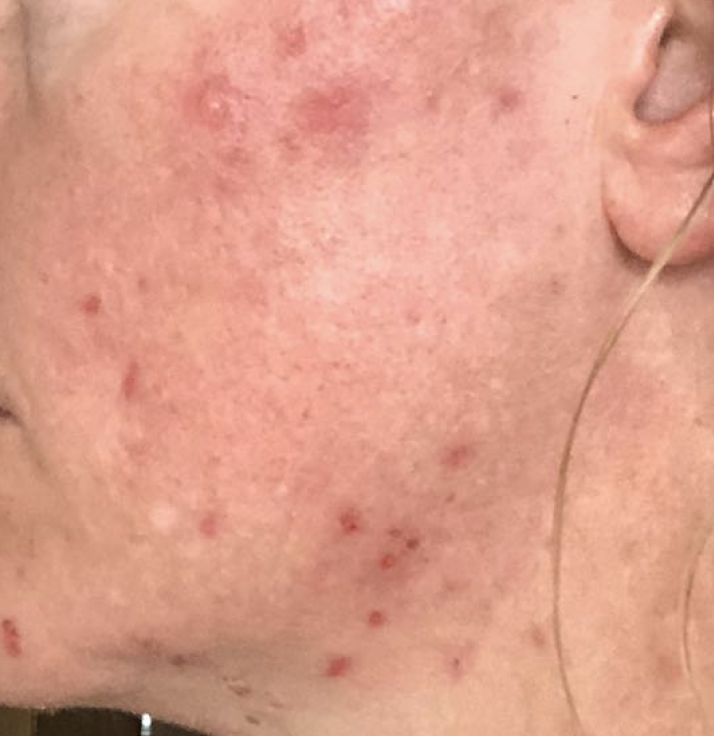
Papulopustular rosacea causes acne-like red bumps, pustules and inflamed spots, but it is a subtype of rosacea, not ordinary acne. The giveaway is often the surrounding skin. Look for persistent redness, flushing, burning, stinging, sensitivity or visible thread veins. Flares could be triggered by heat, alcohol, spicy food, exercise, stress, sun exposure or irritating skincare.
Standard acne medication may only partly help, and harsh acne products can sometimes make the skin more inflamed. Rosacea cannot be cured, but a doctor-led plan can calm inflammation, support barrier repair, reduce trigger sensitivity and create long periods of skin stability. At Thames Skin Clinic in Twickenham, Dr Anna Hemming assesses which condition, acne, rosacea or a combination of both, is actually driving your breakouts before building a treatment plan.
How is papulopustular rosacea different from acne?
Papulopustular rosacea can cause acne-like spots, bumps and pustules, but it is not the same as acne.
Acne is usually driven by blocked pores, oil, bacteria, hormones and comedones such as blackheads and whiteheads.
Papulopustular rosacea is driven more by inflammation, vascular reactivity, skin barrier disruption, flushing and trigger sensitivity.
This is why standard acne medication may not be enough, and in some cases, harsh acne products can make the skin more irritated.
What is papulopustular rosacea?
Papulopustular rosacea is a type of rosacea that causes redness with acne-like breakouts.
The breakouts usually appear across the central face, especially the cheeks, nose, chin and forehead. They may look like pimples, pustules or inflamed bumps, but they often sit on skin that is red, hot, reactive or sensitive.
Common signs include:
- Red bumps
- Pustules
- Inflamed spots
- Tender inflammatory nodules
- Facial redness
- Flushing
- Burning or stinging
- Skin sensitivity
- Visible thread veins
- Congestion
- Large pores
- Oiliness
- Dryness or flaking
- Skin that reacts badly to products
The American Academy of Dermatology describes acne-like breakouts as one of the signs of rosacea, and notes that rosacea can also cause flushing, lasting facial colour changes and visible blood vessels.
Why is papulopustular rosacea mistaken for acne?
Papulopustular rosacea is often confused with acne because both conditions can cause spots, bumps and pustules.
However, the surrounding skin usually gives important clues.
With papulopustular rosacea, patients often say:
- “My skin looks like acne, but acne products make it worse.”
- “My face feels hot and inflamed.”
- “My cheeks flush before the spots appear.”
- “My skin burns or stings.”
- “I get spots, but also redness and thread veins.”
- “My skin flares after alcohol, spicy food, exercise, heat or stress.”
- “The bumps are red and inflamed, but I do not get many blackheads.”
- “My skin is oily and dry at the same time.”
- “Antibiotics helped briefly, then it came back.”
These are clues that the issue may not be simple acne.
Papulopustular rosacea vs acne: the key differences
| Feature | Papulopustular rosacea | Acne |
|---|---|---|
| Main appearance | Red bumps, pustules, inflammation, redness | Spots, blackheads, whiteheads, cysts, congestion |
| Redness | Often present as background redness or flushing | May appear around spots but not usually persistent flushing |
| Triggers | Heat, alcohol, spicy food, stress, exercise, sun, hot drinks, skincare | Hormones, oil, blocked pores, bacteria, occlusive products |
| Sensitivity | Common — burning, stinging, reactive skin | Can occur, but not usually the main feature |
| Thread veins | Often present | Not typical of acne |
| Blackheads | Usually fewer | Common in acne |
| Skin barrier | Often compromised and reactive | Can be irritated by treatment but not always reactive at baseline |
| Response to acne medication | May be incomplete or temporary | Often responds if diagnosis and treatment are correct |
| Treatment approach | Calm inflammation, support barrier, reduce triggers, manage redness and breakouts | Reduce blockage, bacteria, oil and inflammation |
Why acne medication may not work
Many patients with papulopustular rosacea have already tried acne medication before they reach us.
This may include over-the-counter acne washes, acids, benzoyl peroxide, retinoids, prescription creams, oral antibiotics or hormonal treatment.
Some of these treatments can help certain patients, especially where acne and rosacea overlap. However, if the main condition is rosacea, acne medication alone may not fully settle the skin.
There are several reasons for this.
1. The inflammation is different
Papulopustular rosacea is an inflammatory skin condition, not simply blocked pores.
The skin may be reacting to heat, vascular change, immune activity, barrier damage, irritants or environmental triggers. If the treatment only focuses on acne bacteria or oil, the underlying inflammatory rosacea pattern may continue.
2. The skin barrier is often damaged
Many patients with papulopustular rosacea have a weakened skin barrier.
This means the skin may feel tight, dry, rough, itchy, stingy or unusually sensitive. Harsh acne products can strip the barrier further, making redness and inflammation worse.
A patient may then feel trapped: the breakouts look like acne, but acne products make the face angrier.
3. Flare-ups are trigger-led
Papulopustular rosacea often flares after triggers such as heat, exercise, alcohol, spicy food, sun exposure, stress or hot drinks.
If the treatment plan does not identify and reduce triggers, symptoms may keep returning even if the spots temporarily improve.
NHS Inform lists alcohol, hot drinks and spicy food as examples of rosacea triggers, while the American Academy of Dermatology explains that triggers differ from person to person and treatment plans should include trigger avoidance, gentle skincare and sun protection.
4. Antibiotics may help temporarily but not build long-term stability
Oral antibiotics can reduce inflammation and are commonly used for inflammatory skin conditions.
However, some patients find their skin improves while taking antibiotics, then flares again when treatment stops. Others cannot tolerate repeated courses or develop side effects.
At Thames Skin Clinic, we look at why the skin is flaring, not only how to suppress the current flare.
5. The vascular component may be untreated
Papulopustular rosacea often sits alongside redness, flushing and visible thread veins.
If the vascular component is not treated, the skin may still look red and inflamed even when breakouts improve.
This is where Laser Genesis or Excel V+ vascular laser may be considered as part of a wider plan.
What do inflammatory nodules mean in papulopustular rosacea?
Some patients with papulopustular rosacea develop deeper, tender inflammatory lumps or nodules.
These can feel painful, swollen or cyst-like. They may take longer to settle and can leave marks, redness or pigmentation afterwards.
Inflammatory nodules can be particularly distressing because they often feel unpredictable. They may appear during a flare, around hormonal changes, after stress, following heat exposure or after irritation from skincare.
At Thames Skin Clinic, we assess whether these are part of papulopustular rosacea, acne, acne rosacea overlap or another inflammatory condition. This matters because treatment needs to be matched to the true driver of the inflammation.
Common papulopustular rosacea triggers
Papulopustular rosacea can flare for many reasons. Triggers do not cause rosacea on their own, but they can make symptoms worse.
Common triggers include:
- Heat
- Exercise
- Hot yoga
- Saunas or steam rooms
- Hot baths or showers
- Sun exposure
- Cold wind
- Alcohol
- Red wine
- Spicy food
- Hot drinks
- Coffee
- Stress
- Rushing
- Sleep deprivation
- Hormonal change
- Harsh skincare
- Acids or scrubs
- Over-cleansing
- Retinol introduced too quickly
- Fragrance
- Central heating
- Weather changes
A flare diary can be very useful. Patients do not need to avoid everything. The aim is to identify the specific triggers that matter for your skin.
Signs your “acne” may actually be papulopustular rosacea
You may want to consider a rosacea consultation if:
- Your spots appear mainly on the cheeks, nose, chin or central face
- Your breakouts come with flushing or redness
- Your skin feels hot, burning or stinging
- You have visible thread veins
- Your skin reacts badly to many acne products
- You get pustules but few blackheads
- Your skin flares after heat, alcohol, spicy food, exercise or stress
- Antibiotics helped temporarily, but symptoms returned
- Your skin is oily and dry at the same time
- Your face feels inflamed rather than simply spot-prone
- You are developing red marks or pigmentation after flares
- You are worried about scarring or thickening skin
How Thames Skin Clinic treats papulopustular rosacea
At Thames Skin Clinic, we do not treat papulopustular rosacea as ordinary acne.
Dr Anna Hemming designed the THAMES philosophy to bring medical standards, detailed assessment and natural skin restoration into every consultation.
T — Thorough
We begin with a detailed consultation. Dr Hemming reviews your history, how long symptoms have been present and where breakouts occur. We’ll observe whether the skin flushes, previous prescriptions, skincare use, reactions, triggers, medical history, medication, lifestyle and goals. The assessment covers whether the condition is papulopustular rosacea, acne, mixed rosacea, dermatitis, perioral dermatitis, seborrhoeic dermatitis or another inflammatory skin condition.
H — Holistic
Papulopustular rosacea is rarely just one problem. We look at inflammation, skin barrier damage, redness, vascular activity, oiliness, congestion, stress, sleep, hormones, diet, alcohol, exercise, sun exposure and lifestyle triggers. The plan must fit the patient, not just the diagnosis.
A — Assessment
We examine the skin carefully and may use skin scan analysis so you can see what we see. This can help identify inflammation, redness, congestion, oiliness, pigmentation, vascular activity and barrier stress that may not be obvious in everyday light. Assessment is especially helpful when patients have mixed features of acne and rosacea.
M — Medical
Papulopustular rosacea is a medical inflammatory skin condition. Treatment is based on diagnosis, skin physiology, safety and suitability. If prescription medication, dermatology referral or ophthalmology review is needed, this will be discussed.
E — Expectations
We explain that rosacea cannot be cured. Treatment focuses on improving the side effects of rosacea, settling signs and symptoms, reducing triggers and creating longer periods of skin stability. Initial reactivity can happen when skincare is introduced. For some patients, this may last two to eight weeks and needs support rather than panic.
S — Safety
Treatment is planned around your skin type, sensitivity, medical history, pigmentation risk, barrier function and tolerance. This is particularly important for patients whose skin has already been irritated by harsh acne medication or repeated product changes.
The Thames Skin Clinic papulopustular rosacea pathway
Your treatment plan may include several layers.
1. Desensitisation and barrier repair
If the skin is reactive, inflamed or stinging, the first step may be to calm and desensitise it. This helps rebuild tolerance before introducing stronger active skincare or laser treatment. For some patients, starting too aggressively can make rosacea worse. A calmer start often gives a better long-term result.
2. Medical-grade skincare
Medical-grade skincare may be used to support barrier repair, reduce inflammation, manage oiliness, improve skin function and support long-term stability. At Thames Skin Clinic, skincare is introduced in a structured way and reviewed after six to eight weeks. Once the skin has been desensitised, skincare usually takes six to eight months to treat and restore the skin.
For many rosacea-prone patients, this stage is built around ZO Skin Health, introduced gradually through a personalised plan rather than as a fixed routine. Sensitive or reactive skin often starts with a slower, barrier-focused programme before more active correction is considered. This is because rosacea-prone skin can be more reactive during the early weeks of a new skincare plan.
3. Exoie plant-based exosomes
Dr Anna Hemming is a key opinion leader for Exoie plant-based exosomes. Exosomes may be recommended to support desensitisation, calm inflammation, improve barrier repair and support skin health restoration in rosacea-prone skin. They are not a cure for rosacea, but they can be a valuable part of a wider plan when the skin is reactive or inflamed.
4. HydraFacial, HydraRadiance or HydraShower
For patients with congestion, oiliness, papules or pustules, in-clinic treatments may help calm the skin while supporting clarity. HydraFacial can be adapted to cleanse and hydrate without overstimulating the skin. HydraRadiance and HydraShower may be used where appropriate for patients with more congestion or acne-like rosacea.
5. Dermalux LED phototherapy
LED phototherapy may be used to reduce inflammation, calm sensitivity and support recovery. It can be particularly useful during a flare or when the skin needs desensitising.
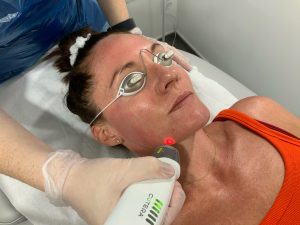
6. Laser Genesis
Laser Genesis may be used to help reduce background redness, inflammation, pore appearance and skin reactivity. It is gentle and can be used as part of maintenance for patients with recurring redness or inflammatory flares.
7. Excel V+ vascular laser
If visible thread veins, vascular redness or flushing are present, Excel V+ may be recommended. Skincare can calm the skin, but it cannot close down existing visible blood vessels. Excel V+ targets the vascular component of rosacea.
8. AviClear where oiliness, congestion and inflammatory breakouts are significant
AviClear may be considered when papulopustular rosacea overlaps with oiliness, congestion and inflammatory breakouts. It is not needed for every rosacea patient, but it may be useful when excess sebaceous gland activity is contributing to recurrent inflammatory lesions.
9. Skinade or Skinade Clear
Skinade or Skinade Clear may be used as oral support within a wider skin health plan. Skinade Clear may be considered for oilier, congested or pustular rosacea-prone skin where appropriate.
How long does papulopustular rosacea treatment take?
Papulopustular rosacea treatment is not instant. At Thames Skin Clinic, we usually think in phases.
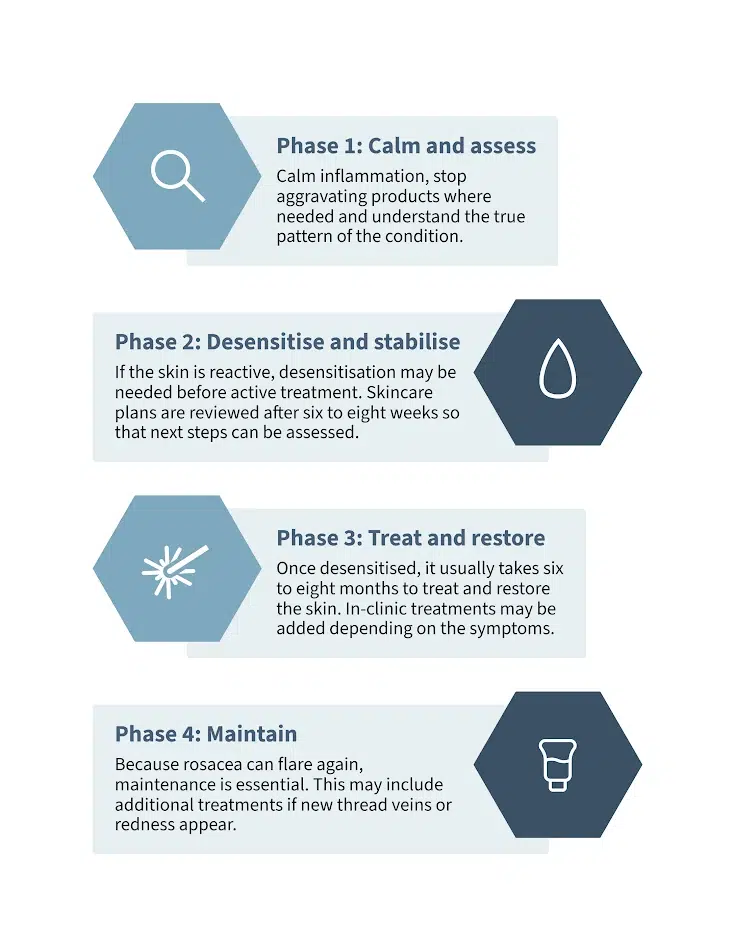
Phase 1: Calm and assess
The first stage is to calm inflammation, stop aggravating products where needed and understand the true pattern of the condition.
Phase 2: Desensitise and stabilise
If the skin is reactive, desensitisation may be needed before active treatment. Skincare plans are reviewed after six to eight weeks so that progress, reactivity and next steps can be assessed.
Phase 3: Treat and restore
Once the skin is desensitised, skincare usually takes six to eight months to treat and restore the skin. In-clinic treatments such as HydraFacial, LED, Laser Genesis, Excel V+ or AviClear may be added depending on the symptoms.
Phase 4: Maintain
Because rosacea can flare again, maintenance is essential. This may include skincare, SPF, trigger reduction, LED, Laser Genesis, exosomes, HydraFacial or Excel V+ treatment if new thread veins or redness appear.
What should you avoid if you suspect papulopustular rosacea?
Until you have been assessed, it may help to avoid repeatedly changing products or using harsh acne treatments without guidance.
Common irritants include:
- Strong exfoliating acids
- Scrubs
- High-strength retinoids introduced suddenly
- Alcohol-based toners
- Fragrance
- Harsh foaming cleansers
- Over-cleansing
- At-home peels
- Layering too many active products
- Picking or squeezing inflamed lesions
- Heat-based treatments
- Sun exposure without SPF
The goal is not to do nothing. The goal is to stop irritating the skin while getting the right diagnosis.
Why choose Thames Skin Clinic for papulopustular rosacea?
Thames Skin Clinic is a CQC-registered medical skin clinic in Twickenham, South West London.
The clinic is led by Dr Anna Hemming, a medical doctor since 2002 and a specialist in acne, rosacea, pigmentation, natural skin health, wellness, longevity and restoration.
Dr Hemming has worked in medical aesthetics and skin health since 2008 and founded Thames Skin Clinic in 2019 to bring medical standards, careful assessment and natural skin restoration into aesthetic medicine.
She also manages rosacea personally, which shapes the way she treats patients: realistic, thorough, careful and focused on long-term skin stability rather than quick fixes.
Patients visit Thames Skin Clinic from Twickenham, Richmond, Teddington, Kingston, Chiswick, Barnes and across London. They come for doctor-led rosacea treatment, acne rosacea treatment, papulopustular rosacea support, facial redness treatment and skin barrier restoration.
FAQs about papulopustular rosacea
Is papulopustular rosacea the same as acne?
No. Papulopustular rosacea can look like acne because it causes bumps, pustules and inflamed spots, but it is a type of rosacea. It often appears with redness, flushing, sensitivity, burning, stinging or visible thread veins. This means treatment usually needs to focus on inflammation, barrier repair and triggers as well as breakouts.
Why did my acne medication not work?
Acne medication may not work if the real issue is papulopustular rosacea, or if acne and rosacea are overlapping. Some acne treatments can also irritate rosacea-prone skin, especially if the barrier is damaged. A consultation helps identify whether the plan should focus on acne, rosacea or both.
Can papulopustular rosacea cause painful nodules?
Yes. Some patients develop deeper, tender inflammatory bumps or nodules with papulopustular rosacea. These can feel cyst-like and may take longer to settle. They should be assessed properly because they can be confused with acne cysts or other inflammatory conditions.
What triggers papulopustular rosacea?
Common triggers of papulopustular rosacea include heat, exercise, sun exposure, alcohol, spicy food, hot drinks, stress, cold wind, hormonal changes and irritating skincare. Triggers vary between patients, so keeping a flare diary can be helpful.
Can papulopustular rosacea be cured?
No. Rosacea cannot be cured. Treatment focuses on improving the side effects of rosacea, settling inflammation, reducing breakouts, calming redness, supporting the skin barrier and reducing triggers.
Can AviClear help papulopustular rosacea?
AviClear may help selected patients with papulopustular rosacea where oiliness, congestion and inflammatory breakouts are significant. It is not suitable or necessary for every rosacea patient. At Thames Skin Clinic, suitability is assessed during consultation.
Do I need laser for papulopustular rosacea?
You don’t always need laser treatment for papulopustular rosacea. Laser may be recommended if redness, flushing or thread veins are part of the rosacea picture. Patients with mainly pustules, sensitivity or inflammation may need skincare, desensitisation, LED, HydraFacial or other support first.
What skincare is best for papulopustular rosacea?
The best skincare for papulopustular rosacea depends on your skin barrier, sensitivity, oiliness, congestion, previous product use and tolerance. Many patients need a structured plan rather than random product changes. At Thames Skin Clinic, skincare may begin with desensitisation before progressing to more active treatment.
Can papulopustular rosacea leave marks or scars?
Inflamed lesions can leave redness, pigmentation or texture changes, especially if they are picked, squeezed or repeatedly inflamed. Early treatment can help reduce inflammation and lower the risk of long-term marks.
When should I book a consultation?
You should book a consultation if your “acne” is not responding as expected, if your skin also flushes or burns, if you have visible thread veins, if acne products make your skin worse, or if breakouts keep recurring despite treatment.
Book a papulopustular rosacea consultation in Twickenham
Is your acne treatment not working, or your breakouts come with redness, flushing, burning, stinging or sensitive skin? You may be dealing with papulopustular rosacea rather than ordinary acne.
A doctor-led consultation at Thames Skin Clinic can help you understand what is happening in your skin. We can create a realistic plan to calm inflammation, reduce flare-ups and support long-term skin stability.
New patient consultations at Thames Skin Clinic are £249. As part of this consultation fee, £50 is placed on your account for one month following your appointment. It can be used towards treatment or skincare purchased as part of your plan.
Thames Skin Clinic is located at 1–3 Baylis Mews, Twickenham TW1 3HQ, close to Twickenham station, with free on-site parking. Call or email [email protected].