
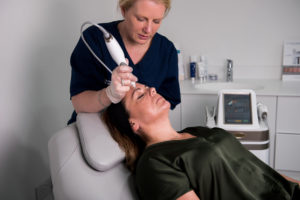
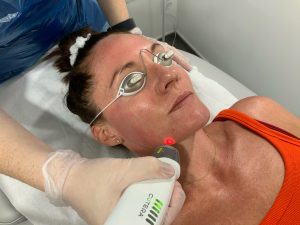

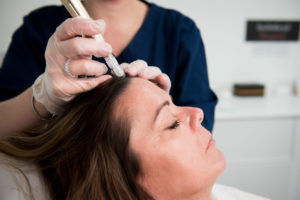


Skin tightening treatments work by creating a controlled stimulus in the skin or deeper supporting tissues. They encourage repair, collagen remodelling and gradual improvement in skin firmness and quality.
Most non-surgical treatments do not simply “pull” the skin tighter in one appointment. Treatments such as laser, radiofrequency microneedling, focused ultrasound and selected collagen-stimulating injectables can trigger a gradual tissue response. Over time, this may improve skin texture, resilience, firmness and support.
At Thames Skin Clinic in Twickenham, Dr Anna Hemming plans skin-tightening treatment carefully because facial ageing is not caused by skin alone. Loose skin, jowls, crepey texture and facial sagging can involve collagen loss, elastin loss, skin thinning, facial fat-pad changes, ligament laxity, muscle activity and changes in bony support. The right plan depends on a doctor-led assessment.
Thames Skin Clinic is based at 1–3 Baylis Mews, Twickenham TW1 3HQ, close to Twickenham station. We see patients from Richmond, Teddington, Kingston, Chiswick, Barnes and across South West London for doctor-led skin tightening and skin health restoration.
What Does Skin Tightening Mean?
Skin tightening is a broad term used to describe treatments intended to improve the firmness, structure and support of the skin.
Patients often use the phrase “skin tightening” when they are concerned about:
- Loose skin on the face
- Jowls or jawline softening
- Neck laxity
- Crepey skin
- Eyelid skin laxity
- Sagging cheeks
- Loose skin after weight loss
- Crepey skin on the arms, abdomen or knees
- Skin that feels thinner, weaker or less elastic
However, not all “loose skin” is the same.
Some patients have true skin laxity. Some have crepey skin quality. Some have facial volume loss. Some have deeper tissue descent. Others have sun damage, collagen loss or a combination of these changes.
This is why a consultation matters. The correct treatment depends on what is actually causing the change.
How Does Non-Surgical Skin Tightening Work?
Non-surgical skin-tightening treatments usually work by delivering controlled energy or stimulation into the skin or deeper tissue layers.
At Thames Skin Clinic, we explain the process simply:
- A treatment creates a controlled stimulus.
- The skin and tissues begin a repair response.
- Collagen remodels gradually.
- The skin may become firmer, stronger and better supported over time.
This is not instant lifting surgery. It is a gradual biological repair process.
Different technologies work at different depths. Some mainly focus on skin texture, fine lines and crepey quality. Others are designed to reach deeper dermal or soft-tissue layers where laxity and early facial descent may contribute to a softer jawline, early jowls or neck laxity.
Why Collagen Matters
Collagen is one of the main structural proteins that gives skin strength, firmness and support. Elastin helps the skin stretch and return towards its original position.
As we age, collagen production slows. Existing collagen becomes more fragmented and less organised, while elastin becomes less resilient. Sun exposure, hormonal changes including menopause, smoking, inflammation, poor sleep, weight change and genetics can all contribute to this process.
When collagen and elastin decline, the skin may become:
- Thinner
- Looser
- Less firm
- Less elastic
- More crepey
- More wrinkled
- Less able to bounce back
Skin-tightening treatments aim to stimulate collagen production and collagen remodelling, while improving the overall quality and resilience of the skin.
Why Skin Tightening Takes Time
Skin tightening takes time because collagen production and remodelling are biological processes.
Some treatments can create a mild early tightening effect because tissue contracts slightly when heated. However, the more important result develops later, as the skin repairs and remodels.
Fibroblasts, the cells involved in collagen production, need time to respond. Existing collagen needs time to reorganise, and new collagen develops gradually. This is why improvements usually build over weeks and months rather than appearing fully on the day of treatment.
Some patients notice an early glow, smoother texture or a fresher look within days or weeks. More meaningful changes in skin firmness and laxity commonly develop over around two to six months, depending on the treatment, area and individual response.
Progress photographs can be helpful because skin tightening changes may be subtle day to day but clearer when compared consistently over time.
Why a Course is Often Recommended
One treatment can begin the collagen-stimulating process, but a course often provides a stronger and more reliable signal for skin remodelling.
Think of skin tightening as fitness training for the skin. One workout can activate the muscles, but repeated training over time is more likely to produce a meaningful change. Skin-tightening treatments are similar: each carefully timed session can build on the response from the previous one.
Treatment spacing depends on:
- The treatment type and device protocol
- The area being treated
- Skin thickness and skin quality
- Age and degree of laxity
- Skin sensitivity and pigmentation risk
- Medical history and previous treatments
- Downtime tolerance
- Whether treatment is combined with skincare, injectables or laser
For many laser and radiofrequency microneedling plans, treatments may be spaced around four to eight weeks apart. Some focused ultrasound treatments may be planned as a single treatment followed by review and maintenance. Your plan should be individualised rather than based on a fixed package alone.
What Layers are Treated?
Skin tightening can target different layers depending on the treatment.
Surface skin
This is where texture, pigmentation, fine lines, dryness and crepey skin are often visible. Skincare and resurfacing approaches may be particularly relevant when surface quality is a major part of the concern.
Dermis
The dermis is the collagen-rich layer of skin. Many laser, microneedling and radiofrequency treatments aim to stimulate repair and remodelling within this layer.
Deep Dermis and Subcutaneous Tissue
Some radiofrequency and ultrasound treatments are designed to reach deeper support layers beneath the skin surface.
Facial Structure
Facial sagging is not always caused by loose skin. Changes in fat pads, ligaments, muscle activity and bony support can make the skin appear loose even when skin laxity is only part of the issue.
This is why skin tightening is not always the whole answer. Some patients need skin-quality treatment. Some need collagen stimulation. Some need volume restoration. Some need resurfacing. Some need surgery. Many benefit from a carefully planned combination.
Skin Tightening Versus Lifting
This is one of the most important distinctions.
Skin tightening improves the firmness, texture and resilience of the skin. A lift changes the position of tissues.
Non-surgical treatments may improve mild to moderate laxity, support early jawline softening, improve crepey texture and help the skin look fresher and firmer. However, they do not remove excess skin or reposition heavier descended tissues in the way surgery can.
If there is significant loose skin, heavy jowling, marked neck laxity or advanced tissue descent, surgical advice may be the more appropriate route. A good consultation should explain this honestly.
Treatments That May Tighten Skin
There is no single best skin-tightening treatment for everyone. Different treatments work in different ways and at different depths.
Radiofrequency Microneedling
Radiofrequency microneedling combines fine needles with radiofrequency energy.
The needles create controlled micro-injuries while radiofrequency energy heats tissue at a planned depth. This can stimulate collagen repair and remodelling. It is often considered where the aim is to improve both skin firmness and skin texture.
Radiofrequency microneedling may be useful for selected patients concerned about:
- Mild skin laxity
- Crepey skin
- Texture and enlarged pores
- Acne scarring
- Jawline softness
- Neck skin quality
- Stretch marks
- Body skin quality and laxity
The treatment depth and settings need to be selected carefully according to the area, skin type, concern and treatment plan.
Laser Skin Tightening and Resurfacing
Laser treatments can support skin tightening in several ways.
Some laser protocols create controlled heating in the skin to support collagen stimulation with relatively limited downtime. Others resurface the skin more strongly, which may improve texture, fine lines, sun damage and collagen remodelling.
At Thames Skin Clinic, laser options may include Laser Genesis, Fotona laser treatments, SmoothEye, Fotona 4D | 5D protocols, fractional resurfacing and selected body-tightening protocols, depending on the area and concern.
Laser may be considered for selected patients with concerns including:
- Fine lines and early laxity
- Crepey texture
- Skin texture and enlarged pores
- Sun-damaged skin
- Acne scarring
- Eyelid skin quality
- Facial and neck skin quality
- Stretch marks
The correct laser depends on skin type, treatment area, downtime tolerance and whether the main concern is laxity, texture, redness, pigmentation or deeper support.
Focused ultrasound
Focused ultrasound uses ultrasound energy to target deeper support layers beneath the skin surface.
It may be considered where mild to moderate laxity or early facial sagging is part of the concern, rather than surface texture alone. In suitable patients, it may be used as part of a wider plan for the lower face, jawline, neck or under-chin area.
Focused ultrasound is not a replacement for surgery. Its role is to support gradual collagen stimulation and improvement in selected patients with appropriate expectations.
Collagen-stimulating injectables
Some injectable treatments are intended to stimulate a gradual tissue response and may be considered in selected areas. They are not interchangeable with dermal filler, and they are not suitable for every patient or every area.
They may be considered when skin is thin, crepey or lacking support, particularly where skin quality, volume change and tissue laxity are all contributing to the ageing pattern.
Unlike traditional dermal filler, collagen-stimulating injectables are not designed to create an immediate filling effect. Their role is to support gradual tissue improvement where appropriate. Suitability depends on anatomy, treatment area, skin quality, medical history and the desired result.
ZO Skin Health and Professional Skincare
Skincare does not replace energy-based skin tightening or surgery where these are more appropriate. However, professional skincare can be an important part of preparation, skin-quality improvement and long-term maintenance.
At Thames Skin Clinic, ZO Skin Health may be used as part of a structured skin plan. It can support barrier function, hydration, pigment control, sun protection and the skin’s tolerance of active treatment.
A strong skincare foundation can be particularly valuable before and after laser, radiofrequency microneedling, resurfacing and injectable treatment. The exact products and timing should be tailored to the skin, the procedure and the level of activity the skin can tolerate.
EXO|E and skin health restoration
Some patients need additional support for skin quality, comfort and recovery before or after collagen-stimulating treatments.
At Thames Skin Clinic, EXO|E skin health restoration may be considered as part of a carefully selected pre- and post-treatment plan. It may be used to support recovery, skin hydration and overall skin quality around procedures where appropriate.
In selected treatment protocols, EXO|E is used with the aim of supporting the skin environment for collagen, elastin and hyaluronic-acid-related skin-quality improvements, and to help reduce expected treatment downtime. It is not a substitute for a surgical lift, and it is not added routinely. Its place in a plan depends on the treatment being performed, the condition of the skin, medical history, treatment goals and individual suitability.
Who May Be Suitable?
Non-surgical skin tightening is often most suitable for patients with mild to moderate laxity, early jowls, crepey skin, reduced firmness or changes in skin quality.
It may be considered if you are noticing:
- Early jawline softening
- Mild jowls
- Crepey neck skin
- Fine lines around the eyes
- Skin that feels thinner or less elastic
- Loose skin after mild weight change
- Early facial sagging
- Body skin laxity
- Skin texture changes after sun damage
- Reduced collagen support after menopause
It may be less suitable as a stand-alone treatment when there is significant excess skin, heavy tissue descent or advanced laxity. In these cases, surgery or a combination plan may be more appropriate.
Can Skin Tightening Help Jowls?
Skin tightening can help some early jowls, especially where mild skin laxity and reduced collagen support are part of the problem.
However, jowls are not caused by skin alone. They can involve changes in fat pads, ligaments, muscle activity and bony support. If the jowl is mainly caused by deeper facial descent or volume loss, skin tightening alone may not be enough.
A full-face assessment is important before choosing treatment. You can read more about jowls and the treatment approaches that may be considered.
Can Skin Tightening Help the Neck?
Neck skin can often be improved, especially where the concern is crepey skin, fine lines, mild laxity or reduced skin quality.
The neck needs careful treatment planning because the skin is thinner and can be more sensitive than facial skin.
Depending on the patient, the plan may include
- Laser
- Radiofrequency
- Microneedling
- focused ultrasound
- collagen stimulation
- Skincare
- EXO|E support
- Or a combination approach
Can Skin Tightening Help Crepey Skin?
Crepey skin can often be improved, but the treatment needs to match the cause.
Crepey skin is usually thin, finely wrinkled, lax or papery in texture. It may be associated with collagen and elastin loss, sun damage, dehydration, menopause, weight change and ageing.
It often needs a layered approach using skincare, collagen stimulation, laser, radiofrequency microneedling, resurfacing, EXO|E skin health restoration or other supportive treatment selected after assessment.
What Results are Realistic?
Realistic skin-tightening results are gradual, natural and individual.
The aim is usually to improve:
- Skin firmness
- Skin quality and texture
- Crepey appearance
- Mild laxity
- Early jawline definition
- Neck skin quality
- Fine lines
- Collagen support
- Overall skin resilience
The aim is not to make a 50-year-old face look surgically lifted after one treatment.
Good results come from choosing the right treatment for the right patient, at the right time, with realistic expectations and an appropriate maintenance plan.
The Thames Skin Clinic approach
Dr Anna Hemming designed the THAMES philosophy to bring medical standards, detailed assessment and natural skin restoration into every consultation.
T – Thorough
We begin with a detailed consultation. Dr Hemming assesses what you mean by “skin tightening” and considers where the concern is coming from. This includes skin quality, facial structure, collagen loss, previous treatments, weight change, menopause, sun exposure, skincare, lifestyle, medical history and goals.
H – Holistic
Skin laxity is rarely one issue. We consider skin, fat, muscle, bony support, hormones, lifestyle, nutrition, sleep, inflammation, sun damage and long-term maintenance. The aim is not to chase one treatment, but to create a plan that makes sense for your skin and your life.
A – Assessment
Clinical assessment is essential. Where appropriate, we may use skin scan analysis and photography to review skin quality, pigmentation, redness, inflammation, texture, pores and signs of ageing. This helps us explain what treatment can realistically improve.
M – Medical
Skin-tightening treatments may involve medical devices, energy, needles or injectable products. They require appropriate assessment, consent, safety planning and suitability checks. Treatment choice is based on anatomy, diagnosis, medical history, skin type and risk.
E – Expectations
We explain what treatment can and cannot do. Skin tightening is gradual, collagen stimulation takes time, a course or maintenance may be needed, and non-surgical treatment cannot reproduce surgical lifting where significant excess skin is present.
S – Safety
Safety includes choosing the right treatment, depth, energy, device, spacing and aftercare. It also means knowing when not to treat, when to delay, when to prepare the skin first and when surgery or another medical opinion may be more appropriate.
Is Skin Tightening Safe?
Skin tightening can be safe when the right treatment is selected for the right patient and performed with appropriate assessment, settings, consent and aftercare.
Risks vary according to the technology, treatment area, skin type, pigmentation risk, medical history, medications, previous procedures and aftercare. Some treatments may need to be delayed or adapted for patients with active skin infection, active inflammation, certain medical conditions, particular medicines, a tendency to pigment or scar, or during pregnancy or breastfeeding.
Your consultation should include a discussion of expected benefit, limitations, risks, downtime, aftercare and alternative options.
Skin tightening FAQs
Is skin tightening instant?
Some skin tightening treatments may create a temporary feeling of firmness or mild immediate tightening, but the main result develops gradually. Collagen stimulation takes time, so improvement usually builds over weeks and months.
What is the best skin-tightening treatment?
There is no single best treatment for everyone. The right option depends on the area, degree of laxity, skin thickness, skin quality, age, medical history, skin type, downtime tolerance and whether the issue is true loose skin, crepey texture, volume loss or deeper facial descent.
Does radiofrequency microneedling tighten skin?
Radiofrequency microneedling can support skin tightening and improve skin quality by combining controlled microneedling with radiofrequency heat. It may be considered for mild laxity, crepey skin, texture, pores, acne scarring and selected body concerns.
Does laser tighten skin?
Laser can support skin tightening by stimulating collagen and improving skin quality. Some laser treatments create controlled heating with lower downtime, while others resurface the skin more strongly. The right laser depends on the concern, skin type, area and acceptable downtime.
Does focused ultrasound tighten skin?
Focused ultrasound may be considered for mild to moderate laxity by targeting deeper support layers and stimulating a gradual collagen response. It may be included in treatment plans for the lower face, jawline, neck or under-chin area in suitable patients.
Can skin tightening replace a facelift?
No. Non-surgical skin tightening may improve mild to moderate laxity and skin quality, but it cannot remove excess skin or reposition tissues in the way surgery can. Patients with significant sagging may need surgical advice.
How many skin-tightening treatments will I need?
This depends on the treatment and the degree of laxity. Some treatments may be planned as one session with review, while others work best as a course of three or more sessions. Some patients benefit more from a combination plan than from repeating one treatment alone.
How long do skin-tightening results last?
Results vary according to treatment, age, skin quality, lifestyle, sun exposure, weight change, hormones and maintenance. As ageing continues, maintenance treatment and a structured skincare plan may be recommended.
Can skincare tighten loose skin?
Skincare can support skin quality, hydration, barrier function, texture and sun protection, but it cannot lift significant sagging skin on its own. It is often used alongside in-clinic treatments to prepare the skin, support treatment tolerance and help maintain results.
Why Choose Thames Skin Clinic?
Thames Skin Clinic is a CQC-registered medical skin clinic in Twickenham, South West London.
The clinic is led by Dr Anna Hemming, a medical doctor since 2002. She is a specialist in acne, rosacea, pigmentation, natural skin health, wellness, longevity, skin restoration and aesthetic medicine. Dr Hemming has worked in medical aesthetics and skin health since 2008 and founded Thames Skin Clinic in 2019 to bring medical standards, detailed assessment and natural results into aesthetic medicine.
At Thames Skin Clinic, a range of skin-tightening and collagen-stimulating options may be considered following assessment. This includes laser, radiofrequency microneedling, focused ultrasound, resurfacing, injectable biostimulation, ZO Skin Health and EXO|E skin health restoration.
The best treatment is not necessarily the newest treatment. It is the treatment that best matches your anatomy, skin quality, goals, safety profile and downtime tolerance.
Patients visit Thames Skin Clinic from Twickenham, Richmond, Teddington, Kingston, Chiswick, Barnes and across London for doctor-led skin tightening, facial rejuvenation, skin health restoration and natural aesthetic treatment planning.
Book a Skin-Tightening Consultation in Twickenham
If you are noticing loose skin, jowls, crepey texture, neck laxity or facial sagging and are unsure which treatment may be right for you, a skin-tightening consultation is the safest place to start.
At Thames Skin Clinic, Dr Anna Hemming will assess your skin, facial structure, concerns and goals before recommending a personalised treatment plan.
New-patient consultations at Thames Skin Clinic are £249. As part of this consultation fee, £50 is placed on your account for one month following your appointment and can be used towards treatment or skincare purchased as part of your plan.
Thames Skin Clinic is located at 1–3 Baylis Mews, Twickenham TW1 3HQ, close to Twickenham station, with free on-site parking.