


Most patients starting ZO Skin Health experience some skin reactivity, such as dryness, flaking, mild redness or stinging, mainly in the first 2–6 weeks. This is because the skin’s natural 4–6 week renewal cycle gets underway. This usually settles by the 6–8 week review, when Dr Anna Hemming checks progress and adjusts the plan. A milder “breakthrough” reactivity can sometimes reappear during the second skin cycle (weeks 6–12), but it should be noticeably calmer than the initial phase.
Starting ZO Skin Health can feel exciting, but it can also feel very different from using standard skincare.
This article explains what to expect in the first 6–12 weeks of starting ZO Skin Health at Thames Skin Clinic, including
- Why your plan is personalised
- Why the order of application matters
- Why we usually avoid mixing skincare brands unless this is deliberately built into your programme.
For a broader overview, you may also find it helpful to read Why We Use ZO Skin Health at Thames Skin Clinic and The Difference Between Skincare and Skin Health.
What is ZO Skin Health?
ZO Skin Health is a medical-grade skincare system. It is not simply designed to make the skin feel temporarily smoother or more moisturised. It is used as part of a structured programme to:
- Support skin function
- Improve cell turnover
- Restore the skin barrier
- Regulate oil production
- Calm visible inflammation
- Prepare the skin for long-term improvement
Because ZO is active and results-driven, the skin can go through a period of adjustment. This is normal, but it needs to be understood, managed and reviewed properly.
At Thames Skin Clinic in Twickenham, we support patients starting ZO Skin Health for concerns such as:
- Acne
- Rosacea
- Pigmentation
- Sun damage
- Ageing
- Texture change
- Sensitivity
- General skin health restoration
Not Every ZO Programme Starts at the Same Level
Starting ZO Skin Health does not mean every patient begins with the same products or the same level of activity.
At Thames Skin Clinic, Dr Anna Hemming designs each skincare plan according to the condition of the skin, the concern being treated and how reactive or resilient the skin is at the start.
Some patients need a desensitising programme first, especially if the skin is inflamed, reactive, rosacea-prone or barrier-impaired.
Some patients begin with a skin health maintenance plan, designed to support healthy function, protect the barrier and maintain good skin quality.
Others start with a gentle progressive plan, where the skin is supported and gradually introduced to more active correction without becoming overly reactive.
Some patients are ready for a more active treatment plan from the beginning. This may include retinol, glycolic acid, pigment-control products, oil-regulating products or prescription-strength ingredients where appropriate.
This is why two patients may both be starting ZO Skin Health but have very different routines. The correct starting point depends on the skin in front of us, patient goals and lifestyle.
Understanding the Star System on Your Plan
Thames Skin Clinic ZO plans are unique.
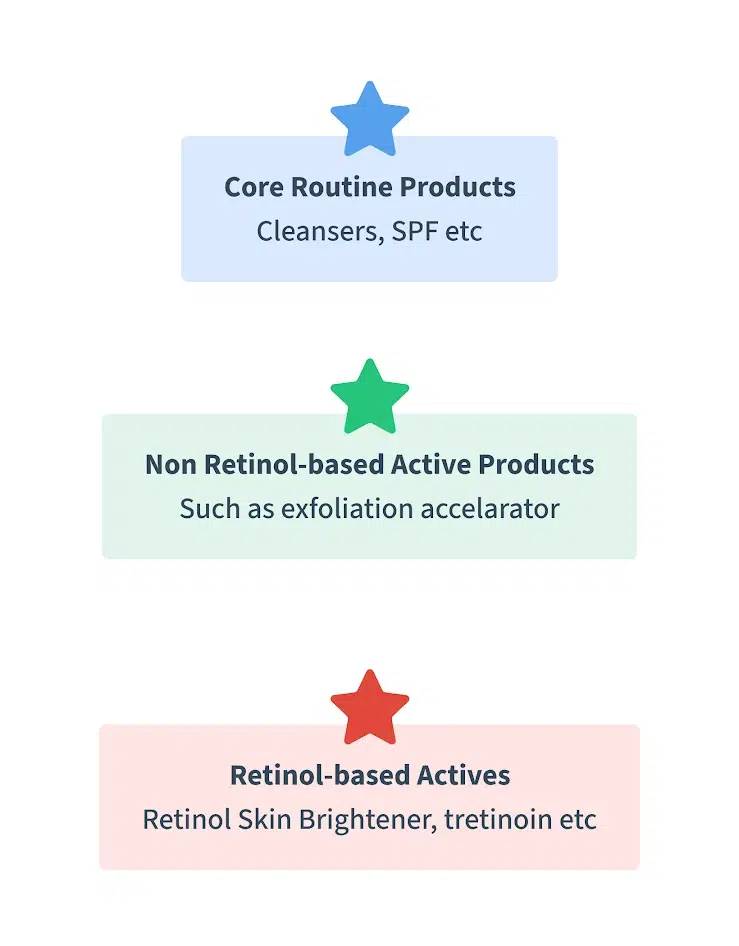
We are the only clinic globally to write your ZO plan using this colour-coded star system:
- Blue
- Green
- Red
These colours are not strictly a “start here, add this later” sequence. The colours indicate the type and activity level of each product, and they guide how your plan can be built.
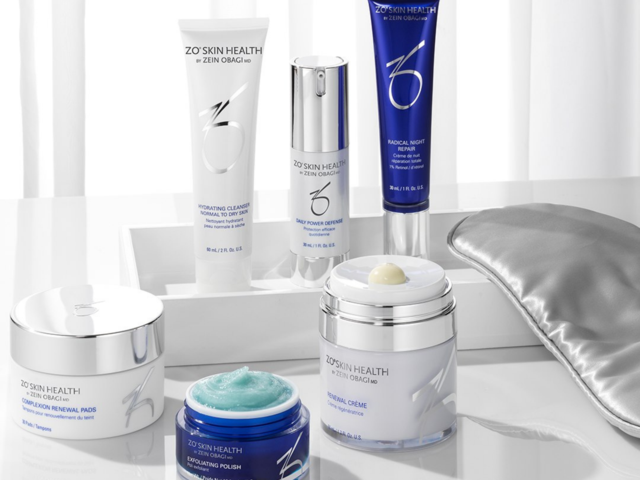
Blue stars are your core routine products:
- Cleanser,
- Exfoliating polish or scrub
- Toner pads
- Daily Power Defense
- Growth Factor Serum
- SPF
- Peptide Facial Refining Concentrate
- Firming Serum
- Vitamin C
- Brightalive
Green stars are active products that are not retinol-based: for example, Exfoliation Accelerator.
Red stars are retinol-based actives: for example, Retinol Skin Brightener, Wrinkle + Texture Repair, Radical Night Repair, tretinoin and hydroquinone.
If your plan is designed as a fully active programme, all of the stars may be active together from day one. This is entirely appropriate for some patients and will be specified clearly on your plan by Dr Anna. Other patients progress more gradually, starting with the blue (routine) stars and introducing green and red (active) stars 2–3 times a week, before building up further.
There is no single “right” way to start ZO. The right route depends on your skin barrier, sensitivity, treatment goals, lifestyle and how quickly we want to progress. It will always be specified clearly on your personalised written plan.
Why the First Few Weeks Matter
The early stages of a ZO programme are important because this is when the skin begins to respond to a new level of activity.
For some patients, this phase feels very gentle. For others, especially those starting retinoids, exfoliating products, oil-control products or pigment-control programmes, the skin may feel dry, tight, flaky, red or more reactive for a short period.
This does not automatically mean the programme is wrong. It often means the skin is adjusting.
However, there is an important difference between expected adjustment and irritation that needs support. This is why we recommend starting ZO Skin Health with professional guidance through a medical skincare consultation rather than choosing active products without assessment.
At Thames Skin Clinic, we consider your skin type, skin barrier, sensitivity, inflammation, oil production, pigmentation, current routine, lifestyle and treatment goals before creating your plan.
What Can Happen When You Start ZO Skin Health?
Not every patient experiences the same response when starting ZO Skin Health. Some people notice very little disruption. Others experience a visible adjustment phase.
Common early changes may include:
- Dryness
- Tightness
- Flaking
- Mild redness or pinkness
- Mild swelling
- Temporary sensitivity
- Stinging on application
- Skin feeling smoother but drier
- Purging or breakouts
- Changes in oiliness
- Temporary unevenness while the skin renews
These changes can usually be managed by adjusting frequency, layering, hydration support and barrier repair. The aim is not to overwhelm the skin. The aim is to guide it safely through the early stages of restoration.
Skin Reactivity and the Skin Cycle
Skin reactivity is a normal part of the early skin repair journey.
The skin renews in cycles, and one skin cell cycle is usually around 4–6 weeks. During this first cycle – broadly the first 2 to 6 weeks of your plan – patients may notice sensitivity as older surface cells are replaced and the skin begins to respond to active ingredients.
Key fact: One keratinocyte (skin cell) cycle takes approximately 4–6 weeks to complete. This is why the first skin cycle is the main period of reactivity when starting ZO Skin Health, and why review appointments are timed at 6–8 weeks – just after this cycle completes.
This may include stinging, pinkness, redness, mild swelling, tenderness, flaking, peeling, tightness or temporary irritation. For some patients, this is mild. For others, especially those on a more active programme, it may be more noticeable.
Reactivity needs to be monitored. It can be expected, but it should not feel unmanageable. If the skin becomes very sore, significantly swollen, cracked, weeping, painful or unusually inflamed, the clinic should be contacted so the plan can be reviewed.
Week 1–2: The Adjustment Phase
In the first two weeks, the skin is beginning to adapt.
Patients may notice that the skin feels different quite quickly. It may feel tighter, drier or more active than usual. Some patients describe the skin as feeling more stimulated.
If exfoliating products, retinoids, glycolic acid or oil-control products are introduced, mild dryness, flaking or swelling can occur. This may be expected, but it should remain manageable.
During this stage, it is important not to add extra products without advice. Many patients are tempted to apply rich moisturisers, oils, balms or calming products from home when the skin feels dry. Sometimes this can interfere with the programme, increase congestion or make it harder for us to understand how the skin is responding.
Instead, we recommend following the routine exactly as advised and contacting the clinic if the skin feels too uncomfortable.
Week 2–6: The Main Reactivity Window
Weeks two to six are typically when reactivity is at its most noticeable. This is the core of the first skin cycle. It’s the window our 6–8 week review is designed to sit just after, by which point reactivity has usually settled for most patients.
The skin may start to look brighter, smoother or clearer during this stage. It can also be the phase where dryness, flaking, swelling or purging becomes more noticeable.
Understanding Purging During Skin Renewal
Purging can happen when active skincare increases cell turnover and brings underlying congestion to the surface. This is most relevant for acne-prone or congested skin. It can feel frustrating, but it is not always a sign that the skin is getting worse. It may be part of the process of clearing blocked pores and improving skin function.
However, not every breakout is purging. If spots are severe, painful, widespread or worsening quickly, the programme should be reviewed.
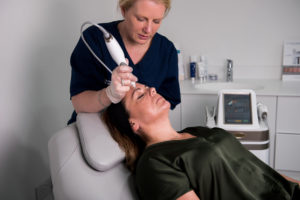
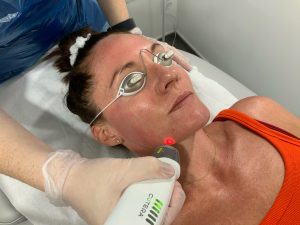
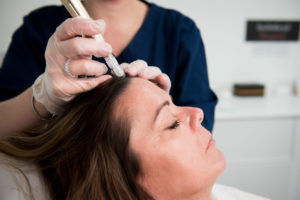
At Thames Skin Clinic, we may support this phase by adjusting the skincare plan or introducing additional support where appropriate. This may include barrier repair, Hydrafacial, extractions, Laser Genesis or other in-clinic treatments depending on the skin and the concern being treated.
Week 6–12: Settling, with Occasional Breakthrough Reactivity
By six to eight weeks, most patients attend their review appointment, and reactivity has generally calmed considerably compared with the initial phase.
From around week 6 to 12, the skin moves into its second cycle.
It’s normal to notice occasional “breakthrough” reactivity during this stage (brief flare-ups of dryness, redness or sensitivity) particularly if your plan is stepped up in activity at review. This is expected, but it should be clearly milder and shorter-lived than what you experienced in the first six weeks. If reactivity during this stage feels as intense as the initial phase, or worse, let us know so we can reassess your plan.
For some patients, especially those treating pigmentation, acne, rosacea or long-term barrier damage, this is still an early stage. These concerns often require a longer treatment plan and regular review.
Rosacea-prone skin, for example, should be understood as a long-term condition. The aim is not to cure rosacea, but to help settle visible signs and symptoms, support the skin barrier and reduce the impact of triggers where possible.
Pigmentation and acne programmes also need time, consistency and maintenance. The first 6–12 weeks are often about getting the skin ready, building tolerance and creating a stronger foundation.
Why Your 6–8 Week Review Matters
We recommend that patients starting ZO Skin Health for the first time have a review appointment at around 6–8 weeks.
This review is timed deliberately to fall just after the initial reactivity window, so we can assess how your skin has responded to the first cycle and adjust your plan accordingly. The programme that was right at the start may need to change as the skin becomes stronger, clearer, calmer or more tolerant.
Key fact: Thames Skin Clinic recommends a review appointment at 6–8 weeks for all patients starting ZO Skin Health for the first time. It’s timed to follow the completion of the first skin cell cycle.
At your review, we may assess:
- How the skin barrier is responding
- Whether dryness, redness, swelling or flaking is expected or excessive
- Whether purging is settling
- Whether pigmentation is improving
- Whether oil control is better
- Whether the skin is ready for in-clinic treatment
- Whether the programme should become more active or more restorative
A ZO plan should not be static. It should move with your skin.
What is “Getting Skin Ready”?
“Getting Skin Ready” is a phrase used within ZO Skin Health to describe the process of preparing the skin before deeper correction or advanced treatments.
At Thames Skin Clinic, we use this principle as part of a wider skin restoration approach.
Getting the skin ready may involve:
- Supporting the skin barrier
- Improving cell turnover
- Reducing congestion
- Calming visible inflammation
- Regulating oil production
- Improving hydration balance
- Supporting pigment control
- Preparing the skin for laser, microneedling, radiofrequency or resurfacing
This preparation phase helps create a healthier foundation so that the skin can respond more predictably to treatment.
Why the Order of Your Products Matters
With medical-grade skincare, the order of application matters.
Dr Anna writes each ZO Skin Health plan to specify how the products should be used together. This is because products are designed to work in layers, and the sequence can affect how well the skin tolerates the programme and how effectively the products support each other.
Some products cleanse and prepare the skin.
Others support exfoliation, oil regulation, pigment control, barrier repair, hydration, antioxidant protection or cell renewal.
Applying products in the wrong order, adding extra products, or mixing in unapproved skincare can make the programme less predictable.
Following the written plan also helps us understand how your skin is responding. If the skin becomes dry, reactive, congested or irritated, we can adjust the plan safely because we know exactly what has been used and how it has been applied.
Why We Do Not Usually Recommend Mixing Skincare Brands
When starting a ZO Skin Health programme, we do not usually recommend mixing multiple skincare brands unless this has been specifically included in your plan.
This is not because other products are always unsuitable. It is because active skincare needs to be structured. Different brands may contain acids, retinoids, exfoliants, oils, fragrance, preservatives or barrier ingredients that do not work well alongside your ZO programme.
Adding extra products can increase irritation, worsen congestion, affect tolerance or make it harder to understand what the skin is reacting to.
There are exceptions.
At Thames Skin Clinic, we may sometimes include EXO|E skin health restoration as part of a wider skin health restoration plan. EXO|E is not used as a random additional product but as a targeted support system for skin that needs help with visible inflammation, barrier recovery or repair.
This is why your skincare plan should be structured, recorded and adjusted as your skin changes.
SPF is Non-Negotiable
When using ZO Skin Health, sunscreen must be applied consistently.
This is especially important when using active skincare, exfoliating products, retinoids or pigment-control programmes. The skin may become more sensitive to light, and inadequate sun protection can increase the risk of pigmentation problems, including irreversible hyperpigmentation.
SPF is not an optional extra in a ZO programme. It is part of the treatment plan.
At Thames Skin Clinic, we will advise which sunscreen is appropriate for your skin type, sensitivity, treatment plan and lifestyle.
Active Products and In-Clinic Treatments
Many patients combine ZO Skin Health with in-clinic treatments such as Hydrafacial, Excel V+ and Laser Genesis, Secret PRO, Secret RF, HIFU, Fotona laser treatments, skin peels, plasma or other procedures.
Your active (green and red star) products may need to be paused before certain treatments, specifically
- Hydrafacial
- Excel V+
- Laser Genesis
- Secret PRO
- Secret RF
- HIFU
- Fotona treatments to the face
These are the treatments where active skincare interacts most with the treatment effect. Your team will advise the exact pause window for your treatment and skin, which is typically 2–4 days.
Key fact: Active ZO products (green and red star) are typically paused for 2–4 days before Hydrafacial, Excel V+, Laser Genesis, Secret PRO, Secret RF, HIFU or facial Fotona treatments. No pause is required for AviClear.
There is no need to stop any of your skincare, including active products, around AviClear treatment. We typically administer a Hydrafacial before most AviClear sessions, and you do not need to pause your actives for this.
Your routine (blue star) products can generally continue as normal around treatment unless we advise otherwise. If you are unsure which products to pause, ask us at the clinic. Your written plan will clearly distinguish routine products from active treatment products by colour.
This is another reason why it is important that your plan is supervised. The products you use at home should support your treatment journey, not create unnecessary interruptions to it.
What Should You Avoid When Starting ZO?
When starting a new ZO programme, it is important to avoid making too many changes at once.
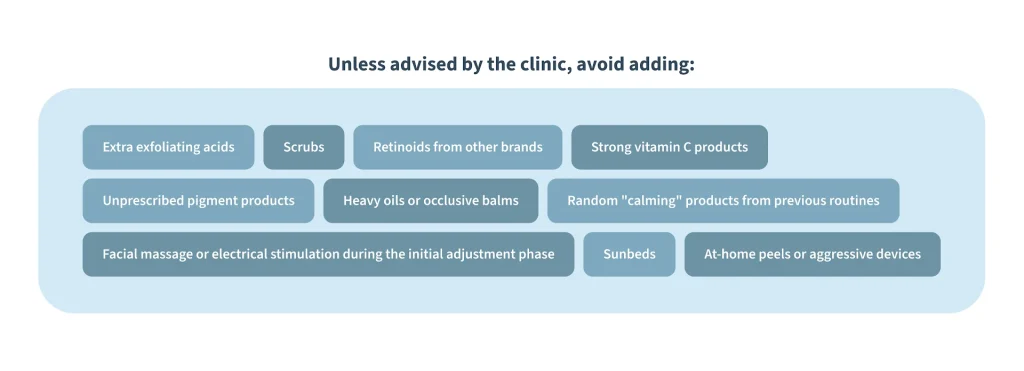
Unless advised by the clinic, avoid adding:
- Extra exfoliating acids
- Scrubs
- Retinoids from other brands
- Strong vitamin C products
- Unprescribed pigment products
- Heavy oils or occlusive balms
- Random “calming” products from previous routines
- At-home peels or aggressive devices
- Facial massage or electrical stimulation during the initial adjustment phase
- Sunbeds
Using too many active products together can make the skin more irritated. Adding rich or unsuitable products can sometimes worsen congestion.
If the skin feels dry, tight or reactive, the best step is to contact the clinic so the programme can be adjusted safely.
What is Expected and What is Not?
Some dryness, flaking, tightness, mild swelling, stinging or temporary sensitivity may be expected when starting active ZO products.
However, patients should contact the clinic if they experience:
- Severe burning
- Significant or excessive swelling
- Cracking or weeping skin
- Painful irritation
- A rash that is spreading
- Eye swelling or irritation
- Breakouts that feel severe or unusual
- Redness that feels excessive or persistent
The aim is controlled skin improvement, not unnecessary discomfort.
At Thames Skin Clinic, we want patients to feel informed and supported throughout the process.
A Note on Pregnancy and Breastfeeding
ZO Skin Health’s manufacturer guidance advises caution during pregnancy and breastfeeding. It’s largely because, for ethical reasons, active skincare ingredients are not tested on pregnant women. In practice, many products within the ZO range are considered pregnancy-safe, and there is no need to stop your skincare routine in anticipation of pregnancy.
If you become pregnant while using ZO Skin Health, there’s no need to panic or stop your plan abruptly. We simply recommend booking a review appointment so Dr Anna can check your plan and adjust anything necessary for your circumstances.
Why Patience Matters
Medical-grade skincare is not usually an overnight transformation.
Some patients notice early improvements within a few weeks. Others need several months, especially when treating acne, rosacea, pigmentation, sun damage or compromised skin barrier function.
The first stage is often about improving the skin’s ability to function. Once the barrier is stronger, inflammation is calmer and the skin is more stable, more active correction may be possible.
This is why consistency matters.
Stopping too soon, changing products frequently or adding outside products can interrupt progress. A structured programme gives the skin time to respond properly.
Starting ZO Skin Health at Thames Skin Clinic
At Thames Skin Clinic, ZO is always recommended as part of a personalised skin plan.
We do not see ZO as simply a range of products. We use it as part of a medically led approach to skin health restoration.
Your programme may be desensitising, maintenance-based, gentle and progressive, or fully active from the beginning. It may be used as a treatment in its own right or to prepare the skin for procedures such as laser, resurfacing, microneedling, injectables or skin tightening.
The most important point is that the plan should fit your skin.
Please note: all ZO Skin Health product sales at Thames Skin Clinic are non-returnable unless faulty, in line with our clinic policy.
Book a ZO Skin Health Consultation in Twickenham
If you are starting ZO Skin Health or would like to understand whether it is suitable for your skin, book a consultation at Thames Skin Clinic in Twickenham.
During your appointment, we will assess your skin, discuss your concerns and design a tailored plan to support your skin barrier and work towards healthier-looking skin.
Contact our team today or Book a ZO Skin Health Consultation in Twickenham.
Starting ZO Skin Health
1. Is dryness normal when starting ZO Skin Health?
Yes, some dryness, tightness, flaking or mild swelling can be normal, especially when starting active products such as retinoids, exfoliating products or oil-control products. The level of reactivity should be manageable and can often be adjusted with professional guidance.
2. Does everyone purge when starting ZO?
No. Purging does not happen to everyone. It is more common in acne-prone or congested skin when cell turnover increases. If breakouts are severe, painful or worsening quickly, the programme should be reviewed.
3. How long does reactivity usually last when starting ZO?
Reactivity is typically most noticeable in the first 2–6 weeks, in line with the first skin cell cycle when starting ZO. Our 6–8 week review is timed to check in just after this window, once reactivity has usually settled. Some mild “breakthrough” reactivity can occur again during the second cycle (weeks 6–12), but this should be noticeably milder than the initial phase.
4. Why is my ZO plan different from someone else’s?
ZO Skin Health plans are personalised. Some patients need desensitising or barrier repair first. Others are ready for a fully active plan (including all blue, green and red star products) from the beginning. Your plan depends on your skin condition, sensitivity, medical history, goals and whether you are preparing for in-clinic treatments.
5. What do the colours on my plan mean?
The blue, green and red stars indicate the type and activity level of each product, not necessarily a strict order to introduce them in. Blue stars are your core routine products. Green stars are active products that are not retinol-based. Red stars are retinol-based actives, including tretinoin and hydroquinone. Depending on your plan, these may all be used together from the start or introduced gradually – this will be made clear on your personalised plan.
6. Can I use my normal moisturiser with ZO?
You should only use additional products if they have been approved as part of your plan. Some moisturisers, oils or calming products may interfere with the programme or worsen congestion. If the skin feels too dry, the routine can usually be adjusted safely.
7. Why should I avoid mixing other skincare brands with ZO?
Mixing brands can make the ZO programme less predictable. Other products may contain acids, retinoids, oils, fragrance or occlusive ingredients that affect tolerance or increase irritation. If another product is suitable, we will include it deliberately within your plan.
8. Is EXO|E different from mixing skincare brands?
Yes. When we include EXO|E, it is not used as a random extra product. It is placed deliberately as part of a skin health restoration plan, particularly where the skin needs support with visible inflammation, barrier recovery or repair.
9. Do I need to stop my ZO products before in-clinic treatments?
It depends on the treatment. Active (green and red star) products are usually paused before Hydrafacial, Excel V+, Laser Genesis, Secret PRO, Secret RF, HIFU and Fotona treatments to the face. This is typically for 2–4 days, as advised by the team. There is no need to stop any skincare around AviClear treatment. Your written plan will always make clear which products are routine and which are active.
10. Is ZO suitable for sensitive or rosacea-prone skin?
It can be suitable, but it must be introduced carefully. Sensitive or rosacea-prone skin may need a slower, barrier-focused programme before more active correction is considered. Rosacea is a long-term condition, so the aim is to help settle visible signs and symptoms and support the skin rather than promise a cure.