


At Thames Skin Clinic in Twickenham, we often meet patients who have invested time, money and hope into skincare but still feel frustrated with their skin.
They may have tried popular brands, followed online routines, copied influencer recommendations or changed products many times, yet their skin still feels congested, sensitive, dry, red, dull, uneven or unpredictable.
This is often because there is an important difference between using skincare products and improving skin health.
Skincare is what you apply to the skin. Skin health is how the skin is functioning.
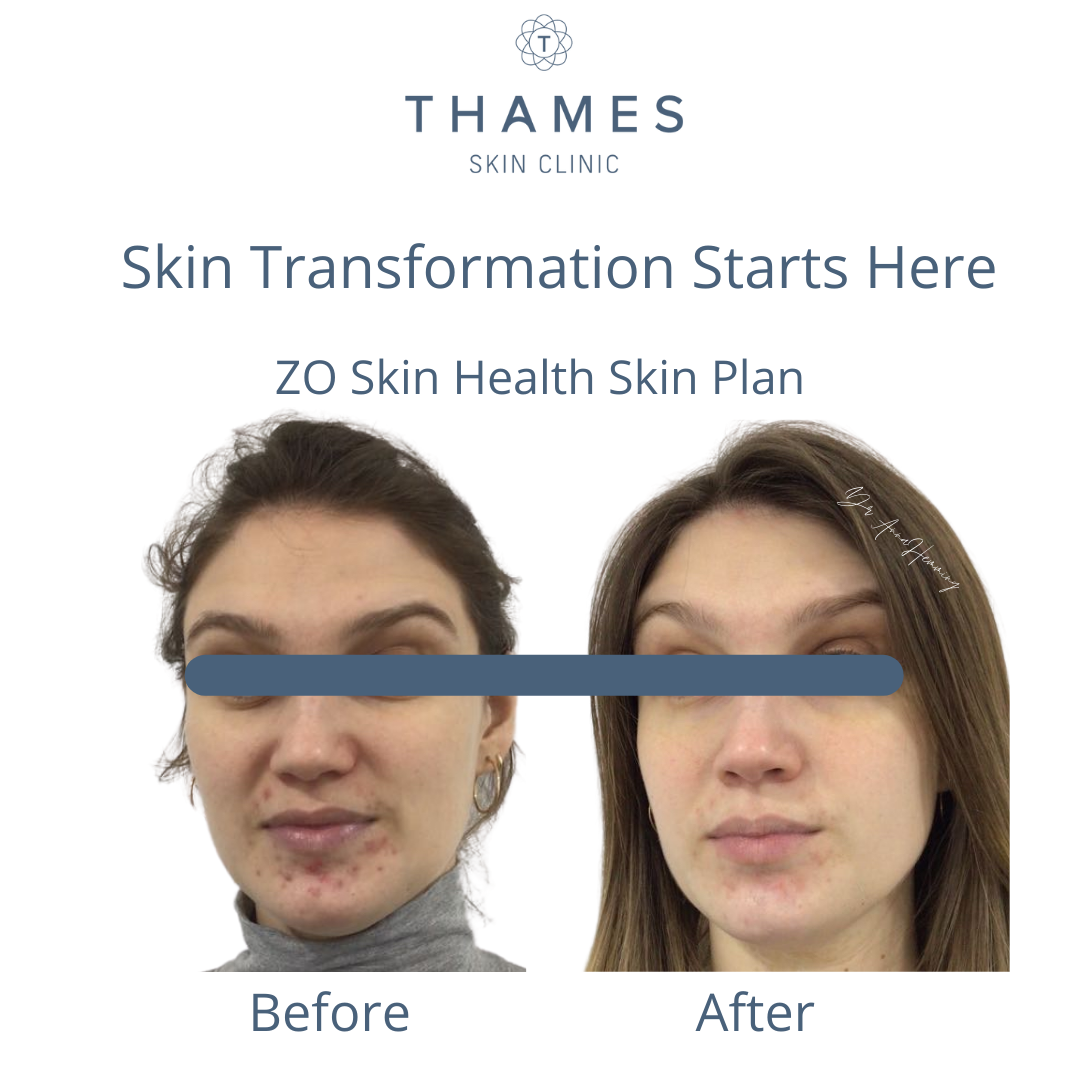
At Thames Skin Clinic, our focus is not simply on adding more products. We use medical-grade skincare, including ZO Skin Health, as part of a structured skin restoration programme designed to:
- support the skin barrier
- reduce inflammation
- improve cell turnover
- regulate oil production
- address pigmentation
- prepare the skin for long-term improvement
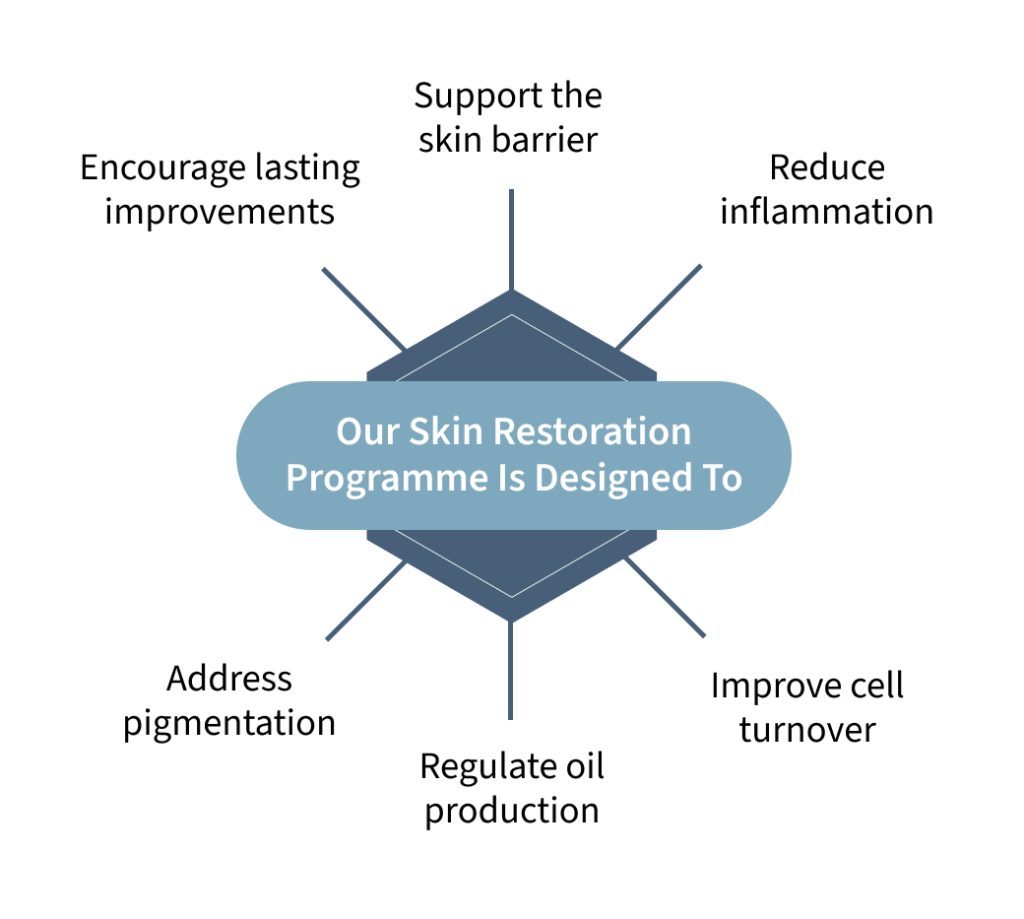
This article explains the difference between skincare and skin health, and why ZO Skin Health is part of a medically led approach to restoring healthier-looking skin..
What is Skincare?
Skincare refers to the products used on the skin each day: cleansers, moisturisers, exfoliators, serums, retinoids, SPF and treatment creams.
For many people, skincare is chosen based on symptoms or trends. If the skin feels dry, they add a moisturiser. If it looks dull, they add an exfoliant. If they see pigmentation, they try a brightening serum. If they break out, they reach for spot treatments or strong acids.
Sometimes this works temporarily. Often, though, the skin becomes more confused. Too many products, the wrong actives, frequent changes or poorly matched routines can leave the skin barrier impaired and the skin more reactive.
More products do not always mean better skin.
What is Skin Health?
Skin health looks deeper than the product shelf.
The skin is an organ with important functions. It protects the body, regulates moisture, responds to inflammation, produces oil, forms pigment, repairs itself and constantly renews.
When the skin is healthy, it tends to be more resilient. It may still age, flush, pigment or break out, but it recovers and responds better.
When the skin is not functioning well, patients may notice:
- Dryness or tightness
- Redness or flushing
- Sensitivity or stinging
- Breakouts or congestion
- Uneven tone
- Pigmentation
- Dullness
- Rough texture
- Poor tolerance to products
- Slow recovery after treatments
At Thames Skin Clinic, we assess these concerns as signs of skin function, not simply cosmetic issues. The aim is to understand why the skin is behaving this way, then build a plan to support it.
Why is the Skin Barrier Important?
The skin barrier is central to skin health.
A strong barrier helps keep moisture in and irritants out. It also helps regulate inflammation and supports a calmer, more resilient skin environment.
When the barrier is impaired, the skin can become dry, reactive, red, inflamed, congested or unpredictable. Products may sting, treatments may feel more uncomfortable or the skin may flare without an obvious reason.
Many people assume this means they need stronger products or more aggressive treatment. In reality, the first step is often to repair and stabilise the skin barrier.
This is one of the reasons ZO Skin Health is such an important part of our work at Thames Skin Clinic. Used correctly, it lets us support the skin in a structured way, restoring the foundation before building towards more active correction or in-clinic treatments.
For patients with more pronounced redness, inflammation or skin that needs to heal after injury or a reactive episode, we may also introduce EXO|E, a plant-based exosome system used through its D|TOX and RE|PAIR stages. EXO|E is designed to support the skin environment using plant-derived extracellular nanoparticles and regenerative signalling ingredients.
Why ZO Skin Health is Not Just “Products”
ZO Skin Health is a medical-grade skincare system developed to treat the skin at the level of structure and function. At Thames Skin Clinic, we do not use ZO as a simple product menu. We use it as part of a personalised treatment plan. Depending on the patient, a ZO programme may be designed to:
- Strengthen and support the skin barrier
- Improve skin tolerance and resilience
- Reduce congestion and oiliness
- Support healthy cell turnover
- Calm visible redness and inflammation
- Improve the appearance of pigmentation and sun damage
- Support collagen, elastin and skin quality
- Prepare the skin for laser, resurfacing or injectable treatments
- Maintain results after in-clinic procedures
This is why two patients may both use ZO Skin Health but follow completely different routines. The right plan depends on skin concern, skin type, sensitivity, previous product use, lifestyle, treatment goals and medical history.
From Product use to Skin Restoration
A skin restoration programme differs from a standard skincare routine. A routine focuses on using skincare products daily. A programme has a purpose, a sequence and a review process.
At Thames Skin Clinic, we may use ZO Skin Health to move the skin through different stages: preparing the skin, restoring barrier function, correcting specific concerns, supporting treatment recovery and maintaining long-term results.
For some patients, the first stage is calming and repairing. For others, it means improving cell turnover, managing oil production or addressing pigmentation. Some patients need a gentle approach; others are ready for something more active.
The aim is not to overload the skin. The aim is to give the skin what it needs at the right stage.
Getting Skin Ready for Treatment
One of the most important principles within ZO Skin Health is preparing the skin properly.
Before laser, resurfacing, microneedling, radiofrequency, skin tightening or injectable treatments, skin quality matters. If the skin is inflamed, dehydrated, congested or barrier-impaired, treatment results can be less predictable and recovery slower.
By improving skin health first, we create a stronger foundation. This helps the skin tolerate treatments better, respond more effectively and maintain results for longer. That is why we often describe skincare as the foundation for everything else we do.
When Skincare Becomes the Treatment
For many patients, medical-grade skincare is not simply preparation for treatment. It is the treatment.
This is particularly true for concerns such as acne, rosacea, pigmentation, sensitivity, dullness, early ageing and poor skin texture.
A doctor-led ZO Skin Health programme supports calmer, brighter and more resilient-looking skin. It may reduce the need to rush into procedures before the skin is ready, and it can help maintain results after treatments are complete.
At Thames Skin Clinic, we see skincare as one of the most powerful tools in medical aesthetics because it is used every day. Clinic treatments may happen monthly or seasonally, but homecare supports the skin continuously.
Why You Need a Skin Consultation First
ZO Skin Health is active and results-driven, which means it should be introduced carefully.
Some patients need barrier repair before active correction. Some need to avoid certain ingredients at first. Some need to build tolerance gradually. Others may require prescription-strength options, pigment-control strategies or plans that work alongside laser or device-based procedures.
Without professional guidance, active skincare can be used incorrectly.
At Thames Skin Clinic, Dr Anna Hemming and the clinical team assess the skin before recommending a programme. They consider your skin type, barrier function, inflammation, pigmentation, oil production, sensitivity, treatment goals and previous skincare history. This allows us to create a plan that is structured, safe and realistic.
Skin Health and Long-Term Results
Good aesthetic medicine is not only about what happens in the treatment room. It is also about how the skin is supported before, during and after treatment.
When skin health improves, the skin often becomes more resilient, tolerant and responsive. This makes treatment planning more predictable and helps patients maintain their results for longer.
This is especially important for patients having treatments such as:
- Excel V+ and Laser Genesis
- Secret PRO (fractional CO2 laser and RF microneedling)
- Fotona Laser Dynamis Max
- Injectable skin boosters
- Polynucleotides
- Exosomes (EXO|E)
- Skin tightening treatments
- Pigmentation programmes
- Acne and rosacea treatment plans
The best results often come when homecare and in-clinic treatments work together. For a broader view of how these fit into a full skin plan, see our skin concerns guide and injectable treatments guide.
The Thames Skin Clinic approach
Dr Anna Hemming designed the THAMES consultation process to bring medical standards into skin assessment and treatment planning.
This means we do not simply ask, “Which product do you want?” We ask what the skin is showing us, why it may be behaving that way, what needs to be restored first, and how we can build a plan that supports your skin safely over time.
Every member of the Thames Skin Clinic team is trained in the THAMES method, so your care feels consistent and professional at every stage of your skin journey with us:
- Thorough: your journey starts with a thorough consultation to fully understand your concerns
- Holistic: we provide a holistic solution to your aesthetics journey, tailored to your individual needs
- Assessment: we conduct a comprehensive assessment of your skin before designing your treatment programme
- Medical: all treatment in clinic is delivered to doctor-led medical standards
- Expectations: you will fully understand all expected outcomes before starting your treatment programme
- Safety: you are treated in a CQC-registered clinic where treatments are selected carefully, delivered to medical standards and supported by appropriate training, governance and safety protocols.
For some patients, this begins with barrier repair. For others, it begins with acne control, pigment management, rosacea support, ageing prevention or treatment preparation.
The programme is tailored to the individual.
This is the difference between skincare and skin health.
Book a Medical Skincare Consultation in Twickenham
If you would like to understand the difference between skincare and true skin health, book a consultation at Thames Skin Clinic in Twickenham.
During your appointment, we will assess your skin, discuss your concerns and design a tailored plan to support your skin barrier, improve skin function and help you work towards healthier-looking skin.
Book a Medical Skincare Consultation in Twickenham
The Difference Between Skincare and Skin Health – FAQs
Is medical-grade skincare different from normal skincare?
Yes. Medical-grade skincare is usually more active and designed to target specific skin functions, such as barrier repair, cell turnover, oil regulation, pigmentation and inflammation. At Thames Skin Clinic, ZO Skin Health is recommended within a clinical plan rather than chosen as a general cosmetic product.
Why do I need a skin assessment before starting ZO Skin Health?
A skin assessment helps us understand your skin barrier, sensitivity, inflammation, pigmentation, oil production, lifestyle and treatment goals. This allows us to create a programme suited to your skin, rather than recommending products based on a single concern.
Can skincare really improve skin health?
Yes, when chosen correctly and used consistently. Medical-grade skincare can support the skin barrier, improve texture, reduce congestion, improve clarity, support pigment control and help the skin become more resilient. For many patients, skincare is an important treatment in its own right.
Can ZO Skin Health prepare my skin for laser or resurfacing treatments?
Yes. Improving skin health before treatment often helps the skin tolerate procedures better and recover more smoothly. At Thames Skin Clinic, we frequently use ZO Skin Health to prepare the skin before treatments such as laser, resurfacing, microneedling, radiofrequency and pigmentation programmes.
Is ZO Skin Health suitable for sensitive skin?
It can be, but it must be introduced carefully. Some patients need barrier repair and calming support before active correction. This is why professional guidance is important, especially for patients with rosacea-prone, reactive or medically complex skin.
Individual results vary, and active skincare should be introduced following professional assessment, especially in sensitive, reactive or medically complex skin.