

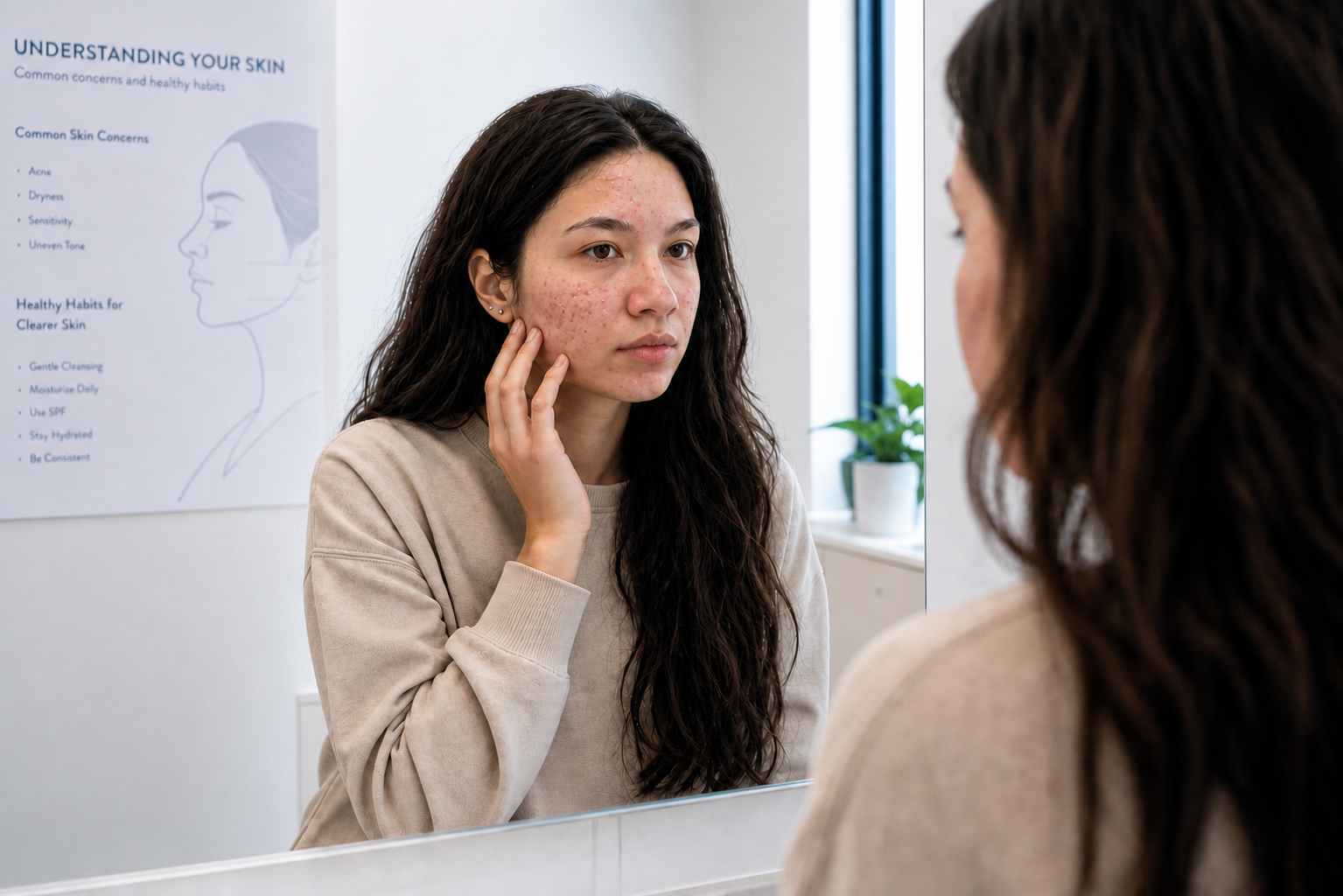
Teen acne during puberty is driven by the surge of hormones during teenage years, typically appearing on the forehead, nose and upper cheeks. Hormonal acne in adults is triggered by ongoing hormonal fluctuations, linked to the menstrual cycle, stress, pregnancy or menopause. Hormonal acne in adults tends to appear as deep, painful cysts along the jawline and chin.
Thames Skin Clinic is a doctor-led acne clinic in Twickenham treating teenagers and adults from South West London.
What’s the Difference Between Teen Acne and Adult Hormonal Acne?
Teenage acne affects most young people at some point during puberty, usually between the ages of 12 and 18. Acne is common in teenagers because of the hormonal shifts of adolescence, particularly a rise in androgens and testosterone, which cause the skin’s oil glands to go into overdrive.
Hormonal acne in adults can affect women and men well into their 30s, 40s and beyond. According to the British Skin Foundation, adult acne is increasingly common, with women more commonly affected than men.
| About | Teen Acne | Hormonal Acne |
| Typical age | 12 to 18 | 20s to 40s+ |
| Main cause | Androgen surge during puberty | Ongoing hormonal fluctuations |
| Appearance | Blackheads, whiteheads and pustules | Deep cysts and painful nodules |
| Location | Forehead, nose and T-zone | Jawline, chin, lower cheeks and neck |
| Pattern | Constant through adolescence | Cyclical, linked to periods / stress |
| Best treatments | Topical products and AviClear | Medical-grade skincare, AviClear and skin peels |
At Thames Skin Clinic, Dr Anna Hemming treats teenagers experiencing their first breakouts as well as adults dealing with persistent hormonal acne.
What Does Teenage Acne Look Like?
- Blackheads and whiteheads are very common in teen acne. These are non-inflammatory blemishes caused by blocked pores.
- Spots tend to appear at the surface level, including pustules (pus-filled spots)
- The skin often looks oily overall, with enlarged pores.
- Deeper cysts can still occur.
Does Teen Acne Go Away After Puberty?
For many people, yes. Teenage acne does improve significantly once hormone levels stabilise, typically in the late teens to early 20s. However:
- Some people transition from teenage acne directly into adult hormonal acne without a clear break.
- Others see their skin clear up completely, only for acne to return in their 20s or 30s.
- Women in particular are more likely than men to experience adult acne, often tied to hormonal cycles.
- Those with a family history of adult acne are more likely to experience it themselves.
The most important thing to understand is that persistent teen or adult acne is not a hygiene problem or something to simply wait out. Acne has identifiable causes, and it responds to the right treatment. If your acne is cyclical or leaving marks on your skin, a professional assessment is the right next step.
Explore teen acne treatments in Twickenham at Thames Skin Clinic or book a teen acne consultation with Dr Hemming at our Twickenham clinic.
What Causes Teenage Puberty Acne
Teen acne during puberty is caused by a hormonal surge that directly overactivates the skin’s oil glands. Three things happen in sequence:
- Androgens surge during puberty: hormones, such as testosterone and DHEA-S, increase, causing sebaceous (oil) glands to produce far more sebum than the skin needs.
- Pores become blocked: excess oil combines with dead skin cells to form plugs inside the hair follicle, creating blackheads and whiteheads.
- Bacterial inflammation follows: Cutibacterium acne multiplies rapidly inside blocked follicles, triggering the redness, swelling and pain of inflamed spots.
What Does Hormonal Adult Acne Look Like?
- Hormone fluctuations in adults often cause cystic acne, which is deep and painful nodules beneath the skin’s surface
- These spots rarely come to a head and can linger for weeks.
- They feel sore to touch and resist most over-the-counter treatments.
- Redness and inflammation are often more pronounced.
Does Hormonal Adult Acne Follow a Pattern?
Yes, and that pattern is one of the clearest signs that hormones are the driver of acne, especially for women who experience acne breakouts in the days before their cycle.
If you notice a predictable monthly pattern, particularly deep spots on the chin and jawline in the week before your period, it’s an indicator that hormones are the primary driver of your acne.
What Causes Hormonal Adult Acne
The cause of hormonal acne in adults involves the same androgens driving excess oil, but the triggers are ongoing and more varied than during puberty.
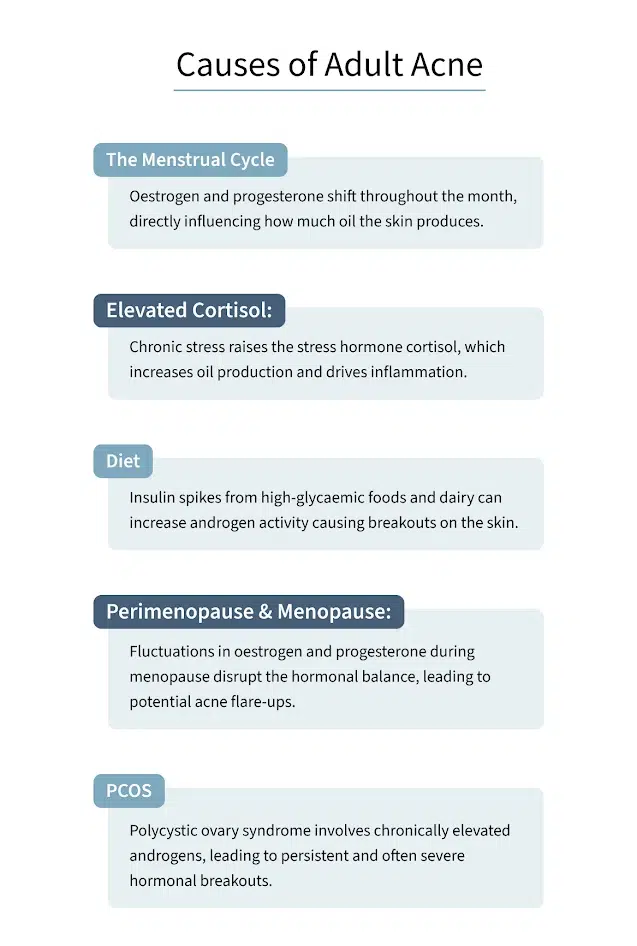
All acne has a hormonal component, since hormones regulate sebum production. The term “hormonal acne” specifically describes breakouts that occur in response to hormonal fluctuations. Those fluctuations can come from multiple sources:
- The menstrual cycle: oestrogen and progesterone shift throughout the month, directly influencing how much oil the skin produces.
- Elevated cortisol: chronic stress raises the stress hormone cortisol, which increases oil production and drives inflammation.
- Diet: insulin spikes from high-glycaemic foods and dairy can increase androgen activity causing breakouts on the skin.
- Perimenopause and menopause: fluctuations in oestrogen and progesterone during menopause disrupt the hormonal balance, leading to potential acne flare-ups.
- PCOS: Polycystic ovary syndrome involves chronically elevated androgens, leading to persistent and often severe hormonal breakouts.
Many adults travel to our hormonal acne clinic in South West London for expert assessment and treatment. Book a hormonal acne assessment with us and we can create a treatment pathway for you.
Acne Treatments at Thames Skin Clinic
Thames Skin Clinic is a doctor-led skin clinic specialising in acne treatments in Twickenham, Kingston. Wimbledon and South West London. We treat patients for acne, rosacea, pigmentation and acne scarring using medically led, bespoke treatment plans.
Dr Anna Hemming is the founder and medical lead at Thames Skin Clinic. As a former GP who served Buckingham Palace for seven years, she brings over two decades of medical experience to aesthetic and regenerative skin care.
Acne is one of her core specialisms. She has been recognised nationally for her expertise:
- Best Injectable Results at the Aesthetics Awards 2025
- Best Medical Practitioner at the Aesthetic Medicine Awards 2025
- Best Medical Practitioner (Doctor, Dentist or Surgeon) at the Aesthetics Awards 2026
- Cutera’s Lifetime Achievement Award 2024.
Dr Hemming and her team take a holistic, medically led approach to acne by assessing hormonal history, lifestyle, skin type and severity before recommending a treatment pathway.
To book a consultation with Dr Anna Hemming, contact us today or book online.
To learn more about acne in both teens and adults, read our comprehensive guide to Understanding and Treating Acne.
FAQs
Can Hormonal Acne in Adults Be Treated Without Roaccutane?
Yes. Hormonal acne in adults can be significantly improved without Roaccutane. Treatment depends on the severity of the acne, the level of inflammation and the underlying hormonal triggers.
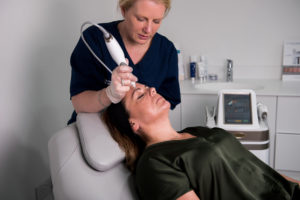
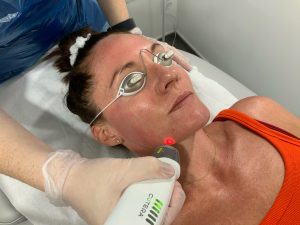
At Thames Skin Clinic, treatment plans are tailored to the individual and may include medical grade skincare and AviClear laser treatment. AviClear targets the sebaceous glands directly to reduce excess oil production that contributes to hormonal breakouts.
For persistent or painful hormonal acne, a professional assessment is important to prevent scarring and ongoing inflammation.
When Should I See a Doctor About Acne?
You should see a doctor about acne if your breakouts are painful, persistent or leaving marks or scars on the skin. Acne that does not improve with over the counter products often needs professional treatment.
For teenagers, early treatment can help reduce the risk of long term scarring and support confidence during puberty. For adults, cyclical breakouts around the chin and jawline point to hormonal acne, which needs professional treatment.
At Thames Skin Clinic in Twickenham, Dr Anna Hemming assesses the underlying causes of acne before creating a personalised treatment plan. Many patients travel to our South West London acne clinic for expert treatment of teen acne and hormonal acne in adults.