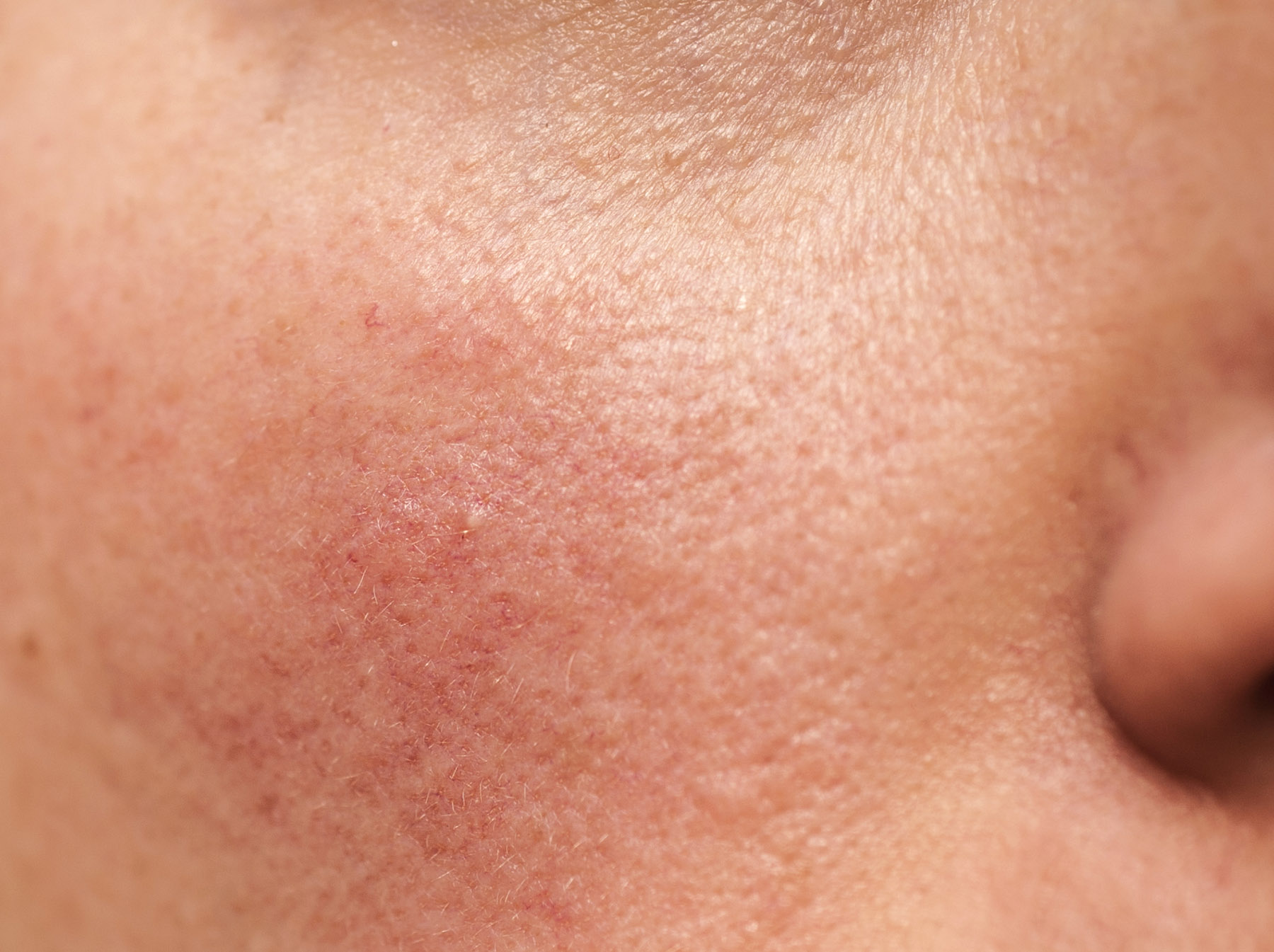
Rosacea is one of the most common causes of facial redness, yet many people don’t realise they have it. If your skin blushes easily, feels sensitive or stays persistently red across the cheeks, nose or forehead, you may be experiencing rosacea.
Understanding rosacea and its triggers is the first step to managing it well. While there’s no permanent cure, there are highly effective ways to calm symptoms and reduce flare-ups, such as medical-grade skincare and advanced laser treatments for rosacea.
This guide walks you through everything you need to know about rosacea: what it is, who gets it, the main symptoms, how to manage triggers and the treatments that can help.
What is Rosacea, and Who Gets It?
Rosacea is a chronic inflammatory condition that mainly affects the face and is different from acne. It shows up as persistent facial redness, bumps and pimples and can also cause irritation around the eyes and eyelids. Rosacea can affect the cheeks, forehead, chin and nose, and in some cases, the neck and chest. This condition appears more often in fair skin but can occur in any skin type and affect a wide age range. It is, however, most common in people over 30 and is seen more in women than men.
Can a Teenager Have Rosacea?
Yes, rosacea can affect any age group, including children and adolescents. The condition is more commonly diagnosed, in adults but it can begin in the teen years or even younger.
How Does Rosacea Show in Different Skin Types?
Rosacea occurs across all skin tones and races. Rosacea symptoms like flushing and redness can be more obvious in fair skin, but it affects all skin types. Symptoms such as flushing and facial redness are more obvious in fair skin but appear in darker skin tones as brownish or purplish changes. Even when redness is harder to see, sensations such as burning, stinging and flushing are all still noticeable.
What are the Main Signs of Rosacea?
According to Patient Info, it is estimated that rosacea affects about 1 in 20 people in the UK. Symptoms of rosacea on the face can start with easy blushing. With time the central parts of the face can turn a deeper red, small blood vessels may become visible and bumps or pus-filled spots appear. Skin can feel hot or sensitive and some people get eye symptoms such as irritation or blurred vision. In some men the oil glands on the nose can overgrow, and the nose can become enlarged and red, a change called rhinophyma. Common symptoms of rosacea include:
- Easily flushing or blushing
- Persistent facial redness
- Visible blood vessels on the skin
- Easily irritated skin
- Scaly, dry or itchy skin
- Eye symptoms such as grittiness or irritation
- Pimples or pustules that may be mistaken for acne
Some people have only one or two of these symptoms, while others have a combination. It varies widely in severity and presentation.
What Are the Types of Rosacea?
The types of rosacea can be grouped into three main patterns: redness, bumps and phyma. Ocular rosacea affects the eyes and causes red eyes, irritation and a gritty sensation.
1. Redness
This includes several patterns of facial redness and visible blood vessels.
Persistent/background redness
Persistent background redness is always present on the central face, including the cheeks, chin, nose and forehead. People may also experience sensitivity, burning, stinging or heat.
Flushing (transient redness)
Redness that comes and goes and is triggered by heat, emotions, certain foods, exercise or alcohol.
Telangiectasias
These are visible dilated blood vessels that look like tiny red threads on the cheeks or nose.
2. Bumps
These are inflammatory lesions that can resemble acne but without blackheads or whiteheads.
Papules
Red, inflamed bumps.
Pustules
Pus-filled bumps that may look similar to acne but occur in the context of rosacea and require different treatment.
3. Phyma (Thickened Skin)
Phyma is the thickening or enlargement of facial skin that mostly affects the nose. Phymatous change includes thicker, more textured or enlarged skin. When this happens on the nose, it is called rhinophyma and is important to recognise as, although it is less common, the treatment differs from other types of rosacea.
What Causes Rosacea, and What Triggers Flare-ups?
The exact cause of rosacea isn’t fully understood. Evidence points to a mix of genetic factors, immune system changes and environmental influences. Triggers of rosacea flare-ups vary from each individual person and often include alcohol, exercise, extreme temperatures, hot drinks, spicy foods and stress. People living with rosacea are also commonly more sensitive to the sun, which is one of the biggest reasons symptoms can intensify.
There are several ideas about what causes rosacea on the face. A few key factors include:
- Genetic influence
Families with a history of rosacea see it more often, so genetics appear to play a strong part. - The skin microbiome
Some people have higher numbers of certain mites on their skin, especially Demodex. These mites can make the skin more reactive, and treatments that target them can help ease symptoms. - Vascular sensitivity
Rosacea involves blood vessels that react too strongly. These vessels can widen quickly, which leads to facial redness, flushing and heat. - Inflammatory reactions
The skin becomes easily irritated and inflamed, which adds to redness and bumps.
For many suffering with the condition, there is no singular cause, as many of these factors often overlap. For more background on rosacea, including what causes it take a look at our article on the key facts about rosacea.
How Can I Manage My Rosacea Triggers?
The goal of rosacea management isn’t to get rid of it completely because there is no cure. These symptoms will recur at different rates and intensities. However, it helps to manage it in a way that doesn’t affect your day-to-day life and allows you to feel happy with your skin.
Know your triggers and avoid them
Identifying your personal triggers so you can avoid them is one of the best ways to reduce rosacea flare-ups. People with rosacea may have some unique triggers for them, such as cosmetics, certain types of foods or exercise. If you make a habit of keeping a small diary in your phone every time you feel yourself flushing, you might be able to identify some triggers that you otherwise would have missed. Environmental triggers vary from person to person, but common ones include:
- Sun exposure
- Hot or cold weather
- Stress
- Alcohol
- Chocolate
- Dairy
- Spicy foods
If you’re unsure, keep a rosacea diary. Write down what you ate, drank or were exposed to during a flare-up.
Protect your skin from the sun
Practical steps to manage triggers include using daily sun protection, wearing wide-brim hats and avoiding overheating. People with rosacea have sensitive skin, so they need to take extra care with sunscreen. Choose a minimum SPF 50 and opt for physical sunscreens rather than chemical sunscreens, as chemical formulas can irritate sensitive skin.
Keep your skin well moisturised
People with rosacea often have a compromised skin barrier. Therefore, it’s important to moisturise daily to strengthen the skin barrier and keep it hydrated, which is going to have an anti-inflammatory effect on your skin.
Don’t rub or scrub your face
Another way to manage rosacea is to avoid rubbing or scrubbing your face. Physical exfoliants, rough towels and harsh physical scrubbing make redness worse. So always pat your skin dry.
Don’t use too many skincare products
A simple skincare routine is best for facial redness, and it helps to avoid layering many products while using prescription treatments.
Don’t introduce multiple actives at once
Strong active ingredients like retinoids or acids should be added slowly with a patch test first to avoid reactions or flare-ups. It’s also best to avoid skincare that has irritating ingredients that can affect your rosacea, such as fragrance, alcohol and witch hazel.
What is the Difference Between Rosacea and Acne?
The main difference between acne and rosacea is that acne presents with comedones, while rosacea has papules and pustules without comedones. Rosacea tends to affect the central face where flushing occurs, while acne can be more widespread.
How is Rosacea Diagnosed?
Rosacea is typically diagnosed by how it looks. In most cases, a skin specialist can identify it just from examining the face and asking a few questions about symptoms and triggers. It’s important to assess physical symptoms along with your skin history. Specific tests are rarely needed unless there’s uncertainty about another condition.
Although there is no cure for rosacea, it is very treatable. Many people are surprised to learn that rosacea is a lifelong condition. It naturally goes through phases; sometimes it flares, and sometimes it settles and becomes much easier to manage.
It helps to set expectations early:
- Rosacea is chronic, meaning it doesn’t fully go away.
- Treatments focus on long-term control, not a one-time cure.
- Most people can achieve steady, predictable skin days with the right plan.
- Flares can still happen, but they tend to become less intense and less frequent with care.
A good rosacea treatment plan evolves with you and your lifestyle, supporting the skin through its calmer phases as well as its more reactive moments.
What Treatments are Available for Rosacea?
Rosacea often develops due to a mix of genetic and environmental factors that no one can fully control. Instead of focusing on the cause, it’s more productive to focus on how to manage it. There are excellent rosacea treatment options that help bring this condition under control, including laser treatments and medical-grade skincare that supports irritated and reactive skin.
The best results often come from a combined approach. Depending on your specific symptoms, this may include topical treatments, a personalised desensitisation plan and gentler laser therapies such as Laser Genesis to maintain your results.
Laser Treatment for Rosacea
Laser treatment for rosacea can reduce facial redness and visible blood vessels. Vascular and pigmentation laser treatments like Excel V+ work by targeting the skin with a specific wavelength of light. Each wavelength is chosen because it is absorbed by a particular type of tissue. Certain wavelengths are absorbed more easily by the chromophores that the treatment is aiming at. This means the treatment can focus on the redness or pigmentation without affecting the surrounding skin.
Medical-Grade Skincare for Rosacea
Medical-grade skincare also helps support rosacea treatment. These products use higher-quality ingredients delivered at strengths that can genuinely improve the skin barrier. Many people with rosacea have a weakened barrier, which means the skin reacts easily and loses moisture quickly. Medical-grade skincare lines help repair and hydrate the skin, leading to fewer flare-ups and calmer symptoms of rosacea. These formulas contain soothing ingredients, exosomes, antioxidants and barrier-supporting lipids that everyday shop-bought products cannot match. Some rosacea needs active treatment plans to help redcue inflammation, spots, pustules. There are different types of skincare suitable for different intensities and types of rosacea.
Rosacea Treatment at Thames Skin Clinic
At Thames Skin Clinic, we are a doctor-led, award-winning skin health clinic in Twickenham. Led by Dr Anna Hemming, a highly experienced doctor with over 20 years of practice, we can assess your skin and help you understand what the most effective treatment for rosacea might be for you. Dr Hemming has personal experience with rosacea, which gives her a unique insight into how to treat and support our patients with facial redness.
Our skin clinic offers proven treatment options, such as medical-grade skincare and powerful laser treatment for rosacea to deal with:
- Persistent redness
- Visible blood vessels
- Irritating bumps
- Inflamed spots
- Pustules
Contact us to book your consultation today, and we can begin creating a rosacea treatment plan designed specifically for you at Thames Skin Clinic in Twickenham. Let us help you calm redness, reduce flare-ups and support healthy, resilient skin.