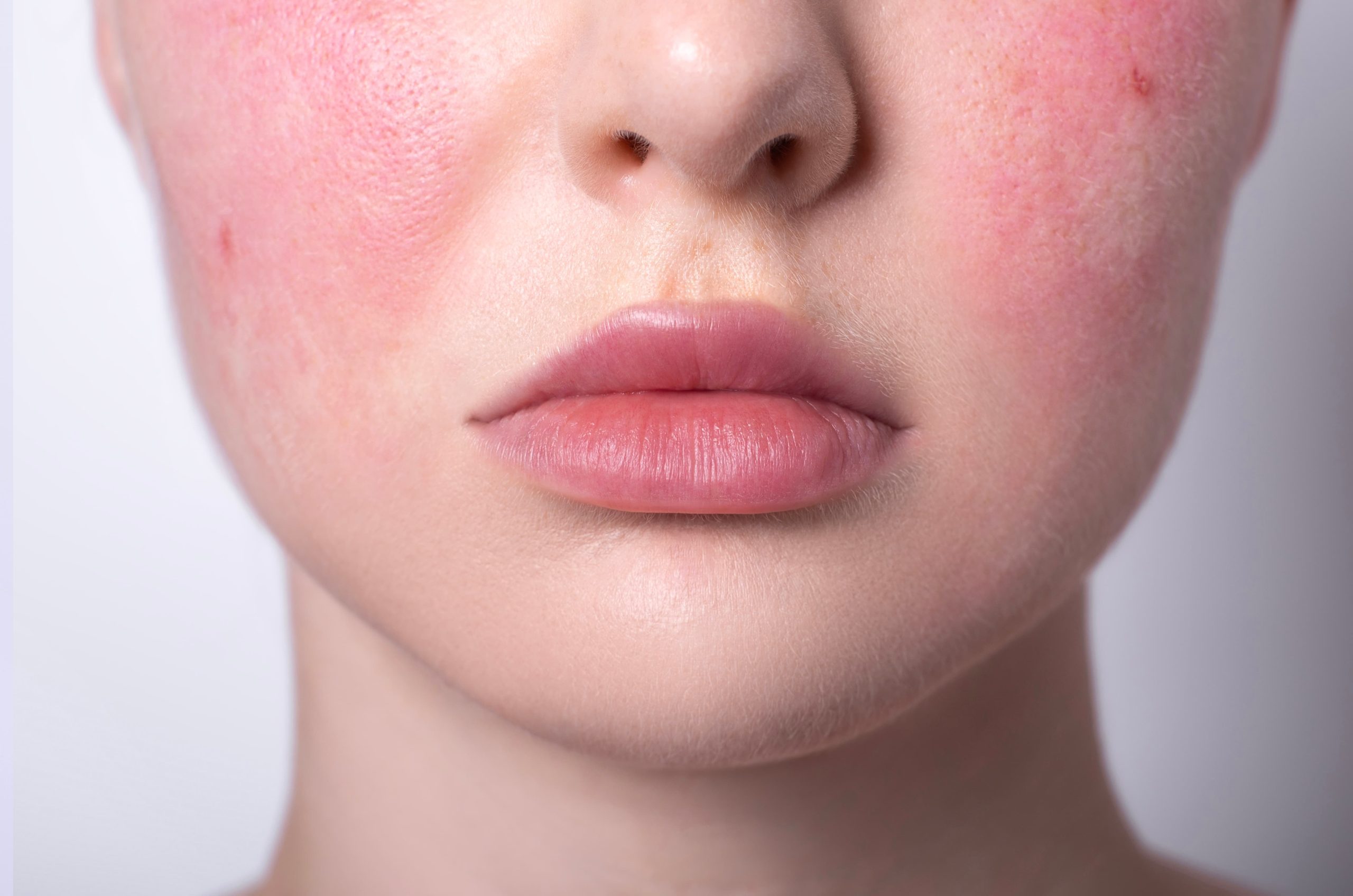
Rosacea is a chronic inflammatory condition that involves recurring skin changes on the face. Many people ask what causes rosacea on the face and why symptoms such as redness, visible blood vessels and bumps keep returning. The true cause of rosacea is not known but is linked to a combination of genetics, immune system overactivity and highly reactive facial blood vessels.
In this article we will discuss the causes of rosacea and common triggers of rosacea and how to manage them including sunlight, heat, alcohol, food and stress.
What Causes Rosacea?
The exact cause of rosacea is not fully understood, but there does appear to be a genetic or family history component, which is an important risk factor.
Rosacea is also linked to an overactive immune system and sensitive blood vessels. In people with rosacea, the blood vessels overreact to certain triggers, causing increased blood flow to the skin. This leads to the key rosacea symptoms, such as redness, flushing and inflammation. While inflammation contributes to these symptoms, researchers do not yet fully understand what causes the inflammation.
What Causes Rosacea Flare-Ups?
Certain environmental or lifestyle factors can make rosacea worse. Triggers for rosacea include sunlight, heat, stress, alcohol, spicy foods and changes in temperature. When exposed to these triggers, the blood vessels widen and inflammation increases, intensifying rosacea symptoms.
How Does Stress Affect Rosacea Symptoms?
Emotional stress is a well-recognised trigger for rosacea. When you feel stressed, it can cause the blood vessels in your face to widen, which makes redness, flushing and irritation worse. Managing stress levels through coping strategies is therefore an important part of controlling flare ups.
Why Does Sunlight Trigger Rosacea Flare-Ups?
People with rosacea have skin that is more sensitive than normal. Sun exposure and ultraviolet (UV) light are some of the most common rosacea triggers, causing blood vessels near the skin’s surface to dilate. This leads to increased redness, flushing and sometimes a burning or stinging sensation.
Because of this, sun exposure is a common trigger for rosacea flare-ups. Protecting your skin by wearing sunscreen every day, seeking shade, and using hats or protective clothing can help reduce irritation and prevent symptoms from worsening.
Does Alcohol Make Rosacea Worse?
Alcohol is another common trigger of rosacea. Alcohol causes dilation of the blood vessels, which makes it more likely to experience rosacea symptoms. Some alcoholic drinks are particularly problematic, especially red wine, which contains higher levels of histamine. For this reason, it is best to avoid alcohol, particularly red wine. Or, you could try eliminating these types of alcohol for a while to see if your symptoms change.
Do Hot Drinks Trigger Rosacea?
Heat in any form is a common trigger of rosacea outbreaks, and that includes hot drinks. Hot liquids trigger rosacea, not because of the drink itself but because of the heat. Allowing hot drinks such as tea or coffee to cool before drinking can help reduce symptoms.
Can Hot Weather or Cold Weather Worsen Rosacea?
Significant changes in temperature can also trigger rosacea. High or low temperatures can dilate blood vessels and increase facial flushing. Dressing appropriately for cold weather and avoiding excessive heat can help reduce flare-ups.
Can Exercise Cause Rosacea Flare-Ups?
Heavy or vigorous exercise can trigger rosacea in some people. This is usually because exercise increases body temperature and blood flow, causing the blood vessels in the face to dilate. If exercise is a trigger for you, try lowering the intensity, taking breaks or exercising in a cooler environment.
Which Foods are Known to Trigger Rosacea?
One of the main reasons certain foods trigger rosacea is their histamine content. Histamine promotes vasodilation, which makes your red blood vessels dilate, causing rosacea outbreaks to occur. Foods that contain histamines include tomatoes, citrus fruit, legumes, chocolate and nuts.
Spicy Foods
Spicy foods, particularly chilli peppers, are another important trigger. These foods contain capsaicin, the compound responsible for the burning sensation when eating spicy food. That sensation also heats up the skin and increases the risk of flushing and rosacea flare-ups. Reducing or avoiding spicy foods can help avoid this.
Dairy Products
Cheese and processed meats are rich in histamine. Histamine promotes vasodilation, which can worsen redness and flushing. Dairy products, such as milk, cheese, and yogurt, can also trigger flushing and redness. This may be due to a sensitivity to lactose, a natural sugar found in milk or to specific proteins in dairy. Avoiding or limiting these foods may reduce rosacea symptoms in some people.
Chocolate
Chocolate can also trigger rosacea for some. It contains cinnamaldehyde, a flavonoid, and similar to histamine, it’s thought it can trigger the inflammation in the face in people with rosacea.
Tomatoes
Tomatoes can be a trigger for some people. Like chocolate, they contain cinnamaldehyde and can stimulate histamine release. If tomatoes worsen your symptoms, it may be helpful to avoid them.
How to Identify Your Personal Triggers of Rosacea
Because rosacea triggers vary from person to person, identifying what triggers rosacea for you is key.
Keep a rosacea diary
If you’re not sure what your triggers are, keep a rosacea diary. Each time your rosacea flares, write down what you ate, what you drank and your surrounding environment. Being aware of your triggers and avoiding them can help you keep rosacea under better control.
Seek the help of an expert
If your face is red, bumpy or sensitive and you don’t know why, get the help of an expert to make sure you’re treating the right condition. Rosacea can look differently in different skin tones and skin types, so a medical professional will carry out a thorough assessment to confirm the diagnosis.
Once diagnosed, a professional can help you to get to know your rosacea triggers and avoid them. Not only that, they can put together personalised treatment plans to help manage your symptoms, which can include desensitisation plans, medical-grade skincare and scarring treatments.
How Can You Reduce Rosacea Flare-Ups?
Identify and avoid triggers
The first step in managing rosacea is understanding what causes rosacea flare ups in your individual case. Common triggers include sun exposure, stress, hot or cold weather, spicy foods, alcohol, and hot beverages. Keeping a diary of flare-ups alongside your diet and environmental conditions can help you spot patterns.
Protect your skin from the sun
Use a broad-spectrum sunscreen with SPF 30–50 and UVA/HEV protection every day. Wearing hats and protective clothing and seeking shade will further reduce flare-ups caused by sunlight.
Follow a gentle skincare routine
Use a ‘healthy skin plan’ tailored to your rosacea. Avoid products containing alcohol or other irritants, and choose hydrating products to maintain the skin barrier and support healthy skin function.
Read our article to learn how to build a gentle skincare routine for rosacea flare-ups and how to protect sensitive skin with clinically-recommended products.
Use prescription medications when necessary
In some cases, prescription treatments may be required to control inflammation and other symptoms. These are used when lifestyle and skincare adjustments alone are not enough.
Manage stress
Stress can trigger rosacea flare-ups in many people. Activities such as gentle exercise, yoga, meditation and deep breathing can help reduce stress and improve skin health.
Maintain a healthy lifestyle
A balanced diet, adequate hydration, regular exercise and avoiding excessive caffeine or alcohol can all support your skin and help reduce rosacea flare-ups. Avoid overheating where possible to give your skin the best chance of staying calm and healthy.
Take Control of Your Rosacea at Thames Skin Clinic
Rosacea can feel frustrating and unpredictable, but you don’t have to manage flare-ups alone.
At Thames Skin Clinic, we are a CQC-registered, doctor-led medical skin clinic in Twickenham in London. Our founder, Dr Anna Hemming, is a highly experienced medical doctor with over two decades in aesthetic medicine.
We assess your skin thoroughly, identify your triggers and design a personalised care plan to help you calm redness and reduce flare-ups for the long term.
If you’re ready to manage your rosacea and build a sustainable routine with expert oversight, book a consultation with our team at Thames Skin Clinic today.
To learn more about rosacea, how it develops and what you can do to manage it long-term, read our full guide on understanding rosacea and how to manage it.